Book Cover Design: GRAY318 Designs Michael Pedersen’s Muckle Flugga for Faber & Faber
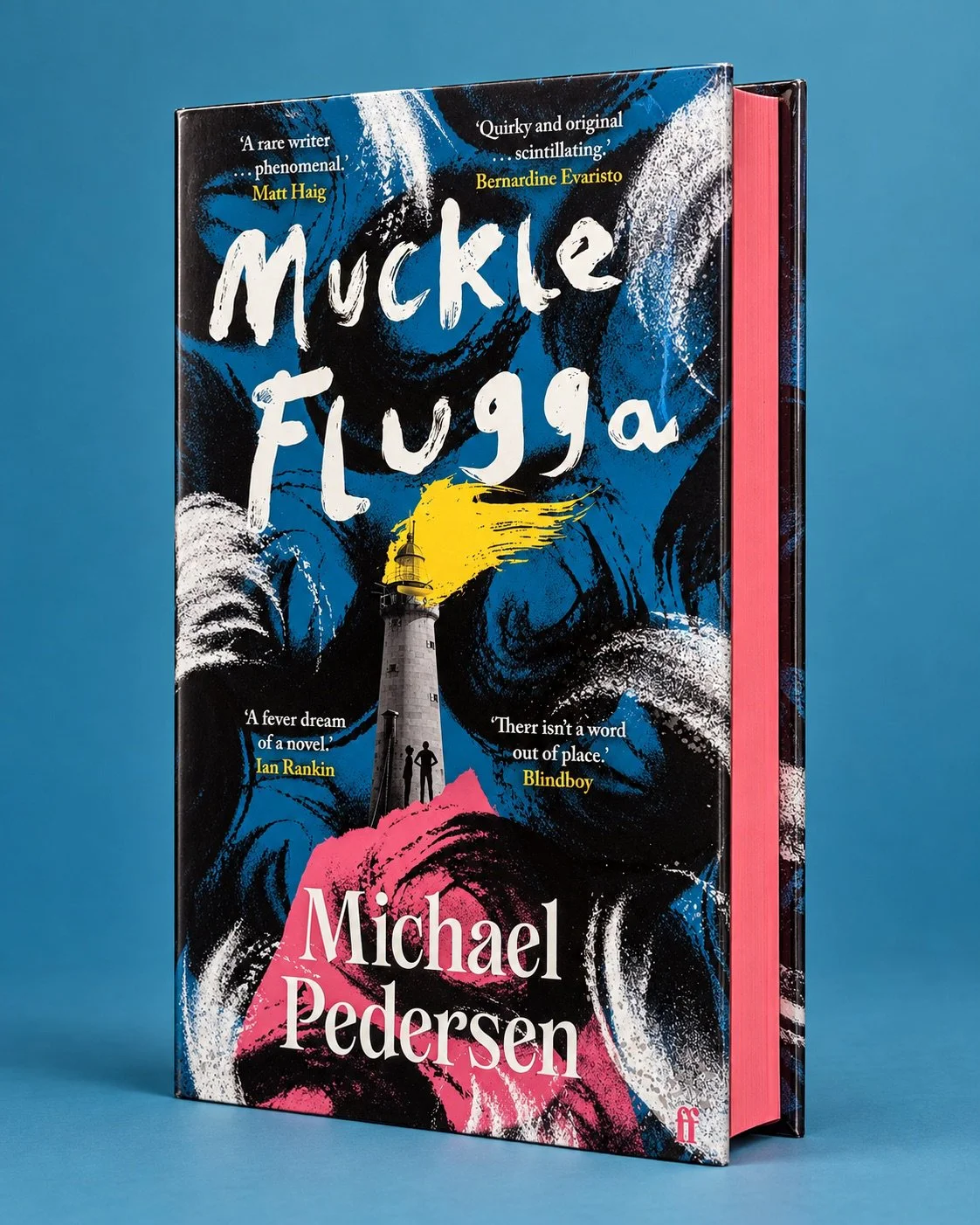
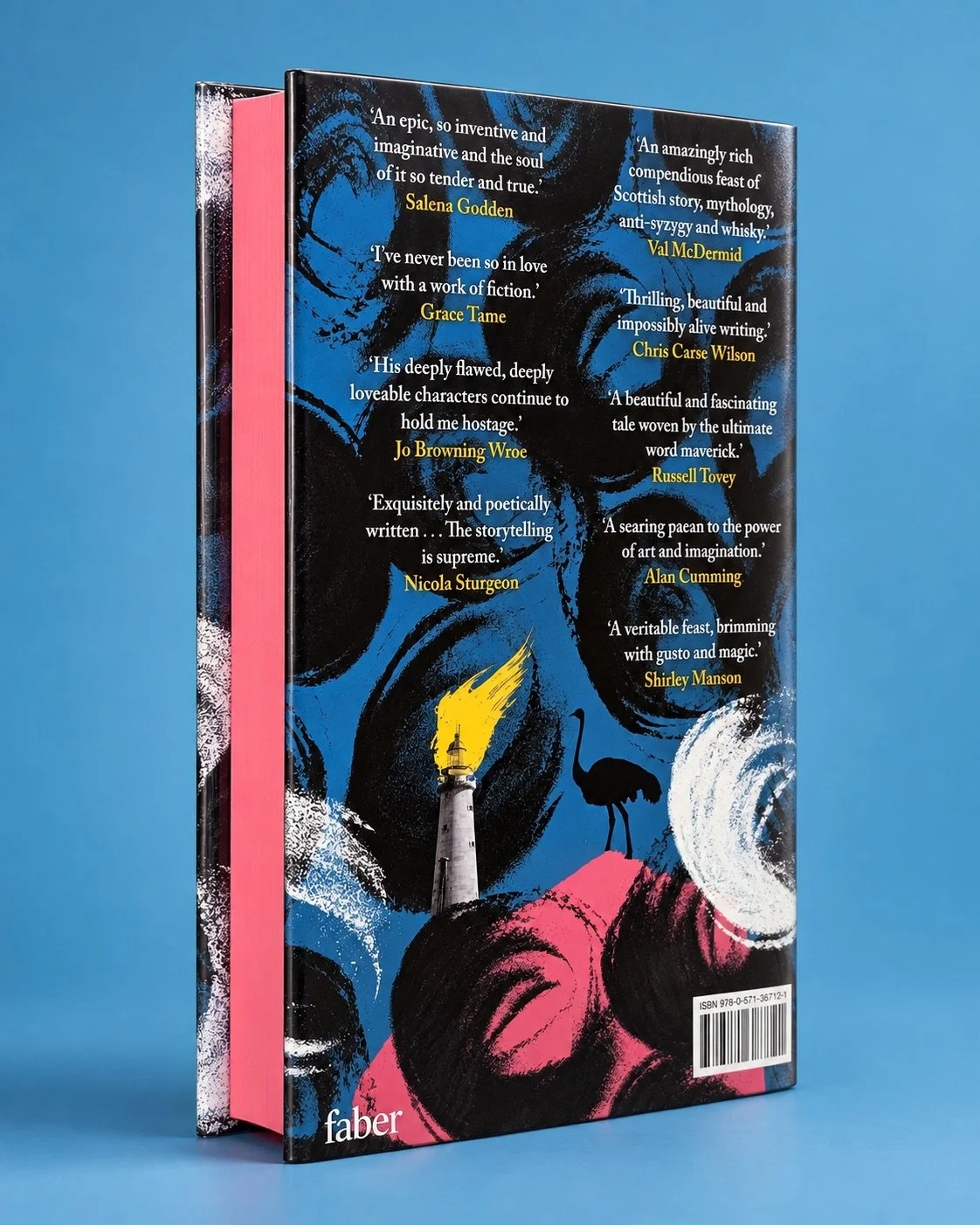
British book designer Jon Gray, known professionally as GRAY318, has designed the cover for Michael Pedersen’s Muckle Flugga, the Scottish poet and writer’s debut novel, published by Faber & Faber.
Set around a remote lighthouse at the northern edge of Shetland, Muckle Flugga is a story of isolation, fathers and sons, friendship, grief, creativity and the pull of the wider world. Jon’s expressive cover distils that atmosphere into an image of turbulent sea, rock, light and weather — less a literal illustration of the novel than a visual expression of its energy.
What is Michael Pedersen’s Muckle Flugga about?
Published by Faber & Faber, Muckle Flugga is the first novel by award-winning Scottish poet and author Michael Pedersen, the current Edinburgh Makar.
The story takes place on Pedersen’s heightened, partly imagined version of Muckle Flugga, the remote rocky island north of Unst in Shetland.
At its centre are a lighthouse keeper and his 19-year-old son, Ouse, an imaginative young artist who has grown up largely separated from the outside world. Their isolated existence is disrupted by the arrival of Firth, a troubled writer from Edinburgh.
Firth’s appearance begins to alter Ouse’s understanding of what his life could become, setting up a struggle between the security and traditions represented by his father and the possibilities of another world beyond the island.
Pedersen describes the novel as a story in which the limits of the world inhabited by father and son begin to crumble when the stranger arrives. The book moves between domestic drama, mythology, magical realism, Scottish landscape and a larger meditation on the importance of art and imagination.
The landscape is more than a backdrop. Pedersen has explained that his fictional Muckle Flugga is deliberately expanded beyond the real island — almost a shape-shifting version of the place, with mythology embedded in its rocks and soil.
Who is Michael Pedersen?
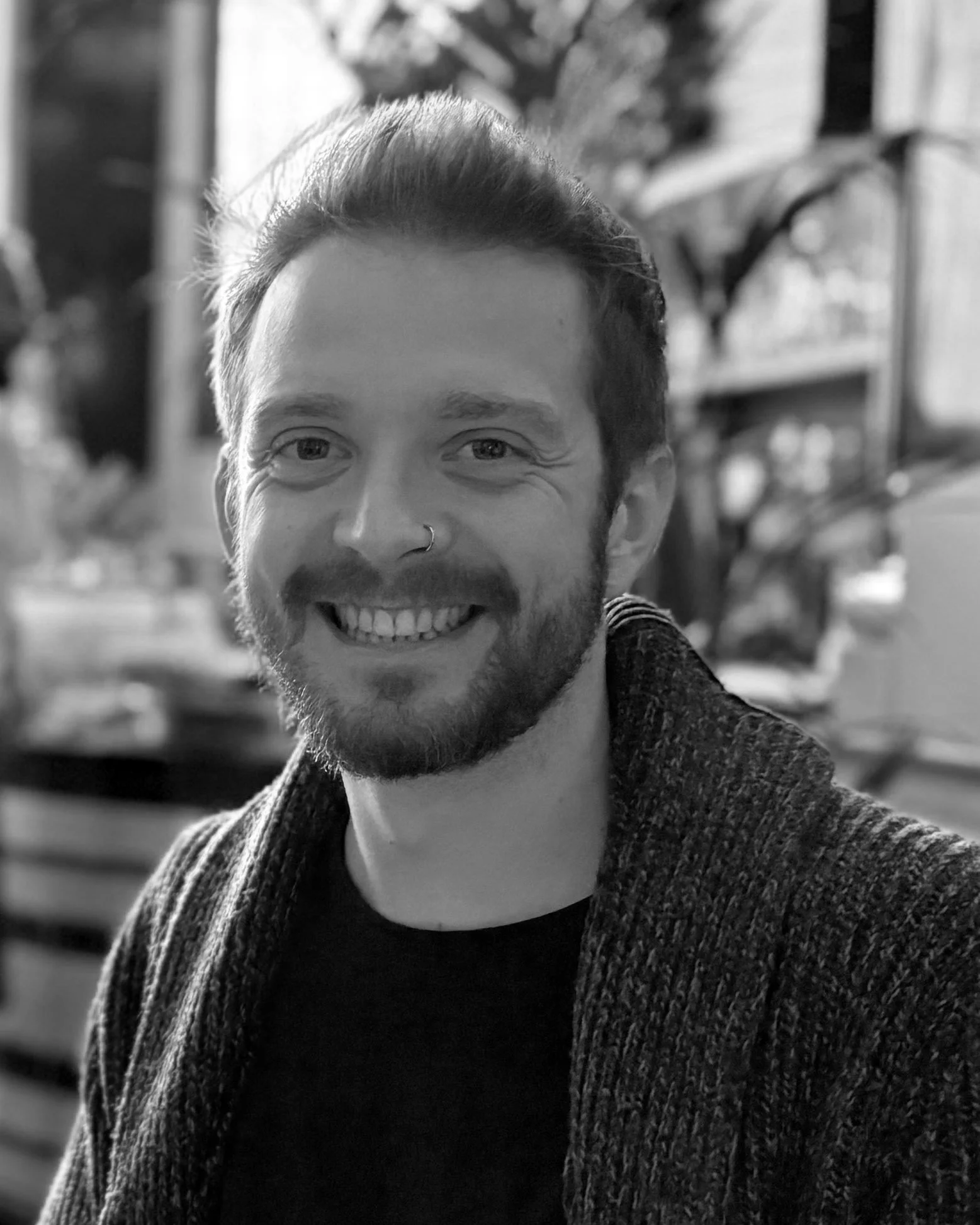
Michael Pedersen.
Photo credit : https://www.instagram.com/shaunmurawski/
Michael Pedersen is a Scottish poet, author and cultural programmer from Edinburgh. He is currently Edinburgh’s Makar — the city’s poet laureate — and previously served as Writer in Residence at the University of Edinburgh. He also co-founded Neu! Reekie!, the influential literary organisation that brought poetry together with music, performance, film and visual culture.
Before Muckle Flugga, Michael was best known primarily as a poet.
His books include Play With Me, his first poetry collection; Oyster, illustrated by the late Scott Hutchison of Frightened Rabbit; the acclaimed prose book Boy Friends; and The Cat Prince & Other Poems. The Cat Prince won Best Poetry at the 2023 Books Are My Bag Readers Awards.
His 2022 book Boy Friends explored friendship, masculinity, love, grief and loss, including his friendship with Hutchison. It was selected as a Sunday Times Critics’ Choice and shortlisted for Best Non-Fiction at the Saltire Scottish National Book Awards.
Muckle Flugga therefore represents a significant step in Michael’s writing career: his movement from poetry and autobiographical prose into full-length fiction.
[Read more about Michael Pedersen and Muckle Flugga on his official website.] Michael Pedersen — Muckle Flugga
The real Muckle Flugga lighthouse
The extraordinary location at the centre of the novel really exists.
Muckle Flugga Lighthouse is the most northerly lighthouse in the UK, standing on an exposed rock beyond Unst in the Shetland Islands.
The first temporary light was established there in 1854 during the Crimean War, after the British government called for better protection for naval vessels operating in the area. The permanent lighthouse was built by the famous Stevenson lighthouse-engineering family and first exhibited its light on 1 January 1858.
The lighthouse also has a remarkable literary connection.
In 1869, an 18-year-old Robert Louis Stevenson visited Muckle Flugga with his father, lighthouse engineer Thomas Stevenson. There has subsequently been speculation that Stevenson's experiences around Unst helped influence the landscape of Treasure Island.
Pedersen brings Robert Louis Stevenson into Muckle Flugga itself, making the historic connection between the lighthouse, Scottish engineering and Scottish literature part of the novel's mythology.
[Explore the history of Muckle Flugga Lighthouse through the Northern Lighthouse Board.] Muckle Flugga Lighthouse — Northern Lighthouse Board
Who designed the Muckle Flugga book cover?
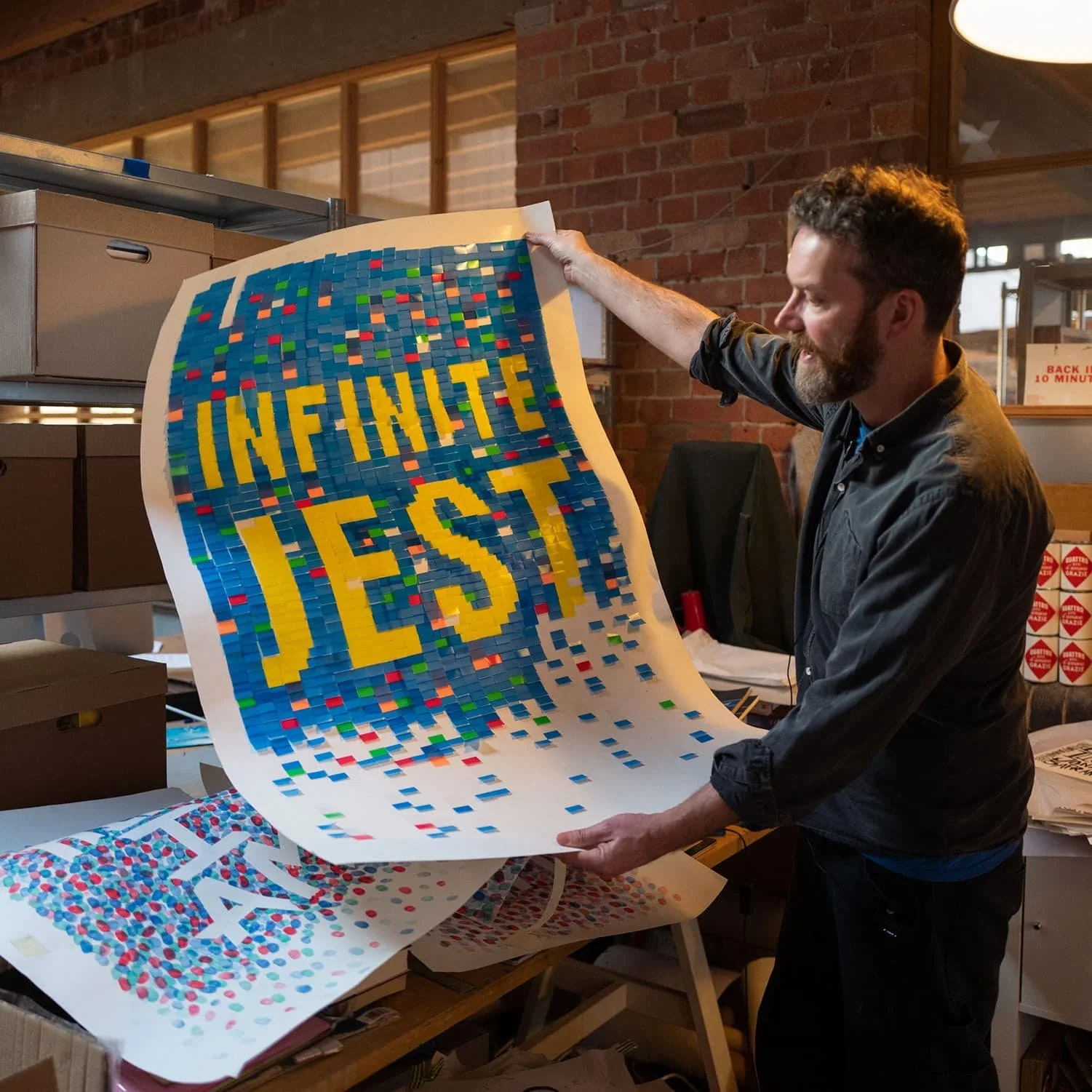
Jon Gray aka GRAY318
The cover was designed by Jon Gray, working under his long-established studio name GRAY318.
Rather than presenting Muckle Flugga as a picturesque Scottish landscape, Jon reduces the environment to its most powerful ingredients: lighthouse, rock, sea, sky and light.
Broad, gestural marks give the image a physical quality. Black and deep blue suggest the scale and force of the surrounding sea, while the lighthouse cuts through the composition as a comparatively tiny human structure. A beam of yellow light provides the focal point.
The typography behaves almost like another part of the weather.
Instead of sitting politely above the image, the title feels integrated into the movement of the painting, reinforcing the slightly unruly, magical and unpredictable character of Pedersen’s island.
It makes the cover particularly effective at two very different scales: as a physical object in a bookshop and as an instantly recognisable image reduced to a small digital thumbnail.
Jon and Michael Pedersen: an ongoing author–designer relationship
Muckle Flugga continues an established creative relationship between Jon and Michael.
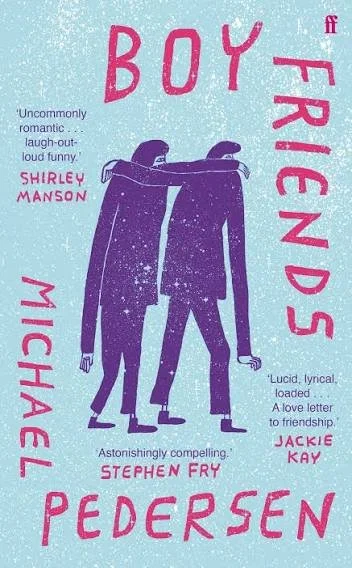
Jon previously designed the cover of Michael’s Boy Friends for Faber, working with illustration by Nathaniel Russell. The design subsequently won at the Academy of British Cover Design Awards.
Jon then designed The Cat Prince & Other Poems, published by Corsair Poetry. That cover was another Academy of British Cover Design winner, with Jon credited as designer.
The sequence creates an unusual continuity across Michael’s work:
Boy Friends moves through memoir and friendship; The Cat Prince through poetry; Muckle Flugga into fiction.
Although the books are very different, Jon has helped create a visual language around Michael's writing that feels energetic, handmade and slightly unpredictable rather than conventionally literary.
GRAY318 and contemporary book-cover design
Jon has worked as GRAY318 across publishing and editorial design for many years, designing jackets for major publishers around the world.
His work has been recognised by organisations including AIGA in New York and D&AD in London, and he is also a co-founder of the Academy of British Cover Design, established to celebrate the designers responsible for some of publishing's most memorable covers.
His broader portfolio demonstrates how a book cover can operate as something more than packaging. At its best, a cover establishes an immediate visual identity for a writer and creates the first emotional encounter with the world contained inside the book.
Muckle Flugga is a particularly fitting example.
Pedersen has written about an island constantly shaped by weather, imagination, history and myth. Jon's design doesn't attempt to explain all of that.
Instead, it gives us the lighthouse, the storm and the light — and leaves us wanting to find out what lies beyond it.
Explore more book-cover design and illustration by Jon / GRAY318 at Dutch Uncle.