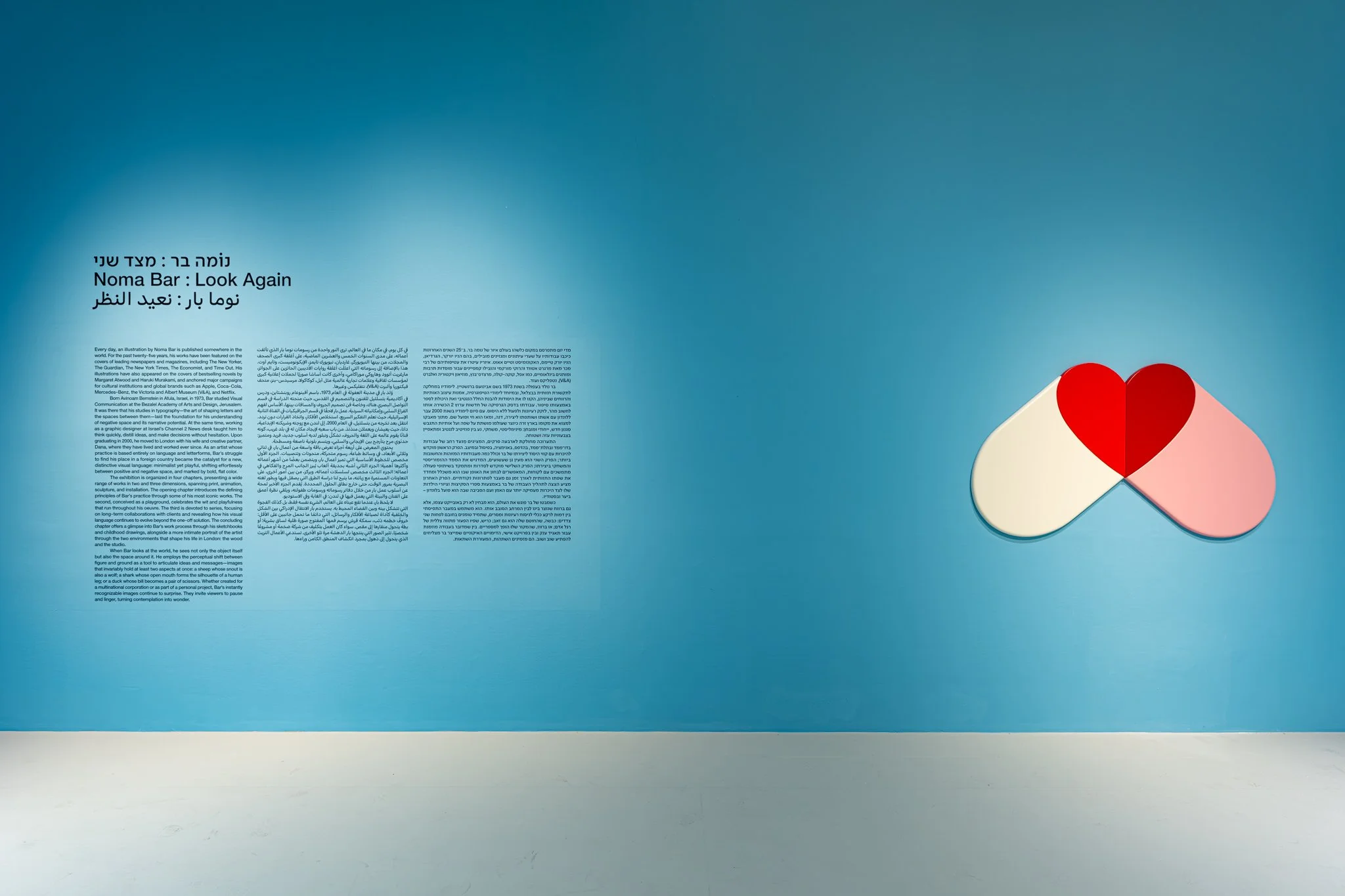
Noma Bar: Look Again — A Landmark Exhibition at Tel Aviv Museum of Art
Exhibition Info:
Exhibition: Noma Bar: Look Again
Dates: August 5, 2026 – January 16, 2027
Venue: Tel Aviv Museum of Art (TAM), Marcus B. Mizne Gallery, Marc Rich and Gabrielle Rich Wing, Paulson Family Foundation Building
Address: 27 Shaul HaMelech Blvd, Tel Aviv
Curator: Yuval Saar, with assistant curator Efrat Levy
Catalogue: A bilingual hardcover catalogue is available in the museum shop
Exhibition at a Glance
Noma Bar's landmark exhibition and retrospective is a genuinely exciting moment, both for his international fan base who have followed his career for years and for anyone about to discover his work for the first time.
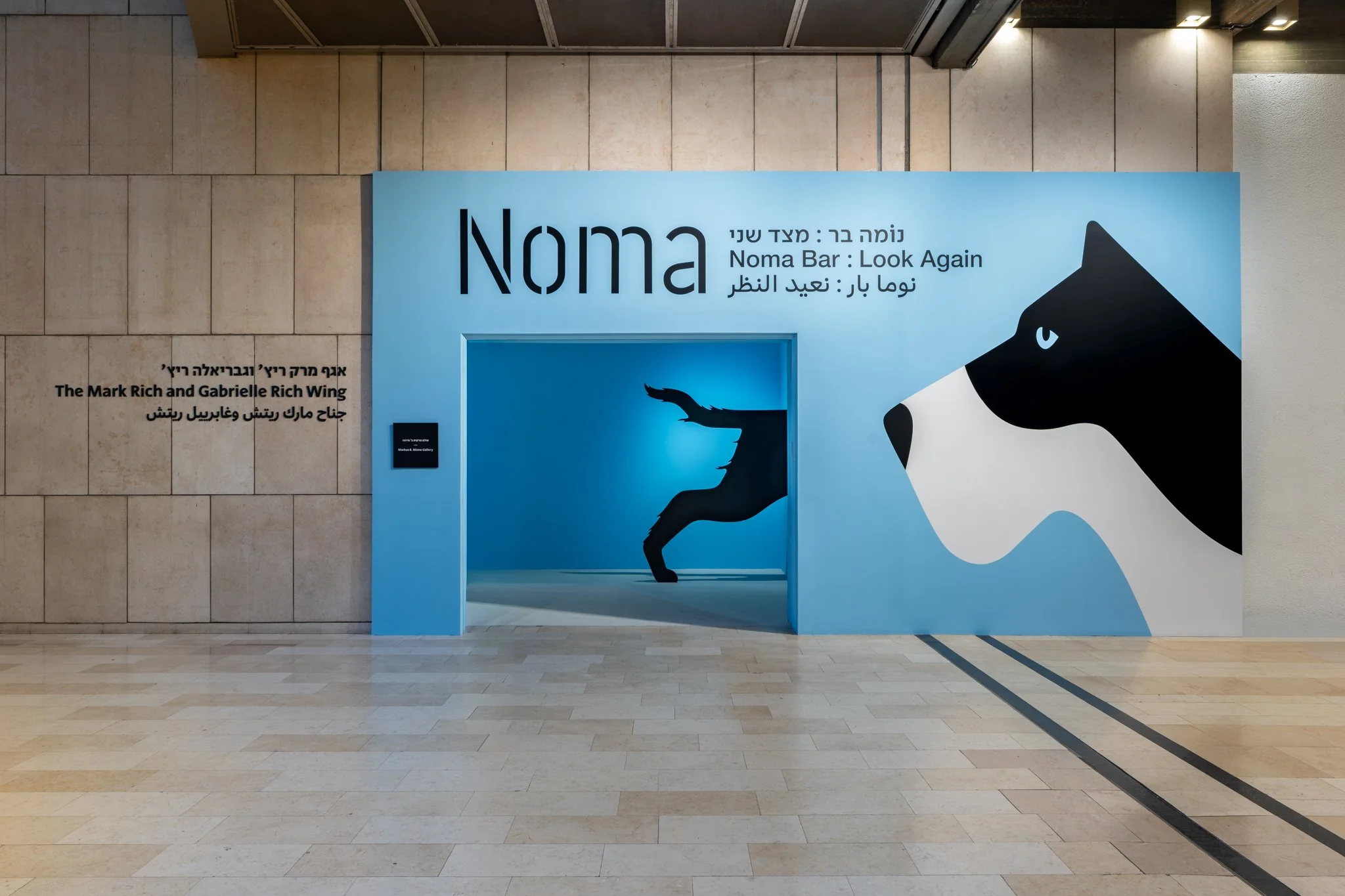
For twenty-five years his images have graced the world on magazine covers, billboards, screens and art, building him a devoted following who know exactly what to look for: the double take, the hidden second image, the moment a shape flips into something else entirely.
Seeing that world reimagined on this scale, as sculpture and installation inside a major museum, is a milestone even his longtime followers haven't seen before.
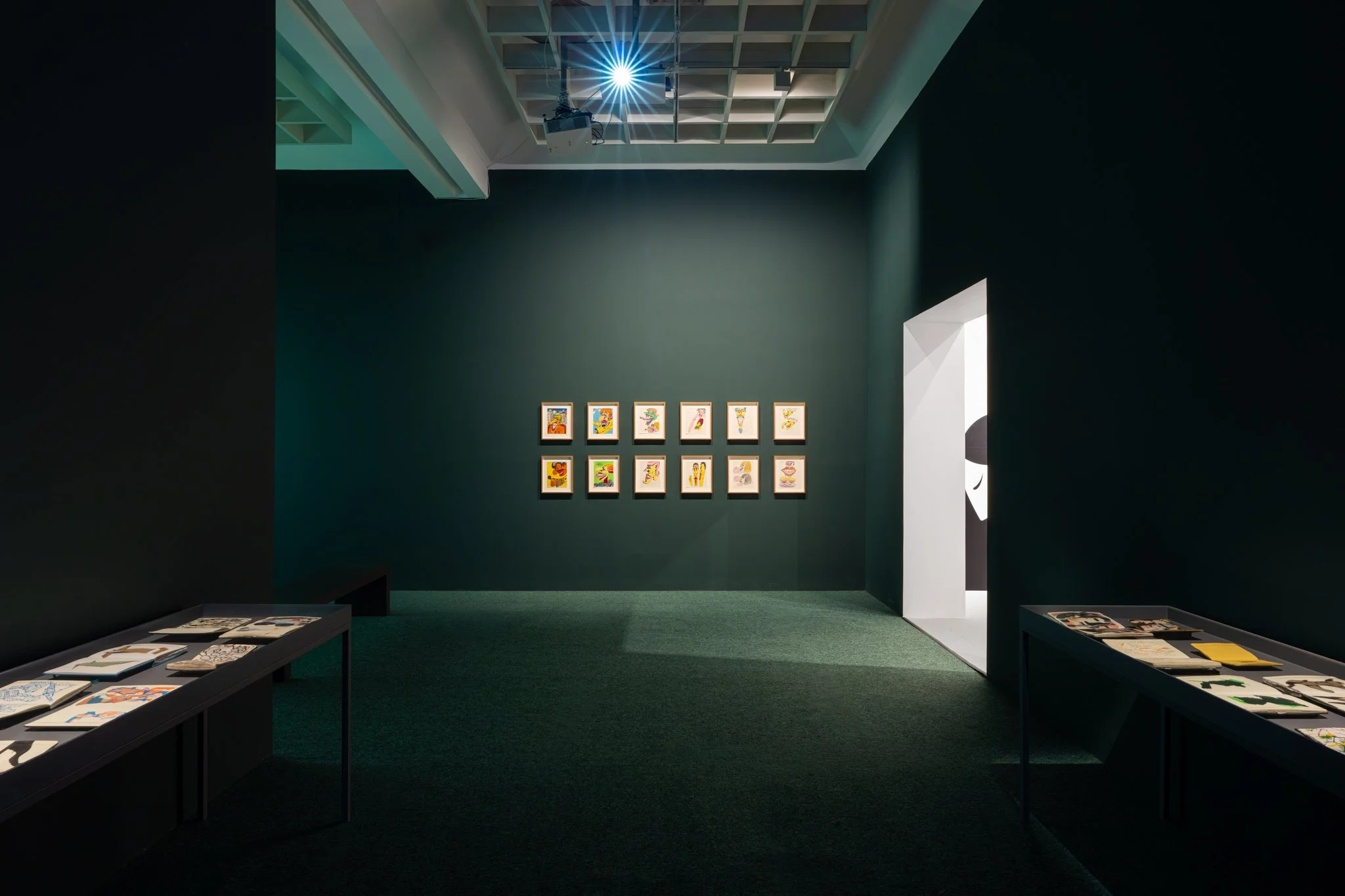
For newcomers, there is plenty to discover: walk into the gallery and every piece invites you to look twice, then look again. TAM invited Noma to take over one of its principal exhibition spaces for the show, the Marcus B. Mizne Gallery. The show was expertly curated by Yuval Saar with assistant curator Efrat Levy with exhibition designer Ariel Armoni, and staged with the support of the museum's Exhibition Fund and sponsors including Coca-Cola Israel, Tambour paints, and SMART vehicles.
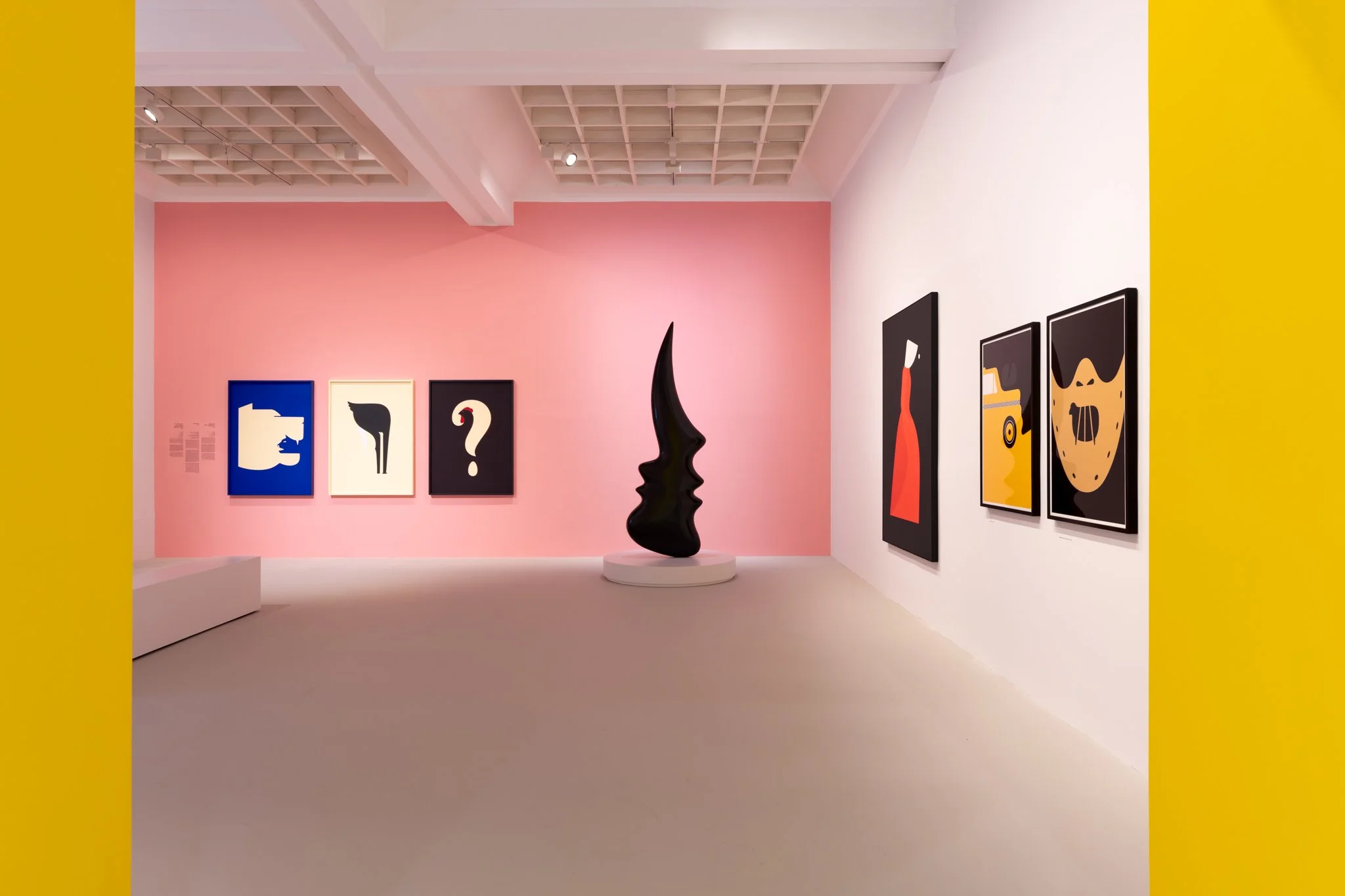
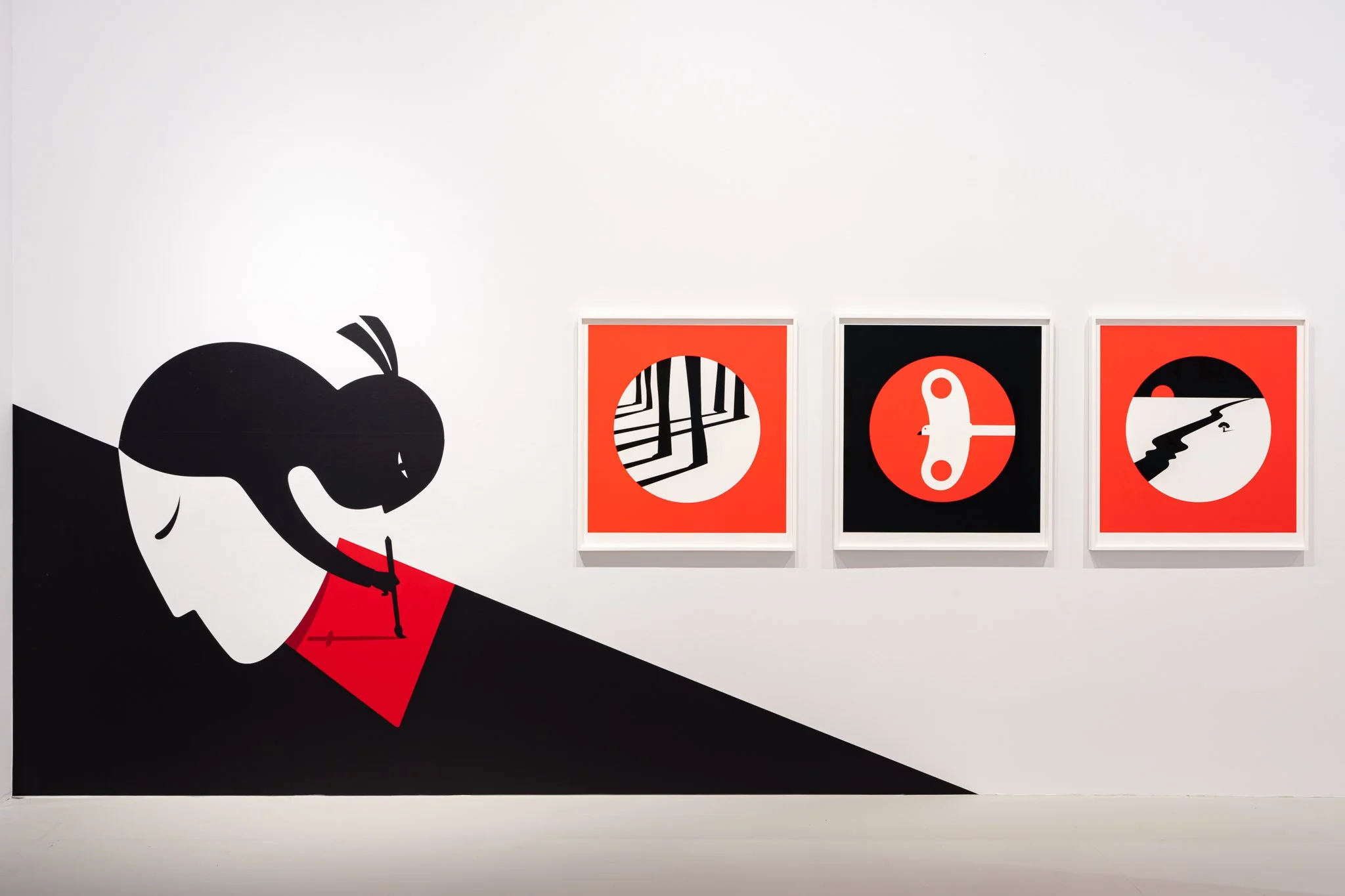
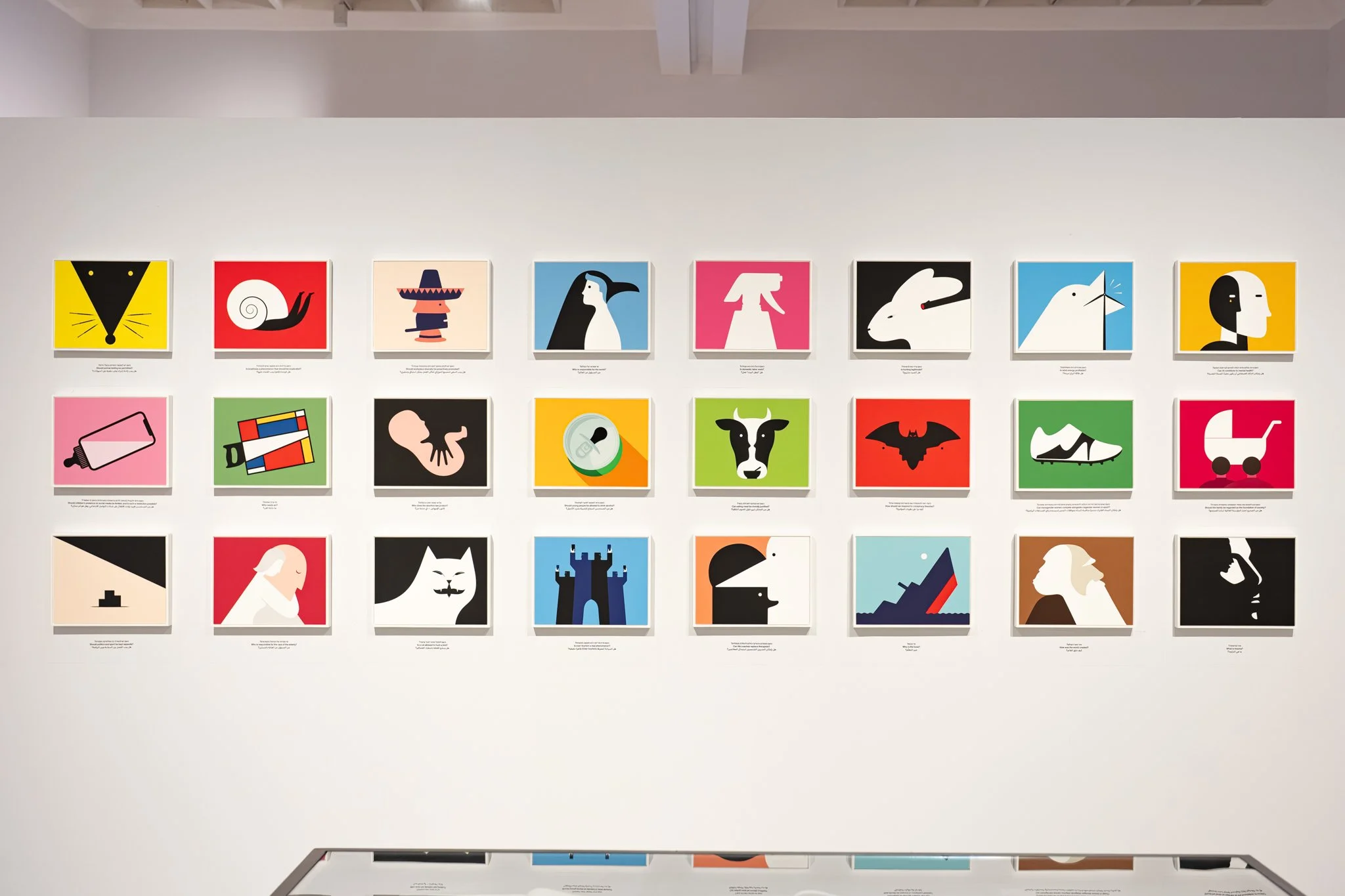
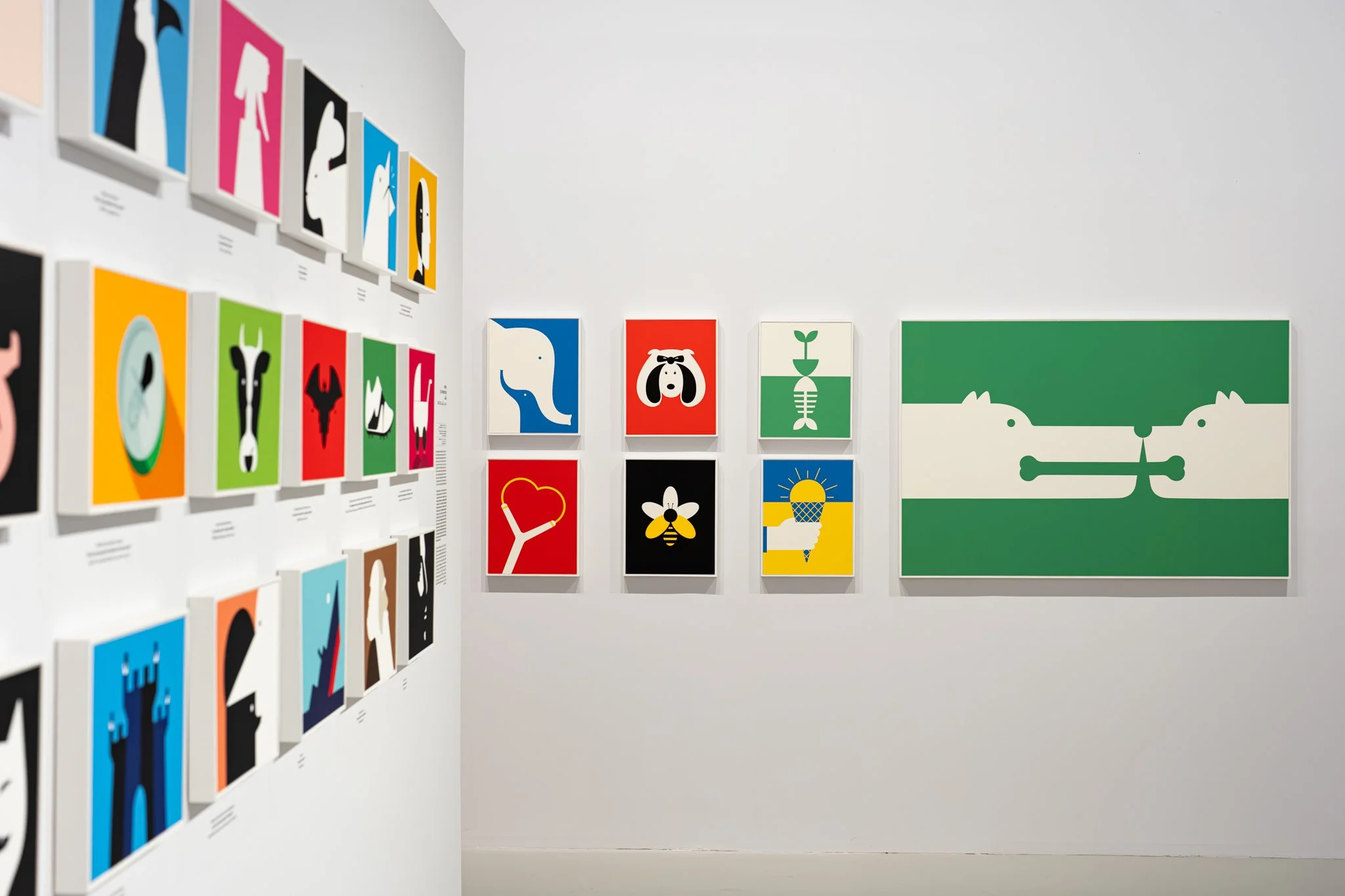
Twenty-five years of images that made their name on magazine covers, billboards and animation are presented as paintings, sculptures, prints and room-sized installations made specifically for this show, alongside Noma’s own sketchbooks and a short documentary film.
It’s a body of original, physical work that asks visitors to do exactly what its title demands: look again!
Photography by Daniel Hanoch
Noma Bar: A Career Reaching Its Museum Moment
Noma Bar (Wikipedia) is widely regarded as one of the worlds most recognisable illustrators working today. For 25 years, his work has appeared somewhere in the world on almost a daily basis. Covers for The New Yorker, The Guardian, The New York Times, The Economist, Time Out and GQ; book jackets for Margaret Atwood, Haruki Murakami and Don DeLillo; and campaigns for Coca-Cola, Apple, Mercedes-Benz, Eurostar, Rolls-Royce, Netflix, Volkswagen, BAFTA and IBM. Noma has also directed animated films for Mercedes, Coca-Cola, Stand Up To Cancer, the World Food Programme, Smart Water and NewYork-Presbyterian Hospital.
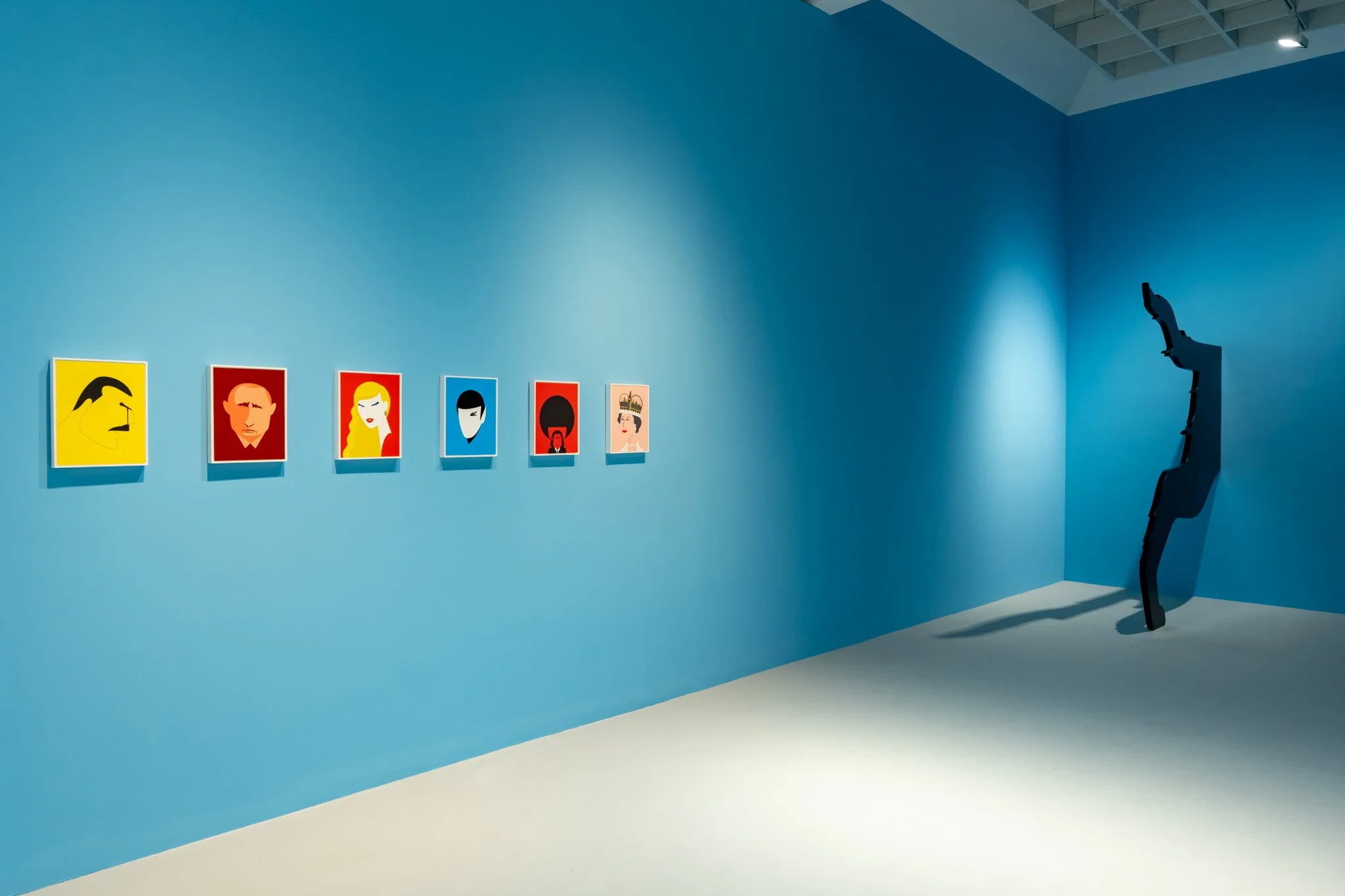
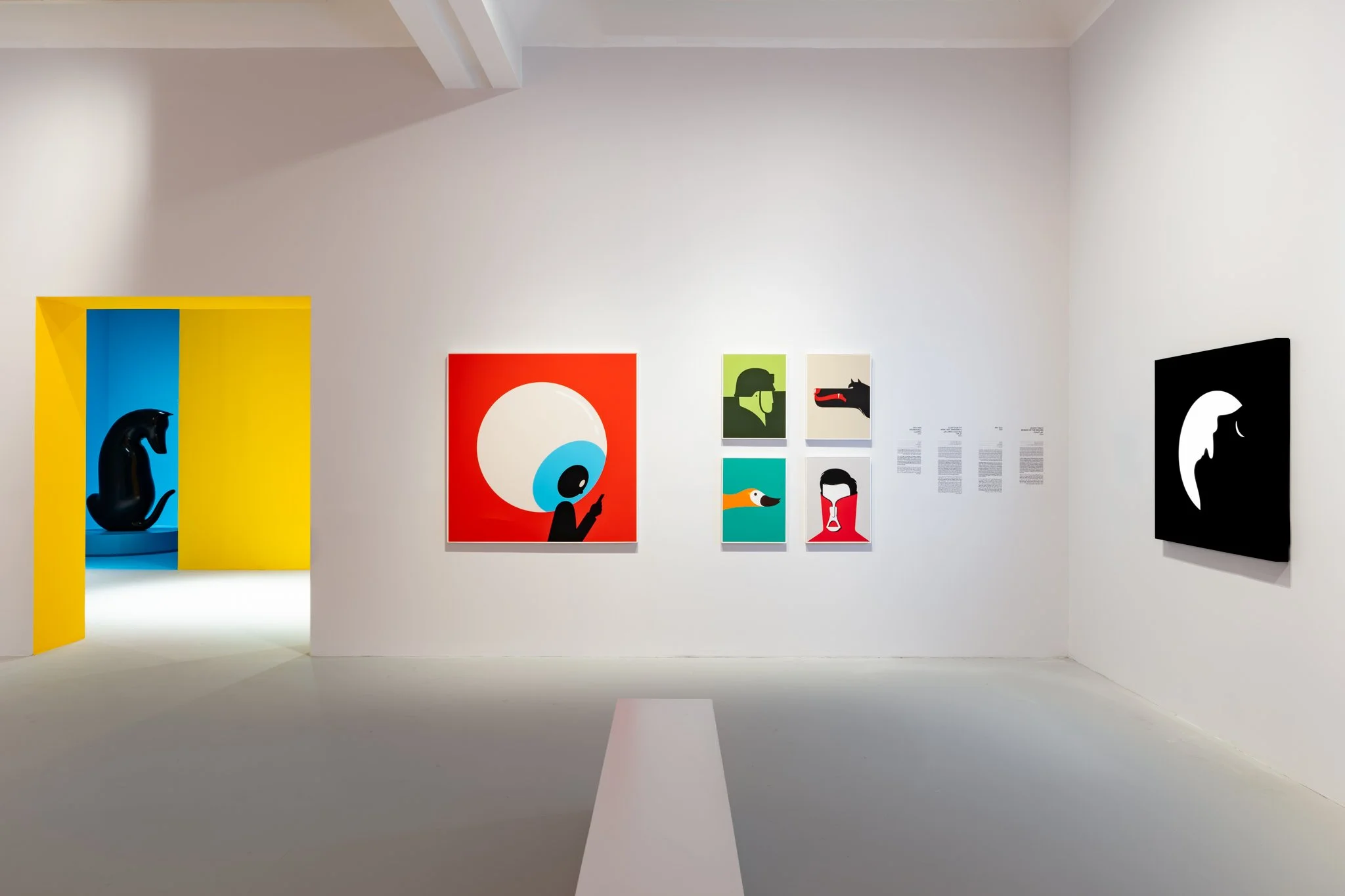
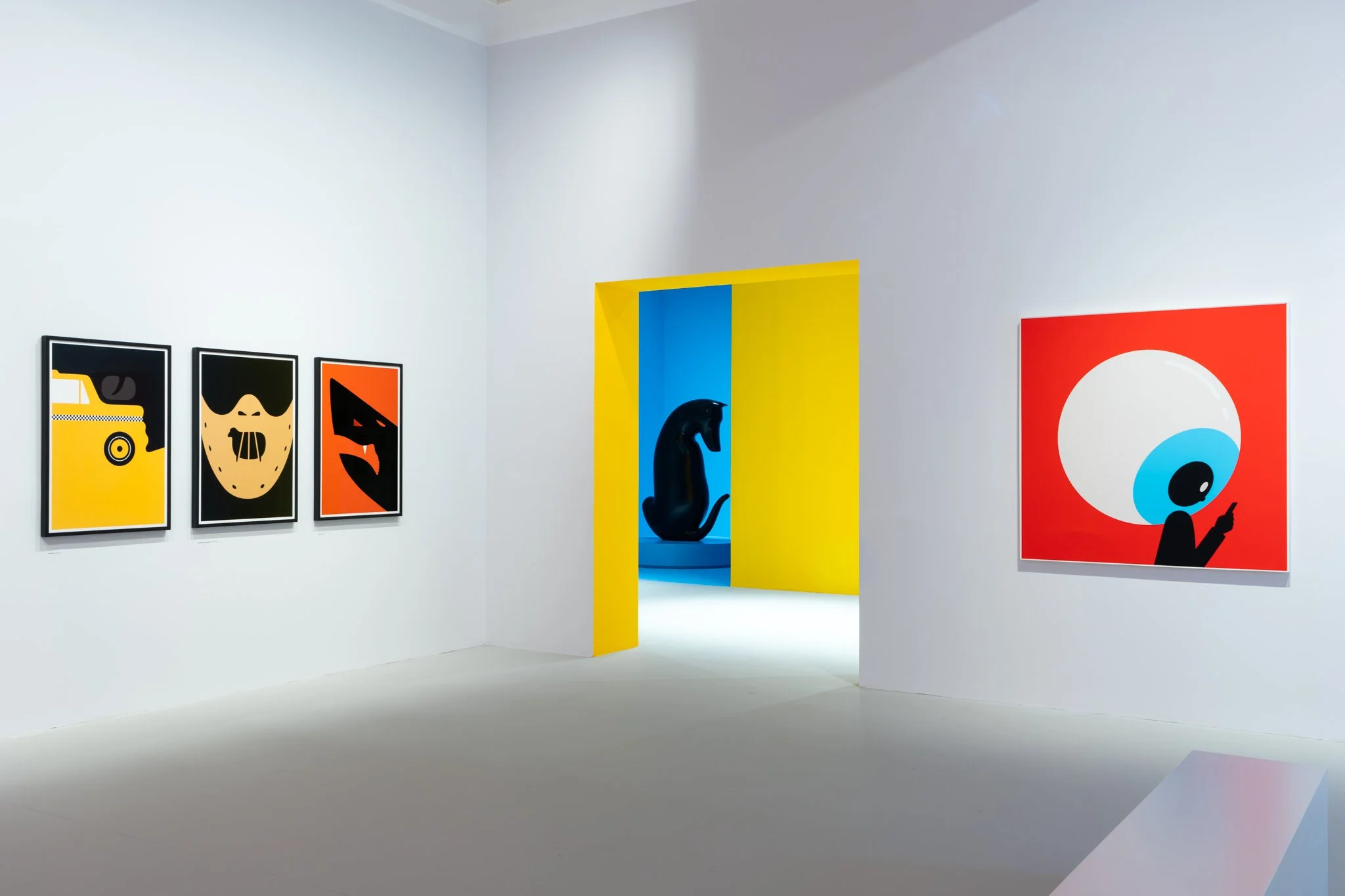
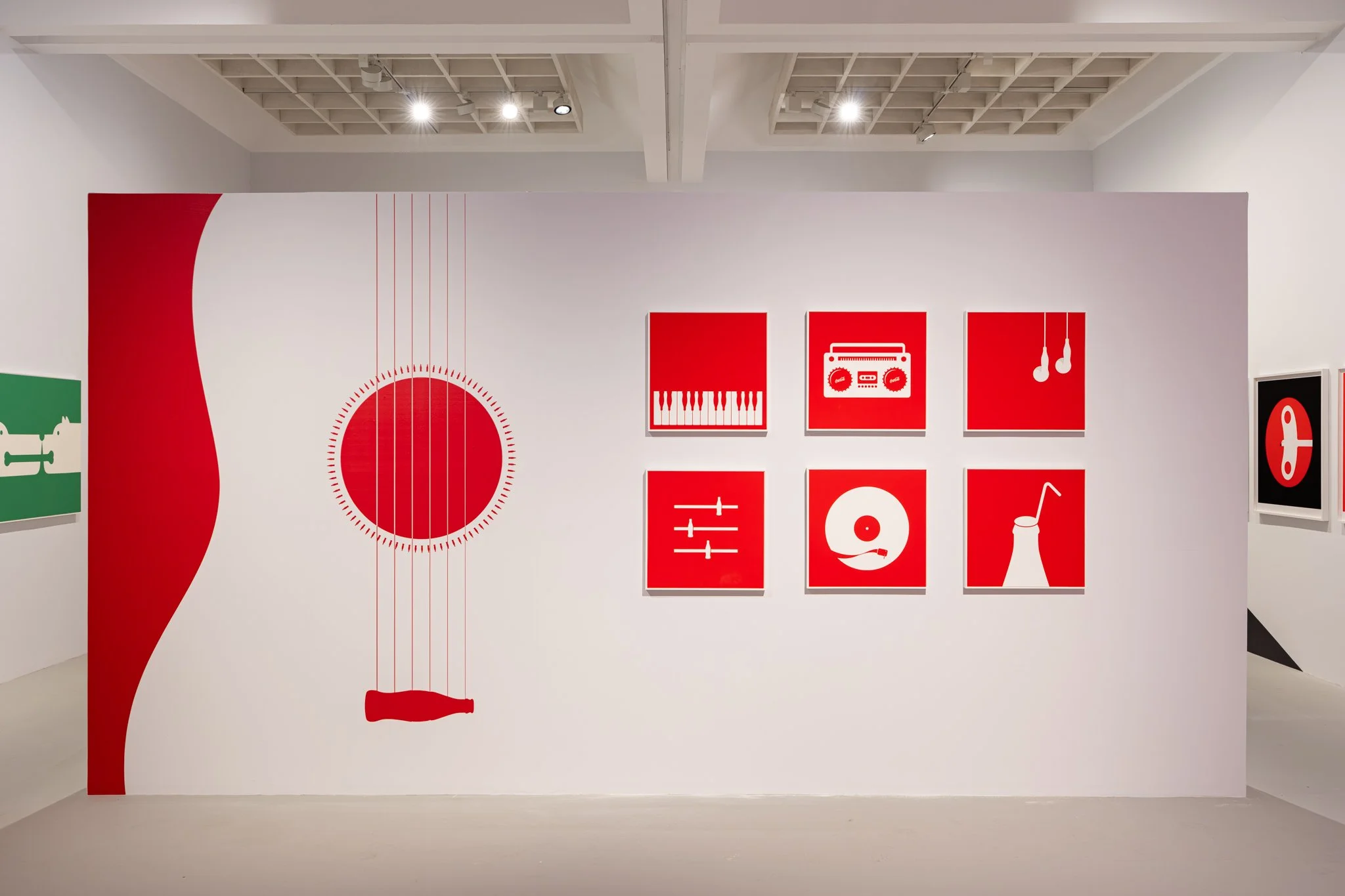
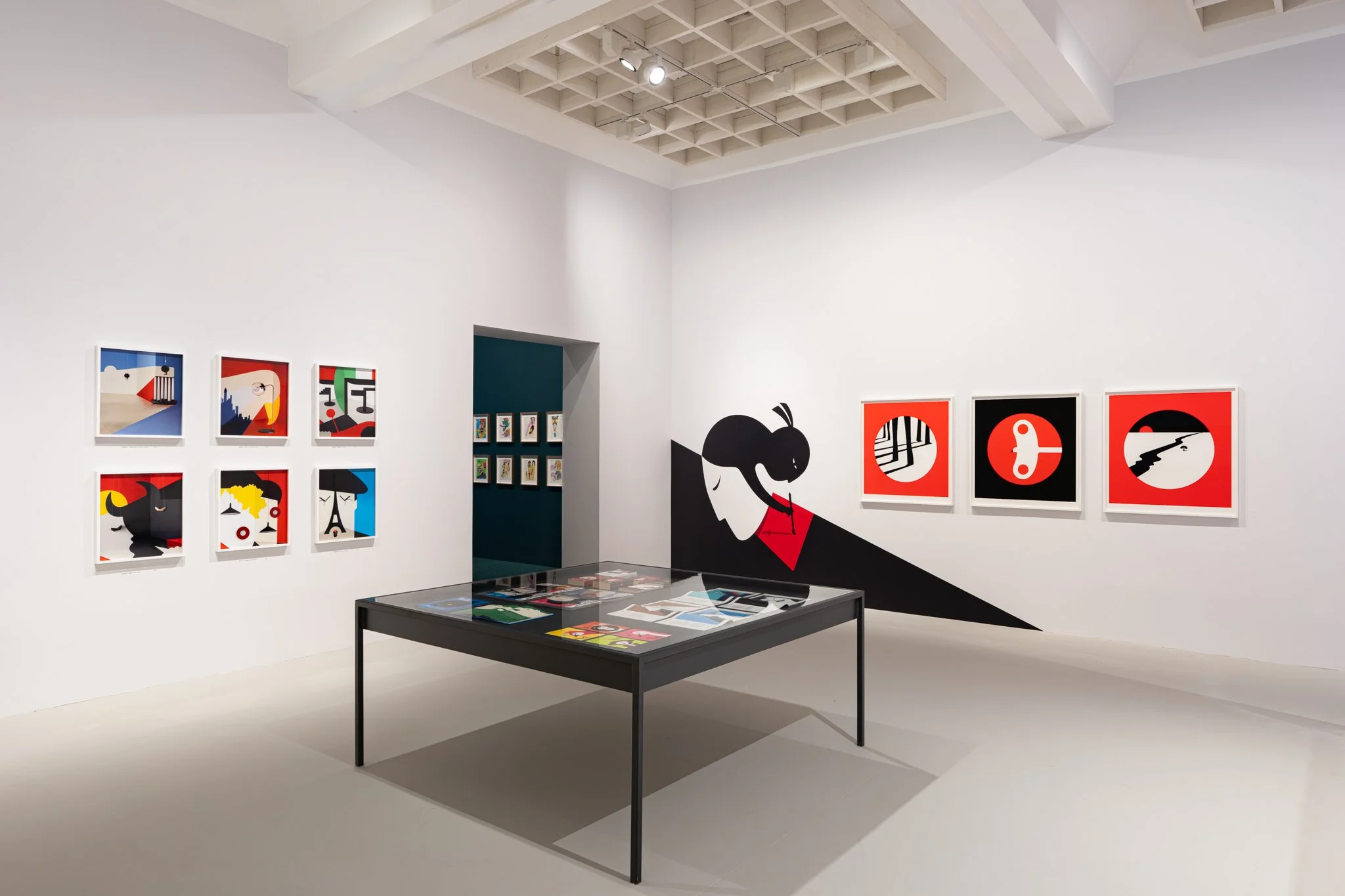
This is only the second time in Noma's career that his work has been given a full museum exhibition. His first was in 2012, when his "Cut It Out" installation was shown at London's Design Museum as part of its Designs of the Year exhibition, where his practice was already recognised at an institutional level.
But Look Again is on a considerably larger scale: a purpose-built exhibition architecture, new large-format commissions produced specifically for the show, a documentary film about his process, and a full accompanying catalogue.
It marks his first solo museum survey exhibition anywhere in the world.
Demand around the opening has been striking. The exhibition's catalogue and accompanying merchandise have already sold out, with the museum preparing a second print run to meet ongoing interest.
Look Again is a milestone: the moment Noma's practice is being read on the terms of fine art and sculptural rather than commercial illustration alone. Getting here has been a remarkable trajectory, shaped alongside Helen Cowley, founder of the international artist management agency Dutch Uncle, who has represented and managed Noma's work for close to two decades.
Under her guidance, his output has expanded from editorial illustration into large-scale brand campaigns, then animation, and now, with this exhibition, into the museum world.
For more on Noma Bar’s work, or to make contact please email Helen helen@dutchuncle.co.uk or visit Noma’s agency profile dutchuncle.co.uk/noma-bar.
Look Again: What's on Display
The exhibition is organised into four sections, each showing a different side of Noma's work and process.
1. Foundation Lines
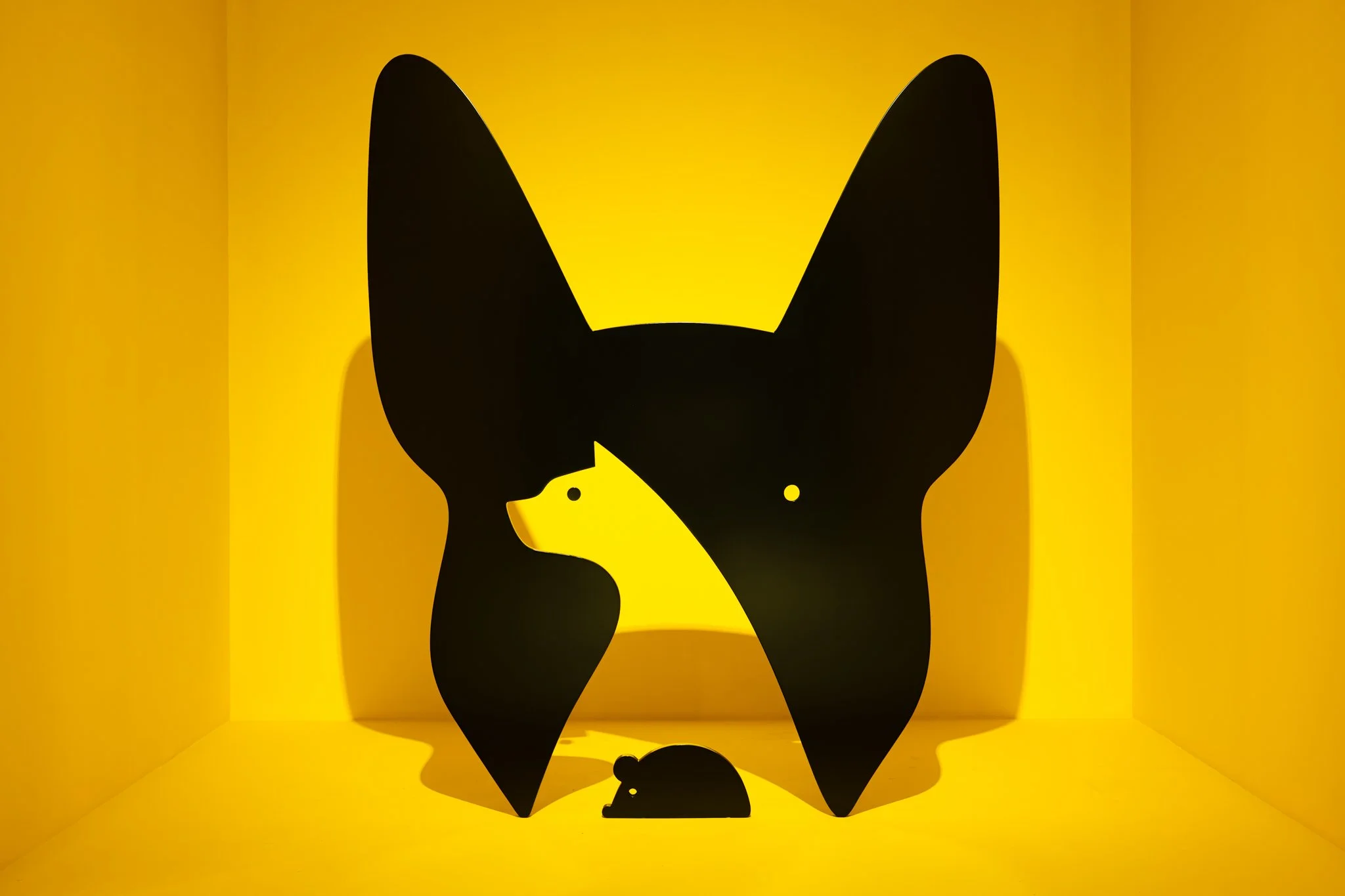
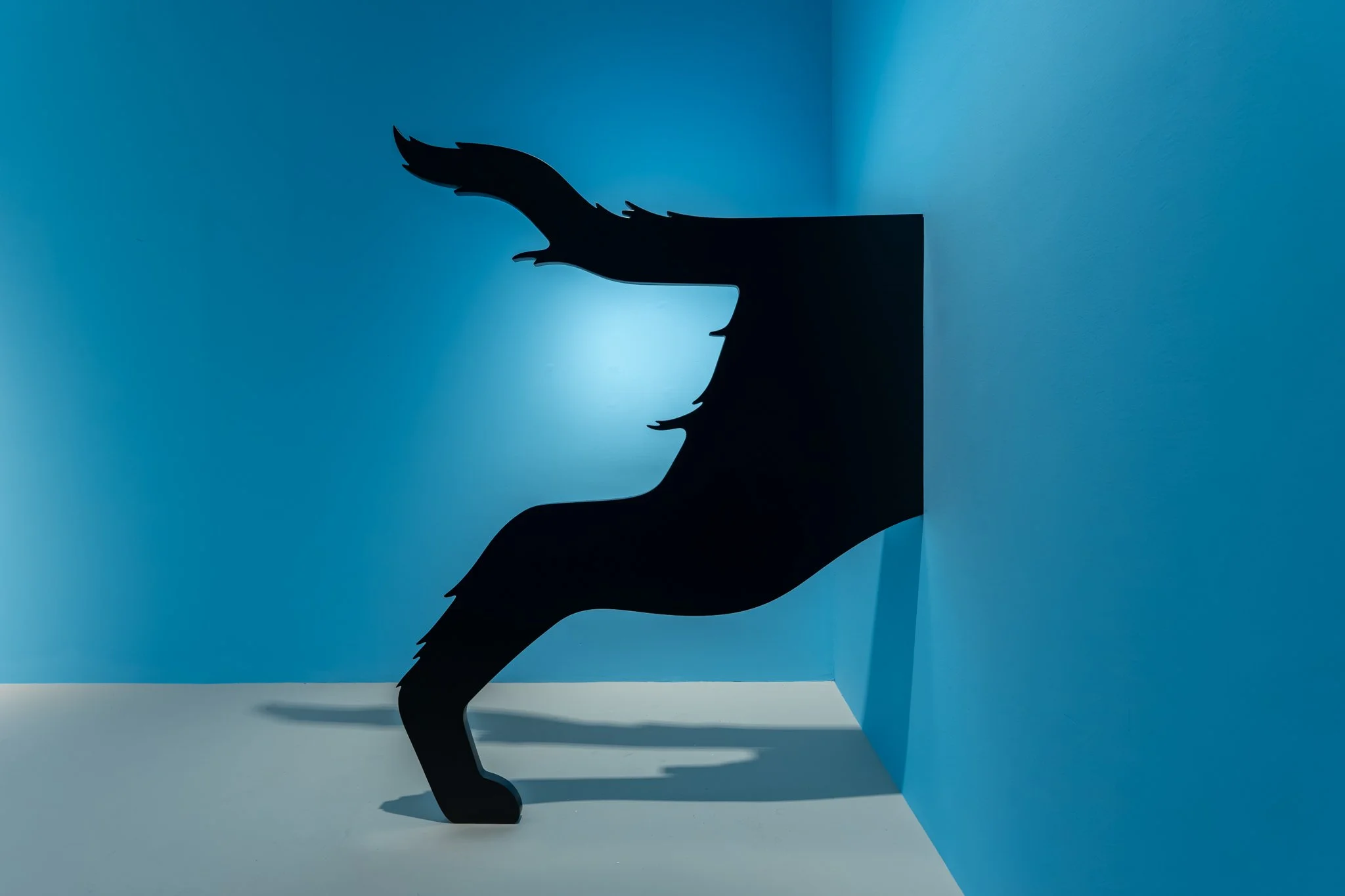
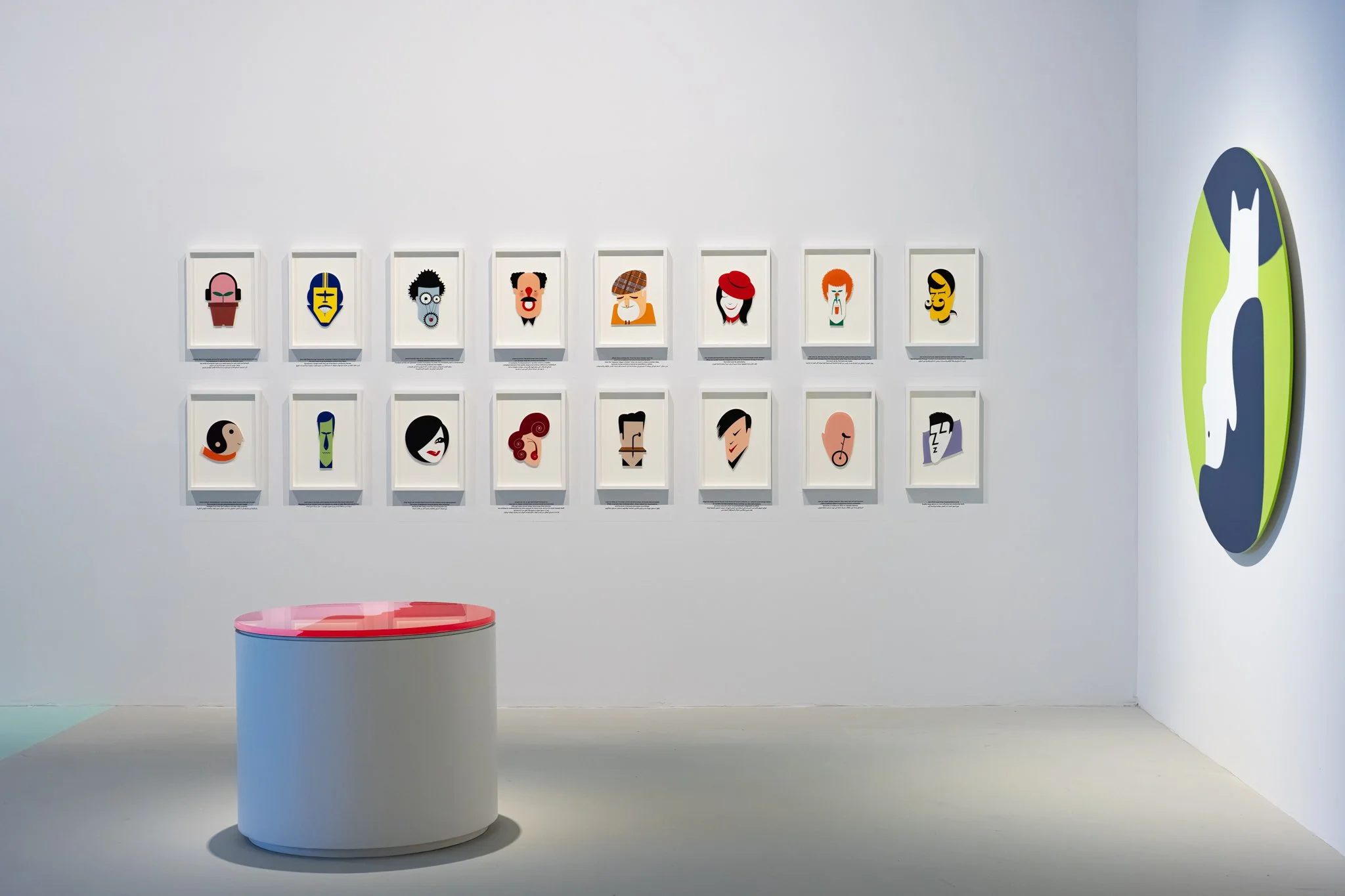
This opening section explains the idea behind everything that follows: the "look again" effect, where a picture reveals a second, hidden image once you look more closely. Several works here were made specifically for the exhibition, translating Noma's flat illustrations into physical sculptures.
Example works on display:
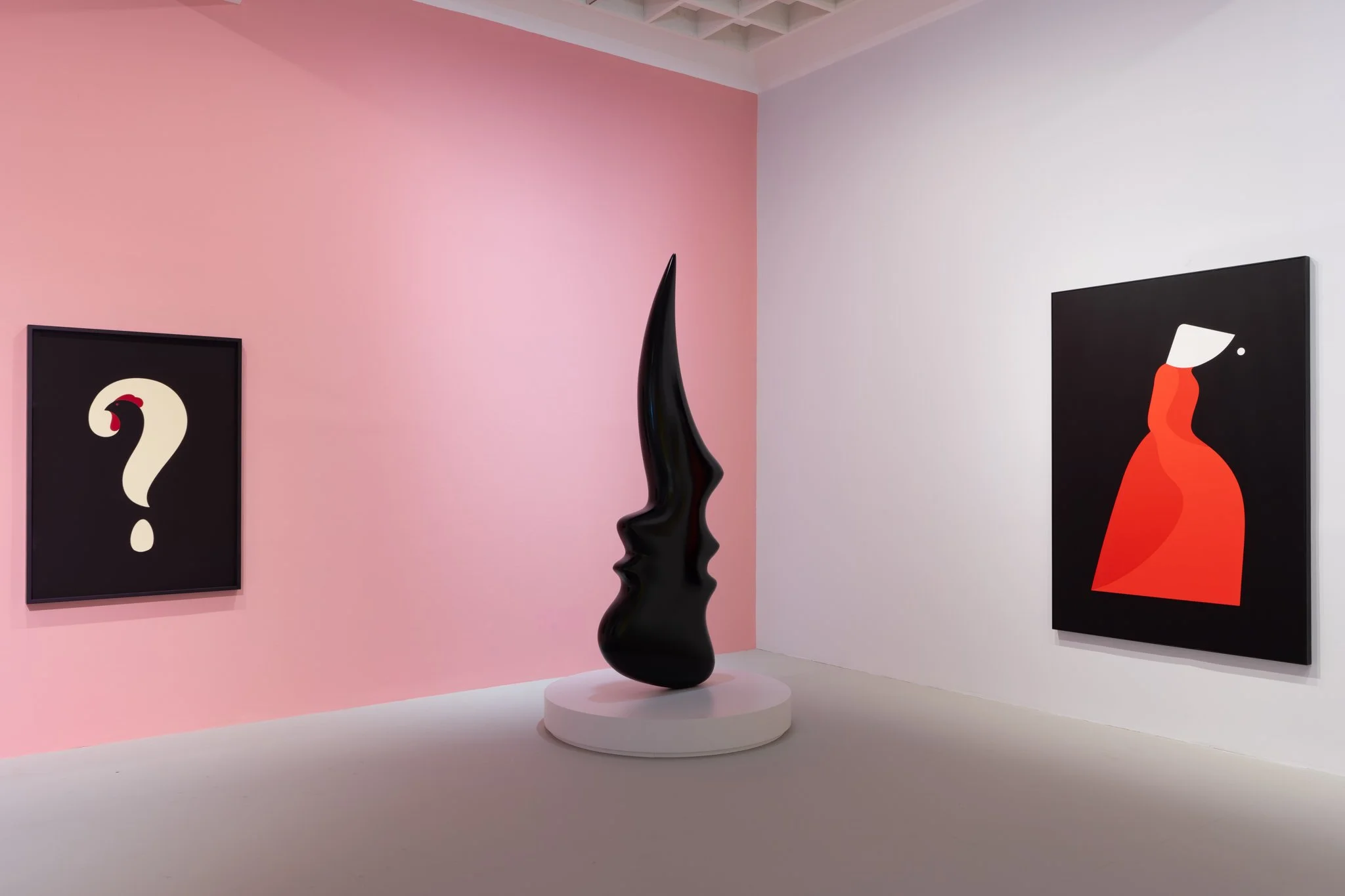
Pointed Sense, inspired by two dogs he saw meeting in the woods near his home
Evolutionary Thought 2, based on a piece of advice from one of his old teachers: "very large, very small, and the sizes in between.
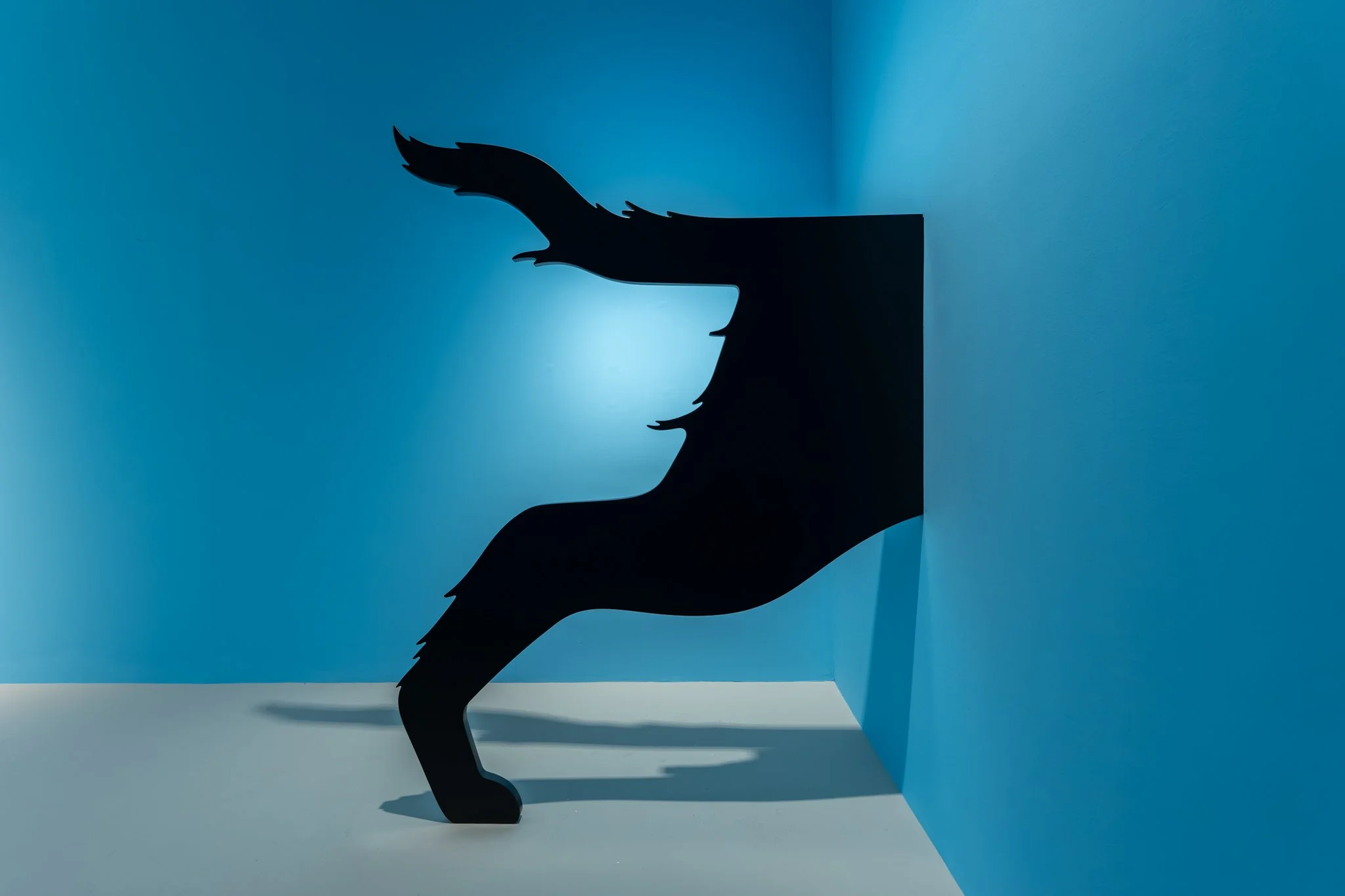
Noma Bar : ‘Pointed Sense’ — Sculpture
2. Series
This room brings together some of Noma's best-known bodies of commissioned work.
Example works on display:
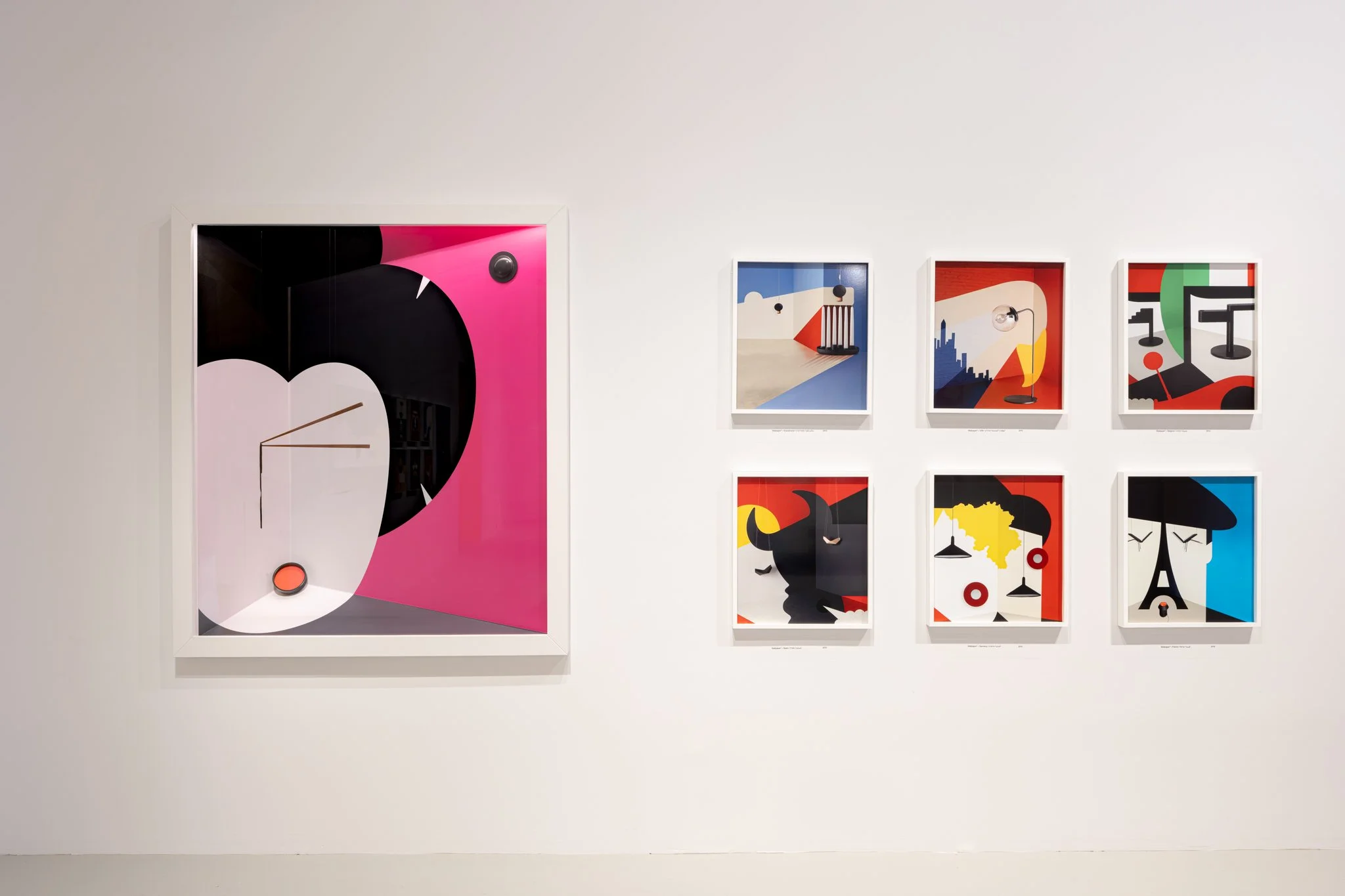
Noma’s celebrated set of covers for Wallpaper* magazine, where each country's identity was built from recognisable design objects, such as French chairs and Scandinavian lighting, arranged into life-size three-dimensional sets and then photographed to look flat. A 3D reconstruction of the series' Japan cover is on display
His multi-year poster campaign for London's V&A Museum, in which he turned animals such as a parrot and an elephant into symbols for international cultural events.
Noma’s celebrated set of covers for Wallpaper* magazine
3. Playground
The most personal and playful part of the show, built around large new commissions.
Example works on display:
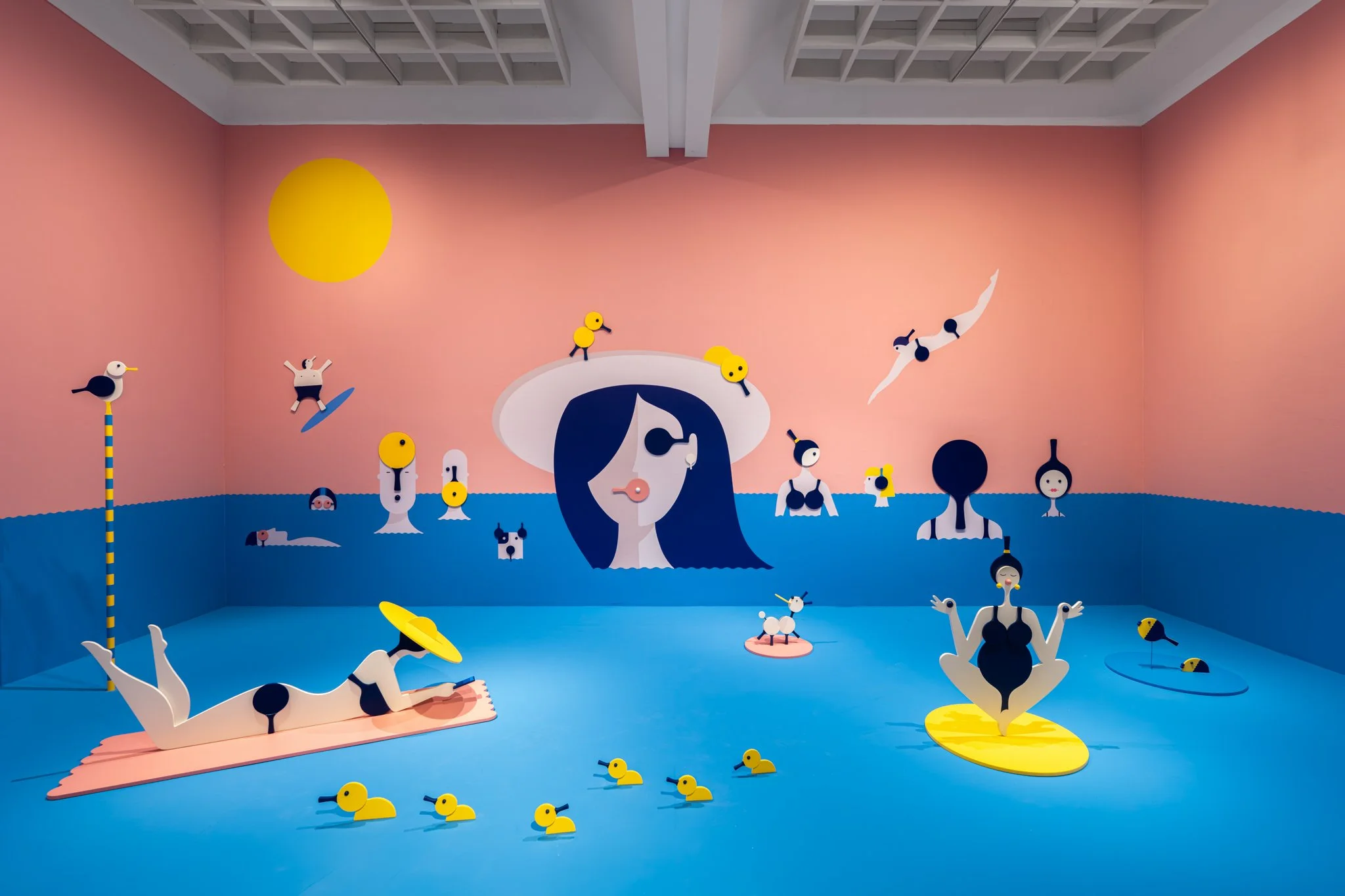
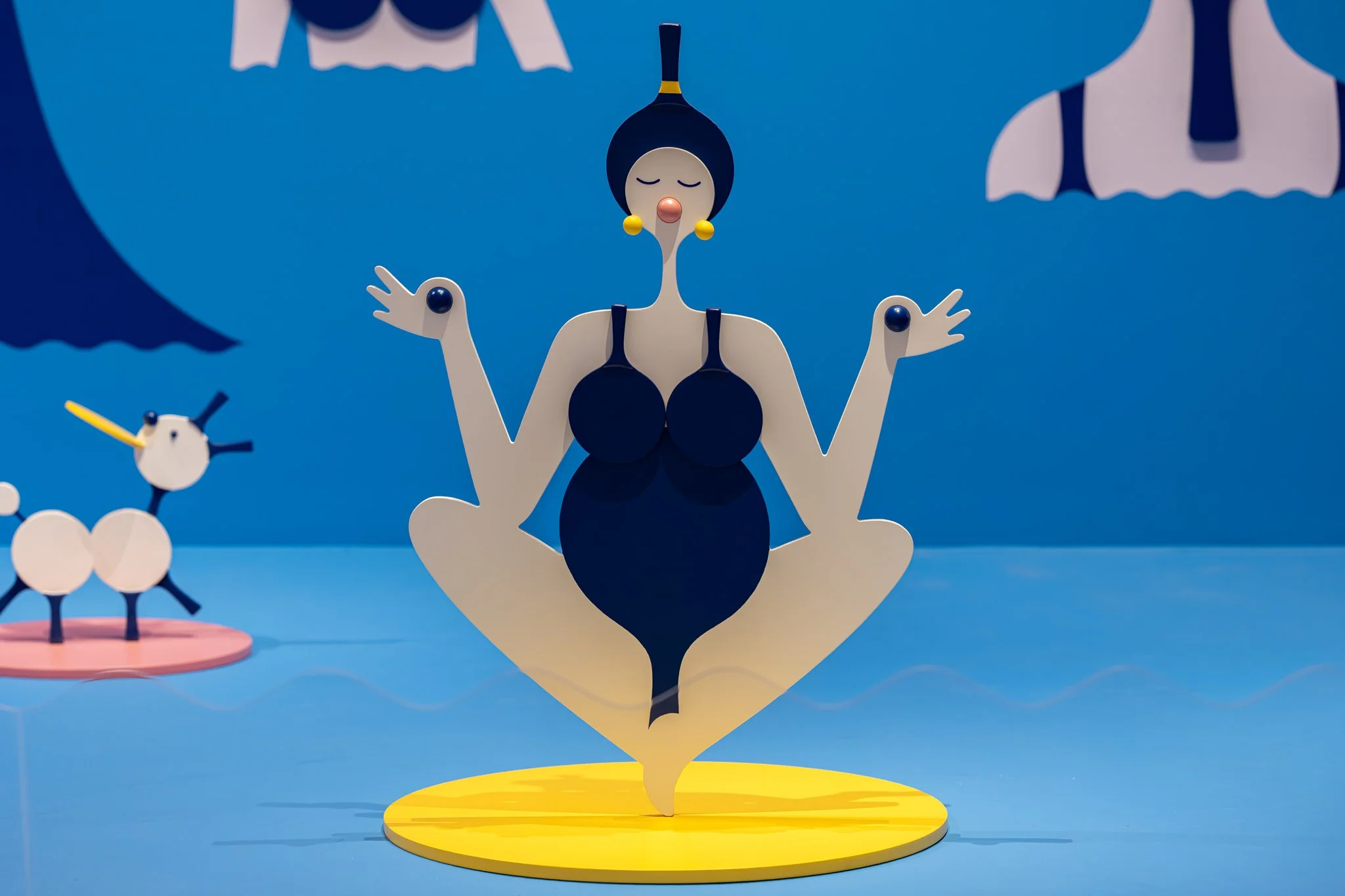
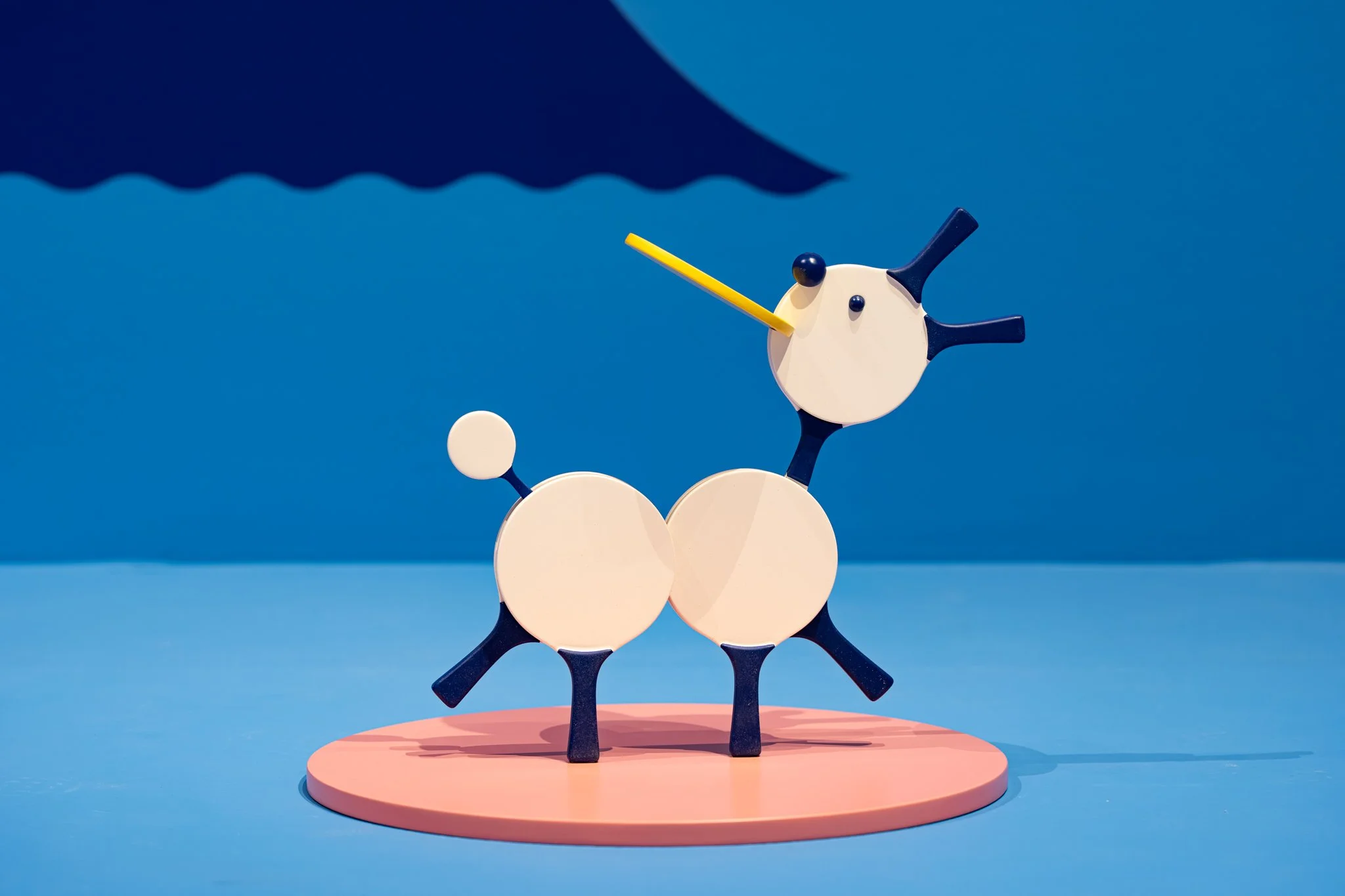
Tel Aviv Summer (2026), the centrepiece of this room: a brand-new installation made entirely from paddles and balls, in tribute to matkot, the beach paddleball game closely associated with Tel Aviv's coastline. Noma has described the game as "a metaphorical dialogue between two sides," which fits neatly with the exhibition's larger theme
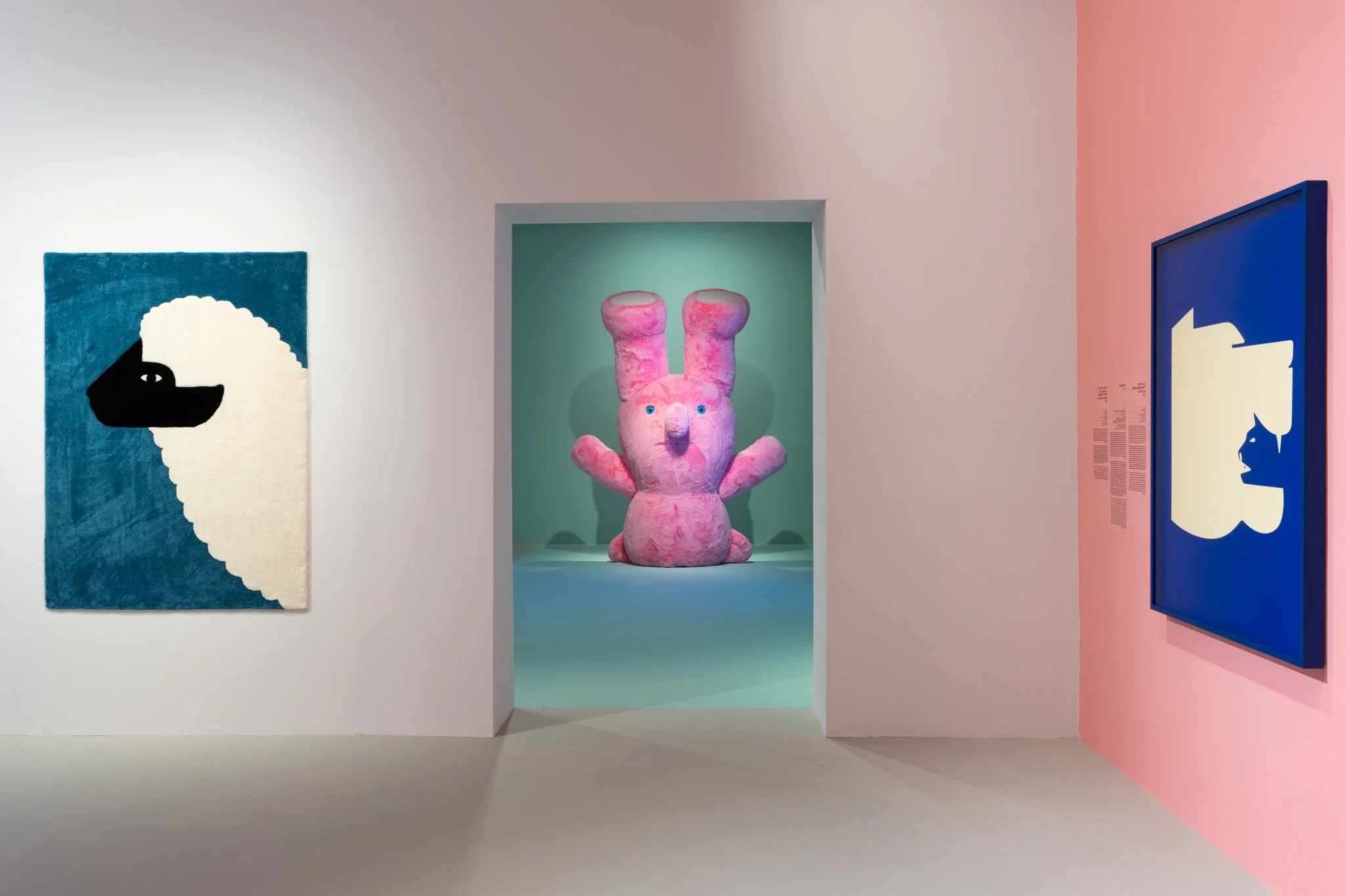
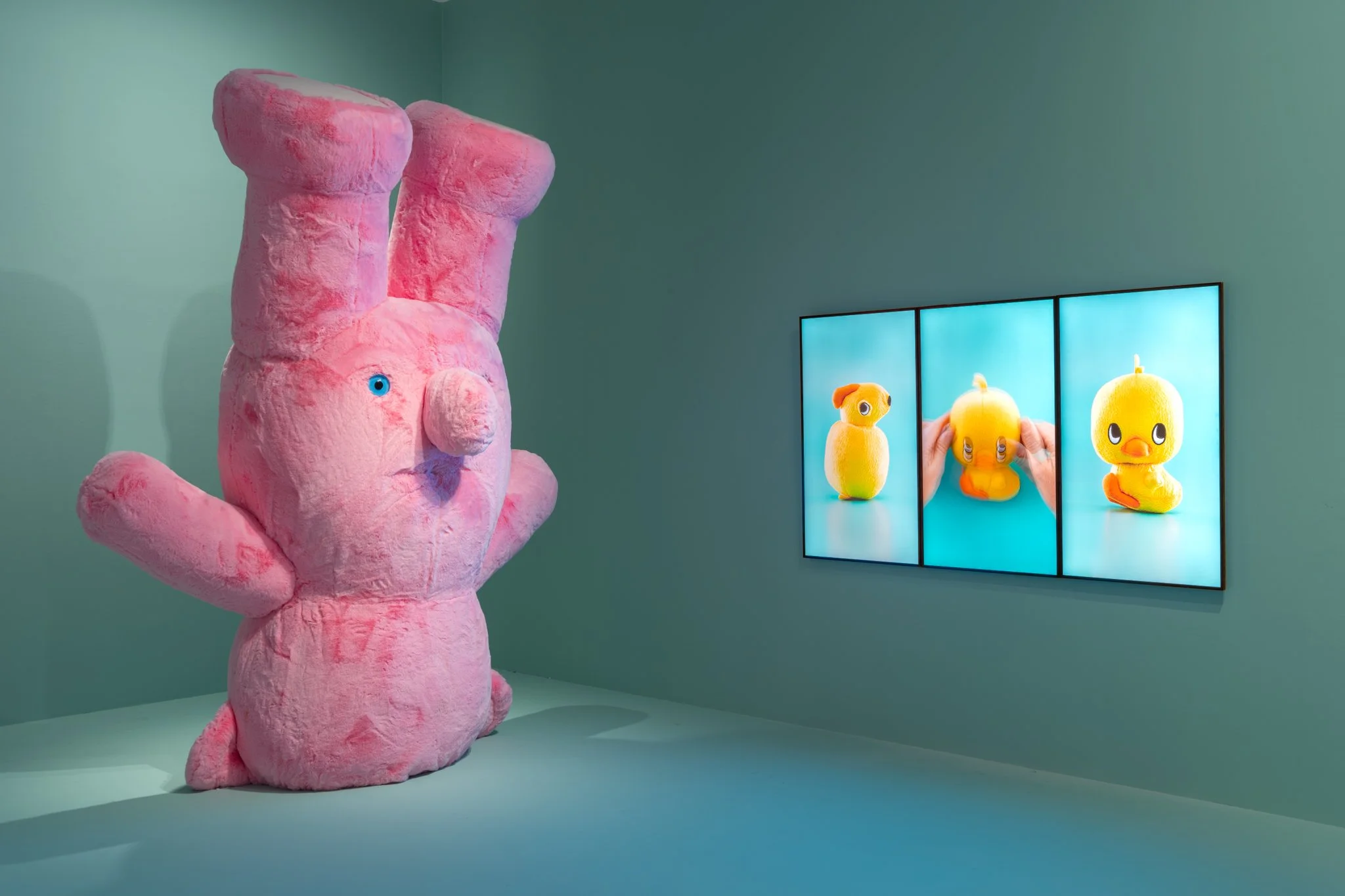
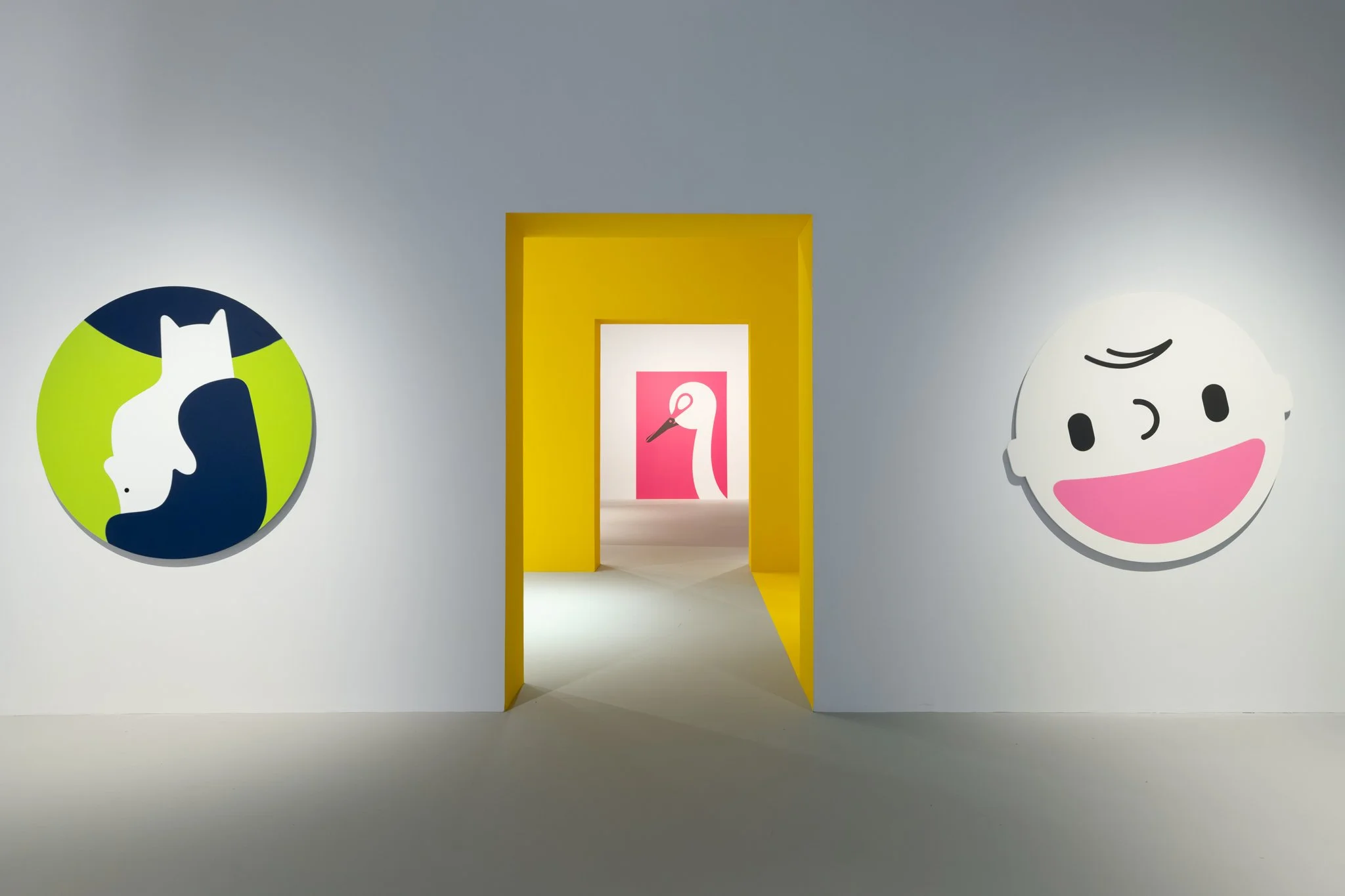
Transitions (2022), a 3 meter high sculpture of his daughters teddy bear in which each figure reveals a completely different character depending on which side you view.
Optimistic and Pessimistic (2018), a flipping illustration made for New York Magazine using the comic-strip character Charlie Brown.
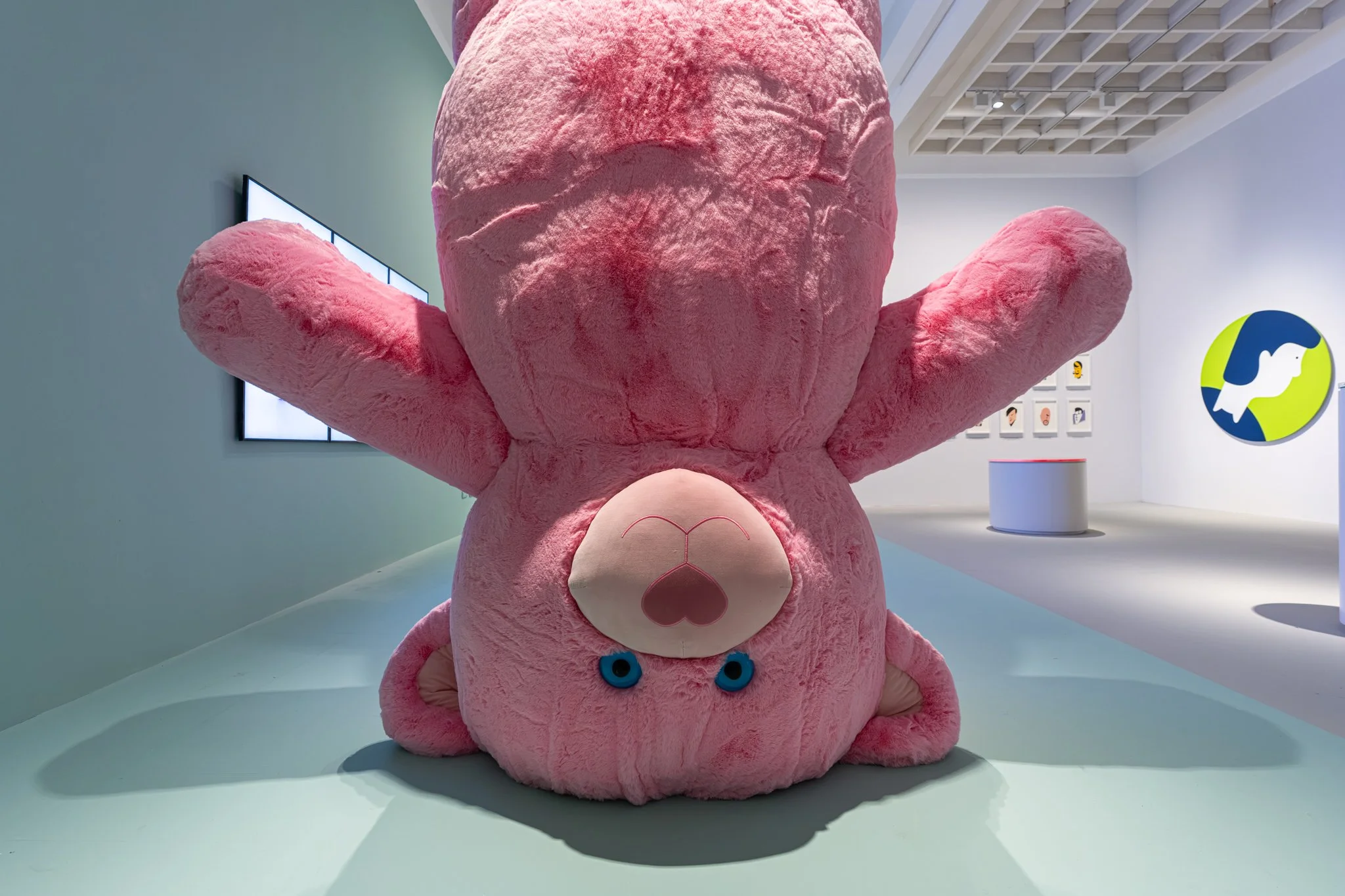
Noma Bar ‘Transitions’ (2022) reverse
Noma Bar ‘Transitions’ (2022) front
Noma Bar ‘Transitions’ (2022)
Noma Bar ‘Tel Aviv Summer’ (2026)
Noma Bar ‘Tel Aviv Summer’ (2026)
Noma Bar ‘Tel Aviv Summer’ (2026)
Noma Bar ‘Tel Aviv Summer’ (2026)
4. Studio
The final room offers a look behind the scenes.
Example works on display:
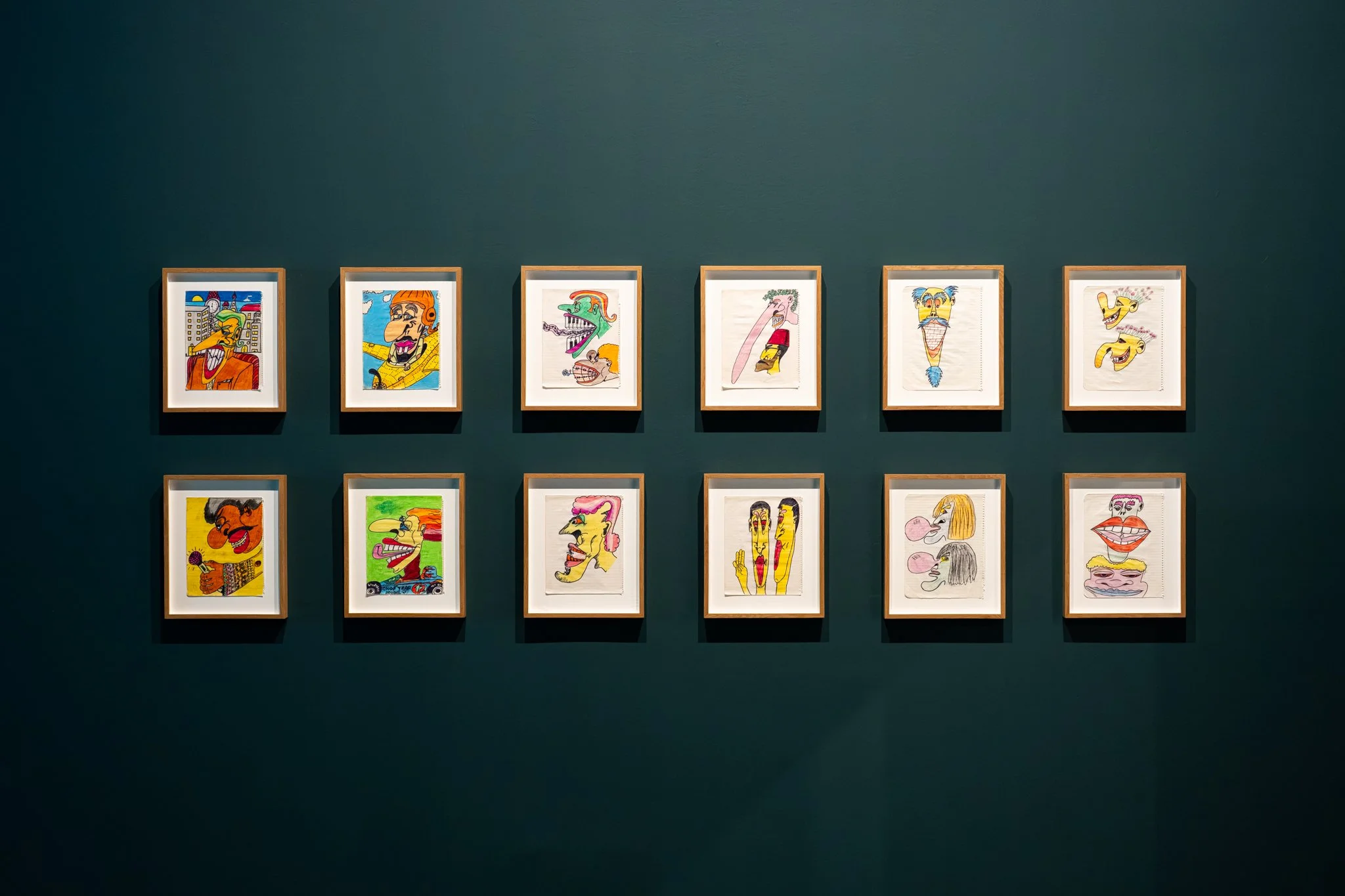
Childhood drawings Noma made at age nine, in 1982
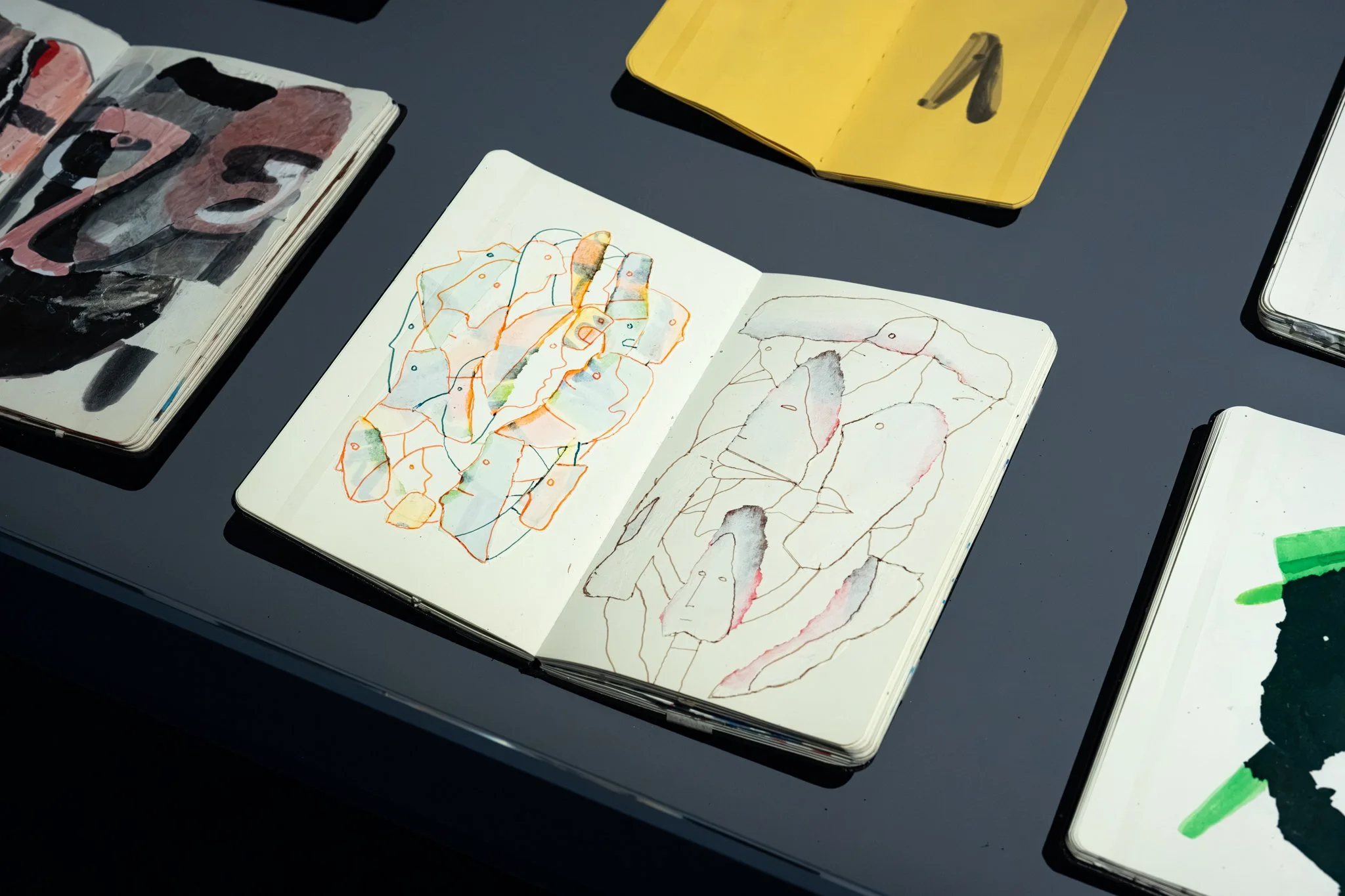
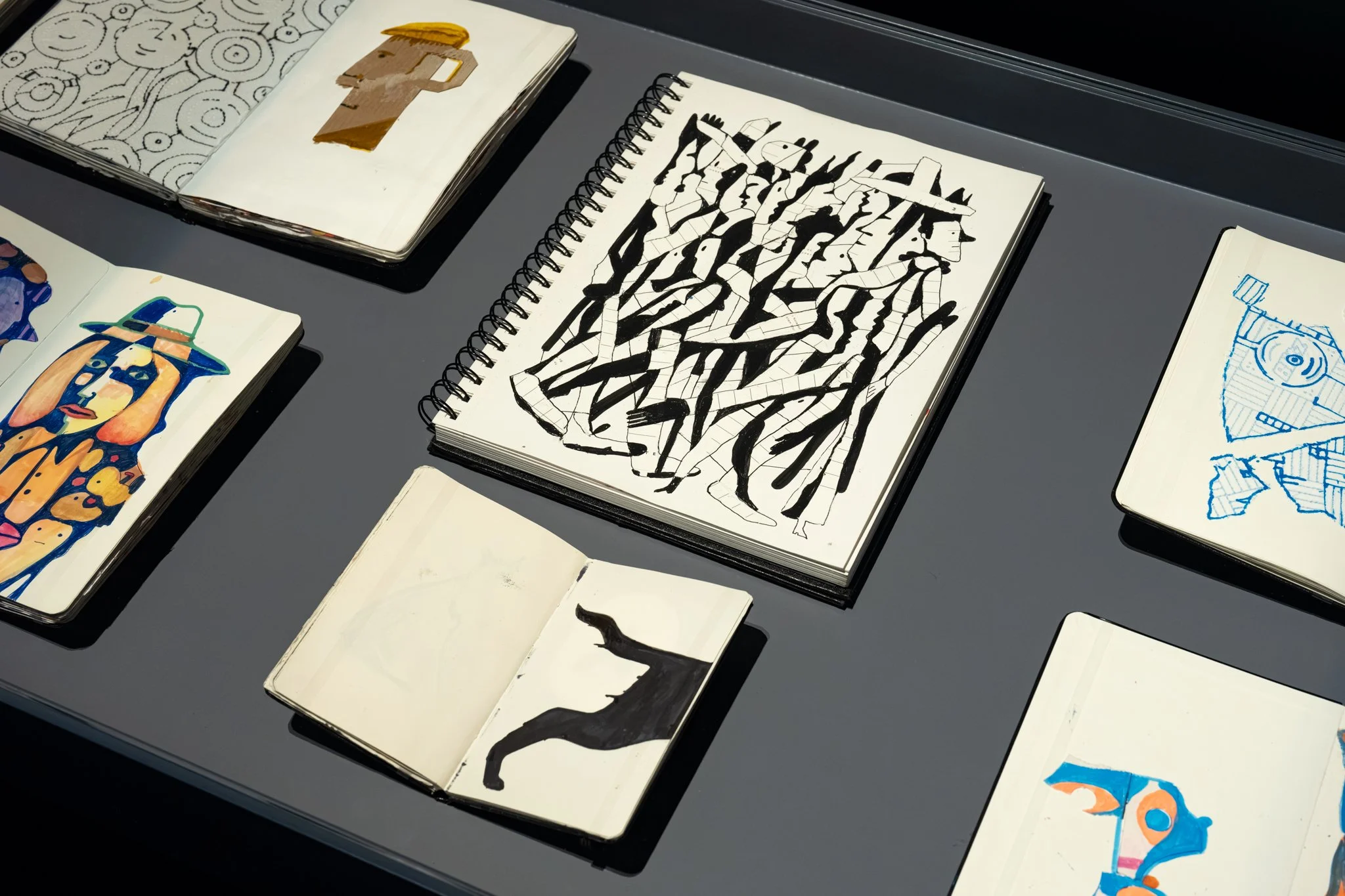
The personal sketchbooks he still fills today on daily walks near his home in London
A short documentary film about Noma and his creative process.
One piece connects several parts of the show at once: Peace (2014), originally created as a newspaper cover for a Middle East peace conference, and rewoven in wool specifically for this exhibition. Depending on how you look at it, the image reads as either a lamb or a wolf, Noma's way of suggesting that two very different things can exist side by side.
A short documentary film about Noma and his creative process.
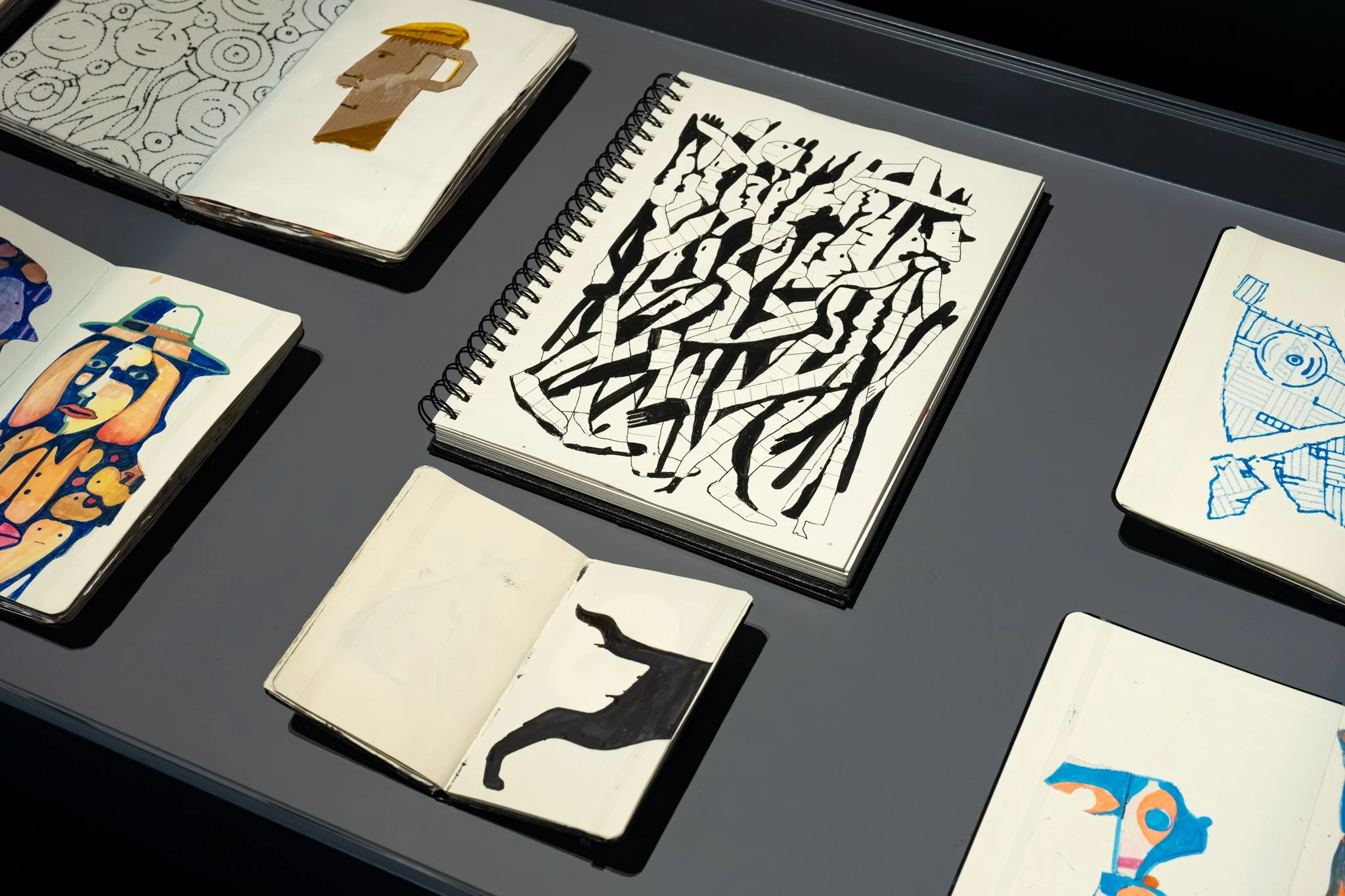
The personal sketchbooks he still fills today on daily walks near his home in London
Childhood drawings Noma made at age nine, in 1982
A Word From the Curator
Curator Yuval Saar has spent years working to establish illustration as a serious museum discipline in Israel.
He previously founded and ran the Tel Aviv-Jaffa Illustration Week, and this exhibition is, by his own account, the largest expression of that effort so far.
Following the opening, Saar shared a personal reflection about the exhibition's early reception:
It took me a while to understand what was so extraordinary about the string of opening events for Noma's exhibition, until it hit me last night at 1:30am, still flooded with adrenaline.
For several days now, I've been seeing something every day that I haven't seen in a very long time: dozens and hundreds of people smiling. Think about that, during this whole rough stretch of recent years, we forgot this feature even existed. Smiles. In abundance. More and more and more.
What a privilege it is to make people smile. To watch them looking at one artwork. And then another. And there's another smile. And colour everywhere. I tried to think of the last time this happened to me, and I couldn't remember.
About the Museum (TAM)
The Tel Aviv Museum of Art, commonly abbreviated as TAM, is Israel's largest and most prominent art museum. It was founded in 1932, before the State of Israel was established, in the former home of Tel Aviv's first mayor, Meir Dizengoff. Its collection spans historic and contemporary art from Israel and abroad, and its major expansion, the Herta and Paul Amir Building, opened in 2011.
TAM has increasingly worked to give illustration the same level of museum attention as painting, sculpture and photography. In 2022, the museum gave a solo exhibition to Israeli illustrator David Polonsky. Noma Bar: Look Again continues that effort, and represents its biggest and most ambitious expression so far.
About Noma Bar
Noma Bar was born in 1973 in Afula, in northern Israel. He studied visual communication at the Bezalel Academy of Art and Design in Jerusalem, graduating in 2000, and moved to London with his wife, Dana, shortly after. He has lived and worked there ever since.
Noma traces his style back to typography classes at Bezalel, where he learned to pay close attention to the empty space around letters rather than the letters themselves. That training shaped his now-famous visual language: flat colour, minimal detail, and the clever use of negative space to conceal a second image inside the first. Over more than two decades, this approach has made him one of the most widely recognised illustrators working today. His influences range from design figures such as Paul Rand and Alan Fletcher to entertainers like Charlie Chaplin, whom he has cited as an inspiration for telling a story without needing words.
This exhibition at TAM is widely regarded as a major recognition of that career, and reinforces his standing among the most influential working illustrators internationally.
For more on his work or to get in touch, see dutchuncle.co.uk/noma-bar.
Sponsors
Exhibition sponsor: Coca-Cola Israel
"Tel Aviv Summer" (2026) work sponsored by: Tambour
"Social Mirror" (2026) work sponsored by: SMART (the Mercedes-Benz/Geely electric vehicle brand), marketed in Israel by Colmobil
Exhibition Fund support: Doron and Marianne Livnat; The Herta and Paul Amir Foundation; The Kirsh Foundation; Charles and Lynn Schusterman Family Philanthropies – Israel
Additional support: Friends of the Tel Aviv Museum of Art in Israel; Young Friends of the Tel Aviv Museum of Art
Special thanks: Colmobil; Helen Cowley and Dan Chrichlow (Dutch Uncle); Dana Bar
Full List of Credits (from the Exhibition Catalogue)
Museum Leadership
CEO: Tania Cohen-Uzielli
Chief Curator: Mira Lapidot
Exhibition Team
Curator: Yuval Saar
Assistant Curator: Efrat Levy
Exhibition Design: Ariel Armoni
Graphic Concept and Design: Eyal Zakin Studio: Tamar Pliner, Saar Dauber
Noma Bar Studio Management and Creative: Dana Bar
Text Editing and English Translation: Daria Kassovsky
Arabic Translation: Jinan Bassul
3D Works and Display Elements: Token Studio for Design
Printing and Framing: Ra Photography Workshop; Ofek Print; Gila Weizman
Films: Dor Even Chen (portrait of Noma Bar); Luke Kirwan (Transitions); Yoav Betzalely (sketchbooks)
Graphic Production: Ofir Israeli, Ktzat Acheret
Exhibition and Collections Management Division
Head of Division: Ronili Lustig-Steinmetz
Exhibition Installation Manager: Maayan Cohen-Dvik
Assistant to Division Head and Project Coordinator: Shiri Rabinowitz
Writing and Editing: Oren Hallel, Daniel Lev, Yona Gilat, Shai Zelek
Shipping Coordinator: Barbara Ordentlich
Registration: Hadar Oren-Betzalel, Shoshana Frenkel
Conservation: Dr. Assaf Oron, Neil McManus, Kamila Ozbayev, Roni Ben-Ami, Eran Bar-Nachum, Jersond Greenspan, Lihi Levy, Shira Landau, Leah Kriaf, Sara Reichert
Lighting and Electrical: Lior Gabbay, Alex Yakimenko, Assaf Menachem, Israel Kobobsky, Artyom Nikiforov
Copyright and Visual Resources Management: Yafa Goldfinger
Marketing and Advertising: Tal Gur-Nozhik, Aya Garby-Golan, Roni Tarbelsi
Public Relations: Hadas Shapira
Head of Public Relations Department: Shira Yaavetz Apel
Catalogue Team
Writing and Editing: Yuval Saar, Efrat Levy
Design and Production: Eyal Zakin Studio: Tamar Pliner, Saar Dauber
Text Editing and English Translation: Daria Kassovsky
Printing: E.R. Printing Ltd., Tel Aviv
Photography: Elad Sarig, and additional images courtesy of Nevit Dilmen (licensed under CC BY-SA 3.0), IBM Corporation, Chris Brook, Esquire/David McKendrick, Time Out London, The Telegraph, Wallpaper*, The Coca-Cola Company, Francis Ware, Luke Kirwan, and Dor Even Chen
All images courtesy of Noma Bar, unless otherwise noted
Catalogue Details
Catalogue number: 4/2026
ISBN: 978-965-539-269-2
© 2026, Tel Aviv Museum of Art
Special Thanks
Colmobil
Helen Cowley and Dan Chrichlow (Dutch Uncle)
Dana Bar
Press Coverage
The exhibition is already gaining attention in both Israeli and international press:
Globes (Israeli business daily): "The second look of Noma Bar: an exhibition that's an explosion of colour, humour and wit"
Mokasini: "'From the Other Side': Noma Bar comes home, to his first solo exhibition in Israel"
Portfolio Magazine: "Tel Aviv Museum 2026: Tom Wesselmann, Noma Bar, Hila Lulu Lin, and 120 years of Bezalel"
Goodesign: "The Tel Aviv Museum presents its 2026 exhibition programme"
Fokus Jerusalem (Germany): "When one picture suddenly becomes two"