Marc Majewski Illustrates La Maison for My Little Box, Paris 2026 Advent Calendar
Illustrator Marc Majewski has created the artwork for Le Calendrier Illustré, the 2026 Advent calendar from French beauty and lifestyle brand My Little Box.
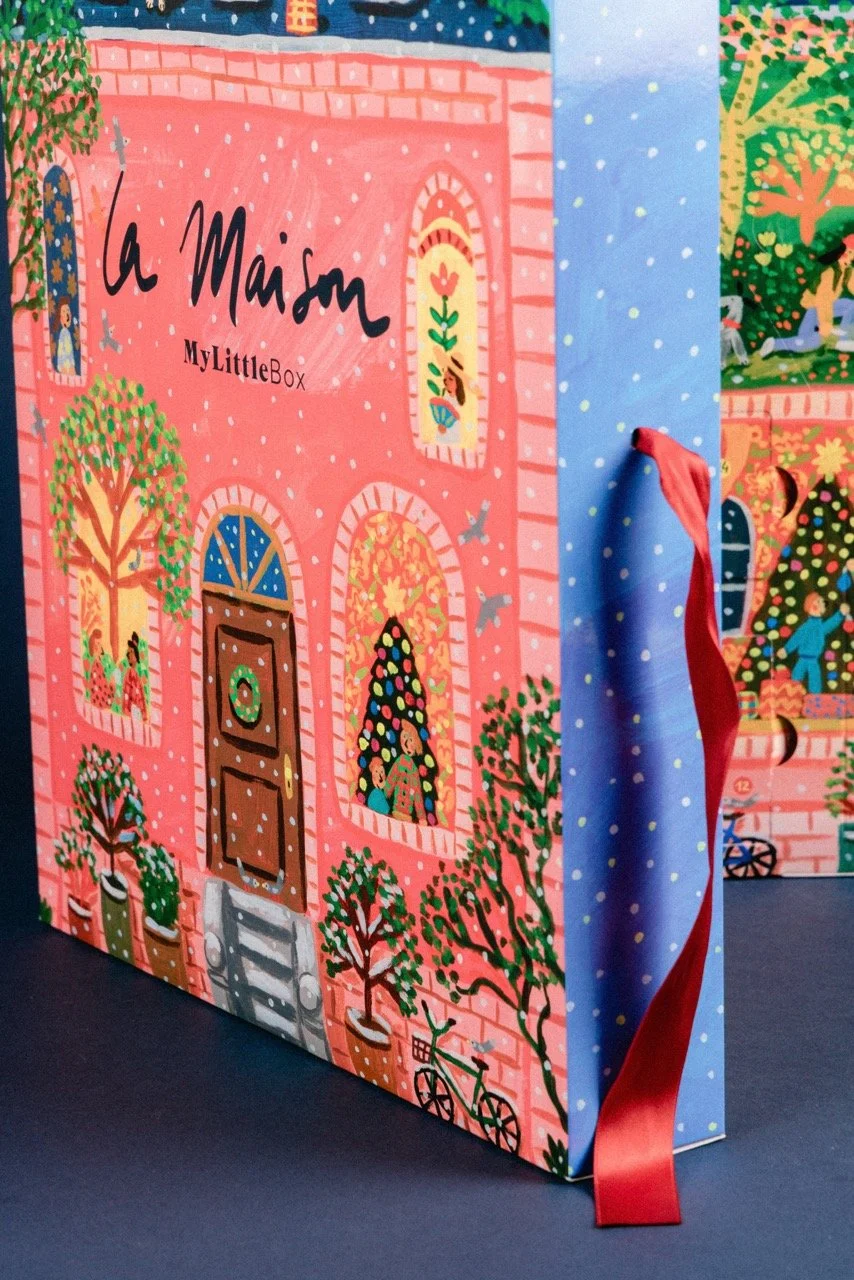
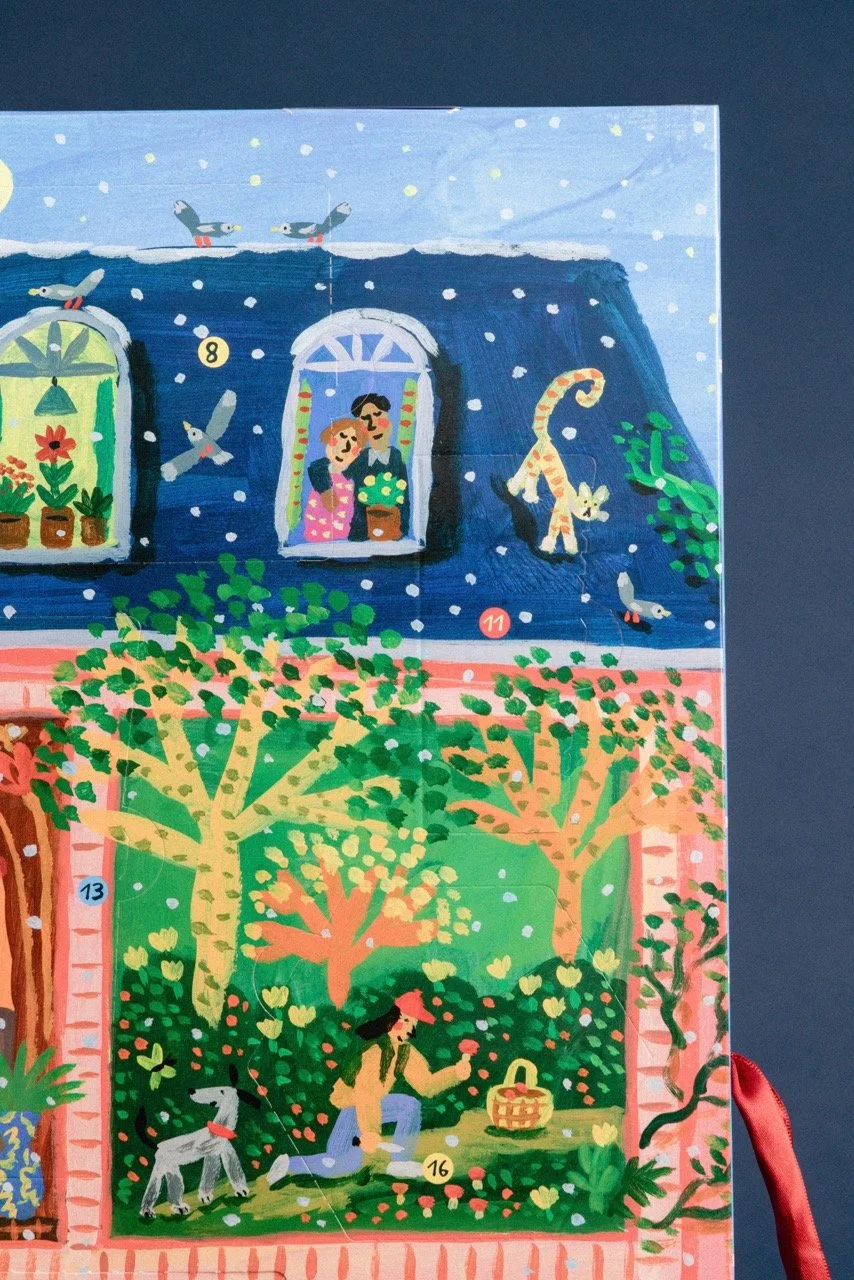
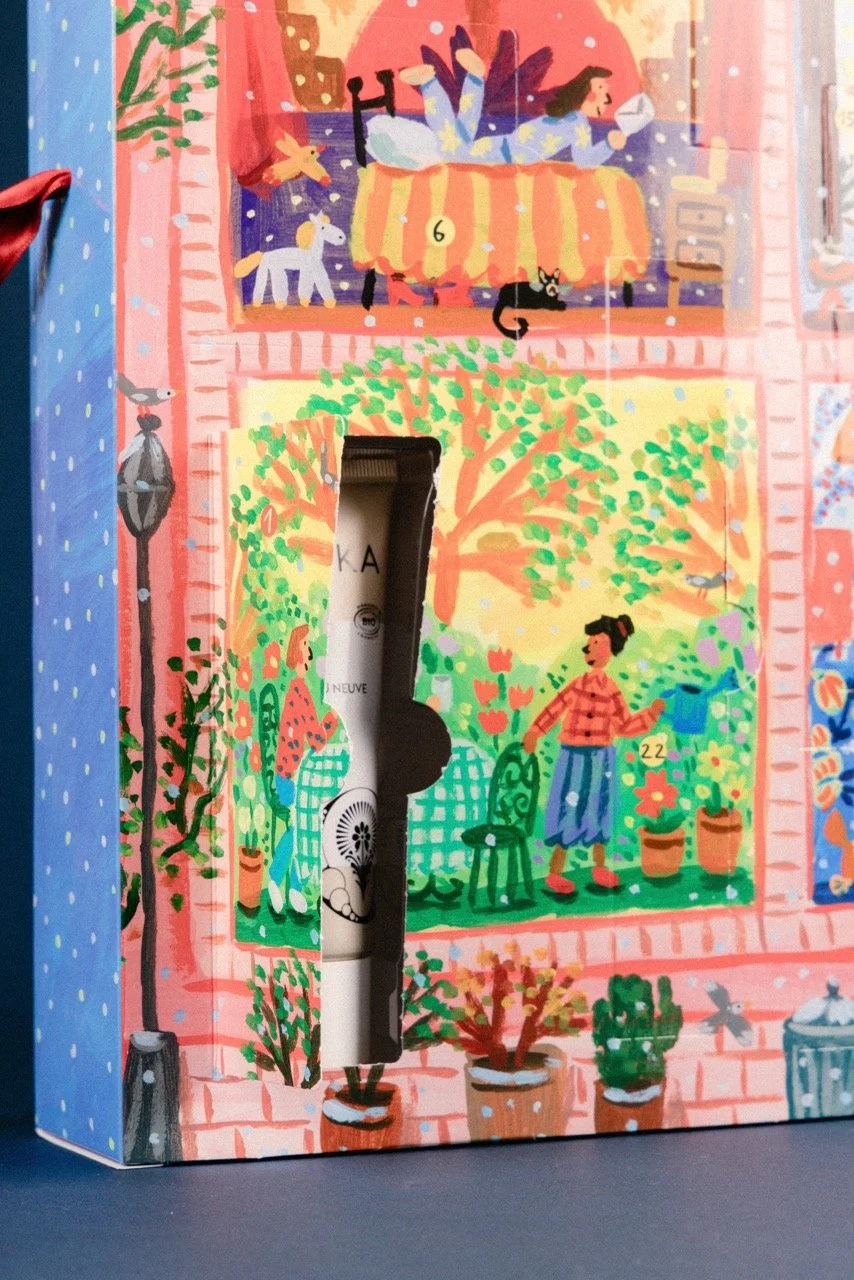
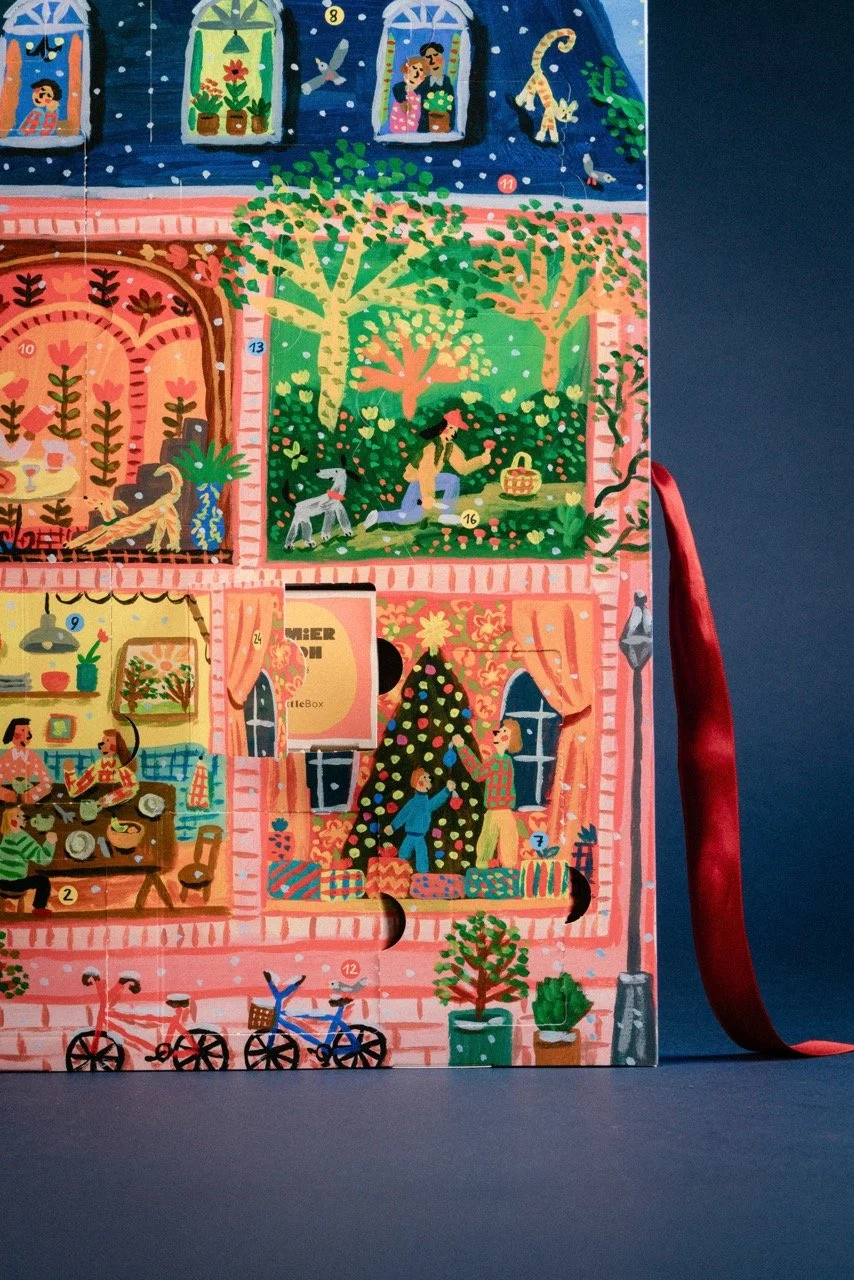
Marc’s illustration turns the calendar into a fully imagined Christmas scene: a place to explore over 24 days, with small visual stories and details hidden among its doors.
Containing 12 beauty products and 12 lifestyle accessories, the My Little Box calendar brings together items from brands including Nuxe, Patyka, Polaar and Le Rouge Français.
Yet the illustration is central to its appeal. It gives the product a sense of occasion before its first door is opened and a life after the final one.
https://www.mylittlebox.fr/shop/oneshot/calendrier-illustre-mlbfr
Why is illustration so powerful for Advent calendar packaging?
An Advent calendar is unusual packaging. It is not opened once and discarded; it becomes part of someone’s home for nearly a month. It needs to hold attention, communicate a festive atmosphere and make repeated interaction feel rewarding.
Illustration is particularly suited to that task because it can do several things at once:
Establish a distinct Christmas world and emotional tone.
Create a sense of scale, place and story around a brand.
Invite customers to look closely, finding fresh details over time.
Turn a product package into a keepsake, display object or part of seasonal decoration.
Give 24 separate openings a shared visual identity.
The best illustrated Advent calendars feel less like a carton of products and more like a miniature stage set, a doll’s house or the cover of a storybook.
Their doors become part of the composition: windows, drawers, shopfronts or hidden rooms, each opening advancing the experience.
Marc Majewski’s La Maison My Little Box
For My Little Box, Marc has designed a festive illustrated house full of the atmosphere suggested by the calendar’s title, La Maison My Little Box. The work draws on the magic of Christmas and the feeling of childhood anticipation: a place where every corner seems likely to contain a small secret.
Marc is known for paint-and-ink imagery with broad, expressive marks, strong colour and an instinct for creating worlds that feel lived in. His picture-book practice—including Parks and Butterfly Child—is especially relevant here. A successful Advent calendar has to work like an image and like an environment. It needs a clear first impression from across a room, but also enough detail to sustain close looking day after day.
That narrative quality makes Marc’s approach a natural fit. The illustration does not merely place Christmas motifs around numbered doors. It gives the beauty calendar a setting, a mood and an invitation to participate in its world.
Advent calendars as collectible brand worlds
Luxury beauty Advent calendars have increasingly become commissioned pieces of seasonal packaging design. The products inside remain important, but the outer object is also expected to feel giftable, photographable and worth keeping.
Dior has repeatedly used artist-led Christmas worlds for its Le 30 Montaigne Advent calendars. Its 2023 edition was designed with Italian artist Pietro Ruffo, whose celestial and architectural imagery reimagined Dior’s Parisian universe. The calendar functions like an illustrated façade: a theatrical exterior whose windows reveal individual gifts.
At Fenwick, the department store’s Beauty Advent Calendar has featured work by artist-in-residence Julie Verhoeven. Her lively, fashion-informed illustration makes the calendar feel tied to Fenwick’s cultural identity rather than simply to its product selection.
Sisley Paris has also used illustration to create highly collectable beauty calendars: British artist Fee Greening illustrated its 2024 edition, followed by Luke Edward Hall in 2025. Both approaches demonstrate how a distinctive illustrator can move a calendar away from generic festive luxury and towards a more authored, recognisable visual world.
Earlier examples include La Compagnie de Provence, whose beauty Advent calendar was illustrated by Louise de Laville. The point is not that every calendar must look the same, but that an illustrator can give a recurring seasonal product a personality customers remember from one year to the next.
What makes a good illustrated Advent calendar?
The strongest calendars balance three kinds of design.
The big picture must work immediately. Whether it is a Parisian boutique, a magical house or a winter landscape, the image needs a clear idea and a strong silhouette.
The close-up reward is just as important. Advent calendars are handled daily, so tiny characters, textures, signs, objects and hidden jokes create value through repeat viewing.
The opening ritual has to feel integrated. The numbered doors should belong to the illustration rather than interrupt it. When the packaging, typography and mechanism are thoughtfully joined, opening a door becomes a small act within the story.
Marc’s My Little Box calendar operates in precisely this territory. It makes the act of counting down to Christmas tactile and visual, using illustration to turn a beauty-and-lifestyle assortment into a scene people can inhabit for a little while.
Illustration beyond the box
For brands, commissioning an illustrator for seasonal packaging is a way to create a campaign asset with much broader potential. A single visual world can extend into social content, shop windows, gifting, animation, printed inserts, editorial storytelling and collectible products. The work can feel both commercial and genuinely authored when the artist’s visual language is allowed to shape the project.
For customers, that distinction is easy to sense. An illustrated Advent calendar is not simply a more decorative box. It is a gift before the gifts: a Christmas image that remains visible throughout December, and one that can retain its charm long after the final door has been opened.