The Art of the Elegant Outlaw: Javi Aznarez and the Lord of Barmbeck
Discover the cinematic storytelling of Javi Aznarez. Known for his world-building in Wes Anderson’s The French Dispatch, Javi brings his signature Ligne Claire style to the legendary tale of the 'Lord of Barmbeck' for Stern Crime.
View the full story series below and explore Javi Aznarez’s full portfolio here.
Lord of Barmbeck illustrated by Javi Aznarez
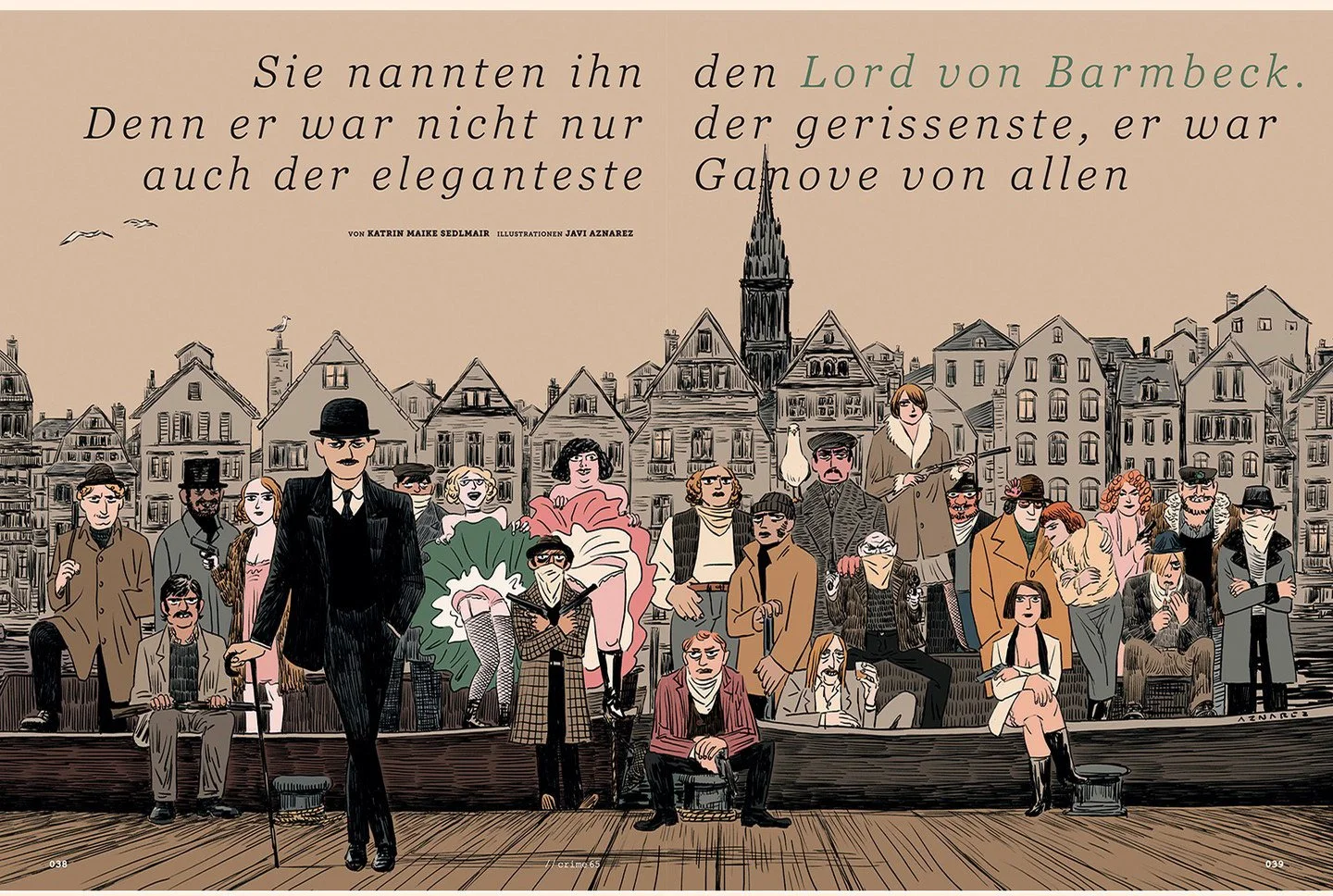
There is a specific kind of magnetism reserved for the "Gentleman Thief." In the smoke-filled taverns and rainy ports of 1920s Hamburg, that magnetism belonged to one man: Julius Adolf Petersen, known to history as the Lord of Barmbeck.
When Stern Crime commissioned Javi Aznarez to illustrate Petersen’s life, they weren’t just asking for a historical record. They were asking for an interrogation of a legend.
What Javi delivered is a masterclass in narrative tension—a series of illustrations that serve as windows into the life of a man who was as much a performance artist as he was a burglar.
The Robin Hood of Hamburg
To understand the art, you have to understand the man. Petersen wasn't your average street thug. Between 1882 and 1933, he built a reputation as a German folk hero. He was the thief who "stole from the rich," famously avoiding physical violence and becoming a beloved local figure in the Barmbek district.
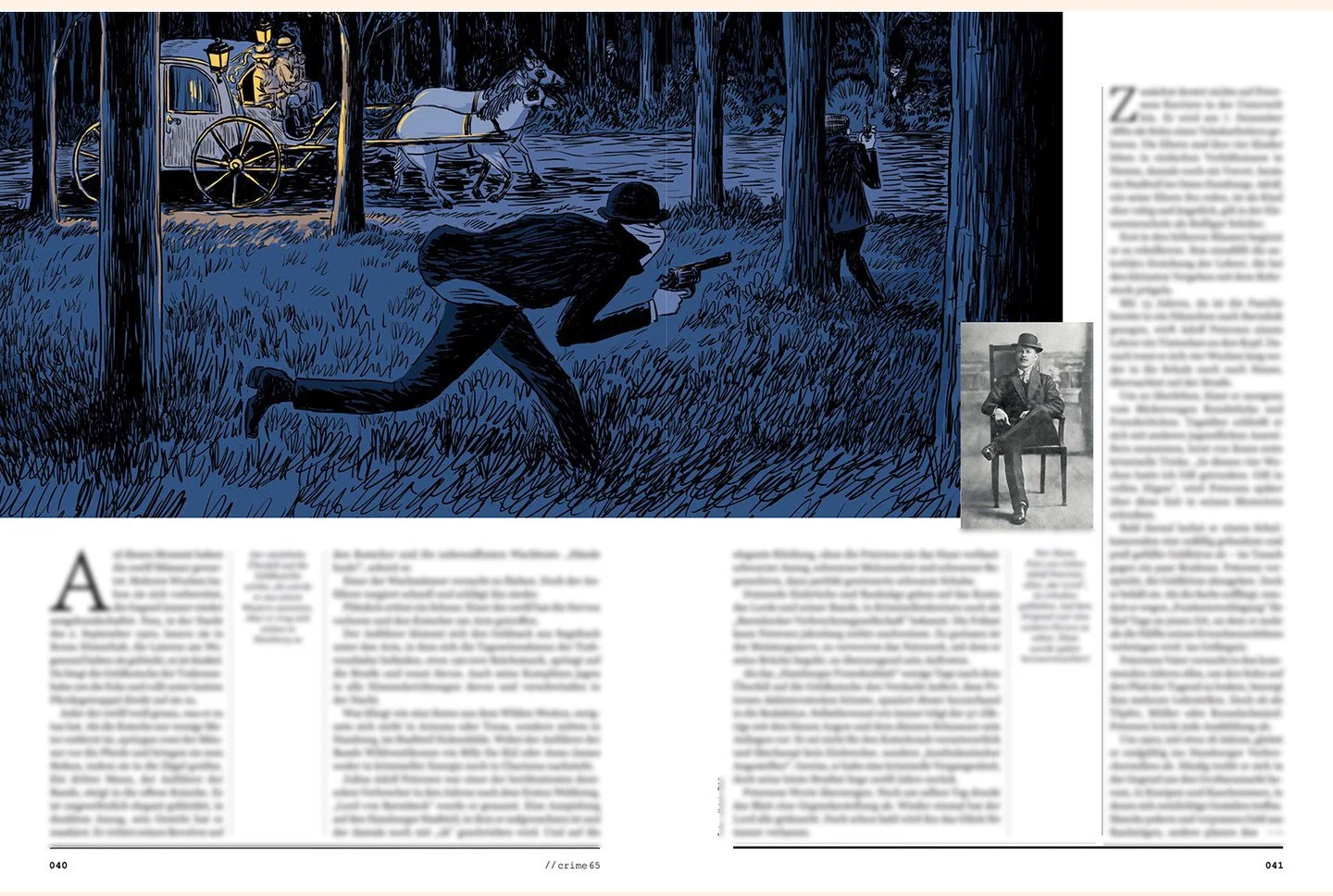
His life was a cinematic cycle of daring heists—most famously the stagecoach robberies captured in Javi's illustrations—and even more daring prison escapes. His myth was so potent it inspired Ottokar Runze’s 1974 film Der Lord von Barmbeck, (https://www.youtube.com/watch?v=9AL6ASEr0aE) which won the German Film Award for Best Feature.
But as Javi’s work suggests, there is a thin line between a folk hero and a man blinded by his own brand.
Javi’s Angle: The Vanity of the Visible
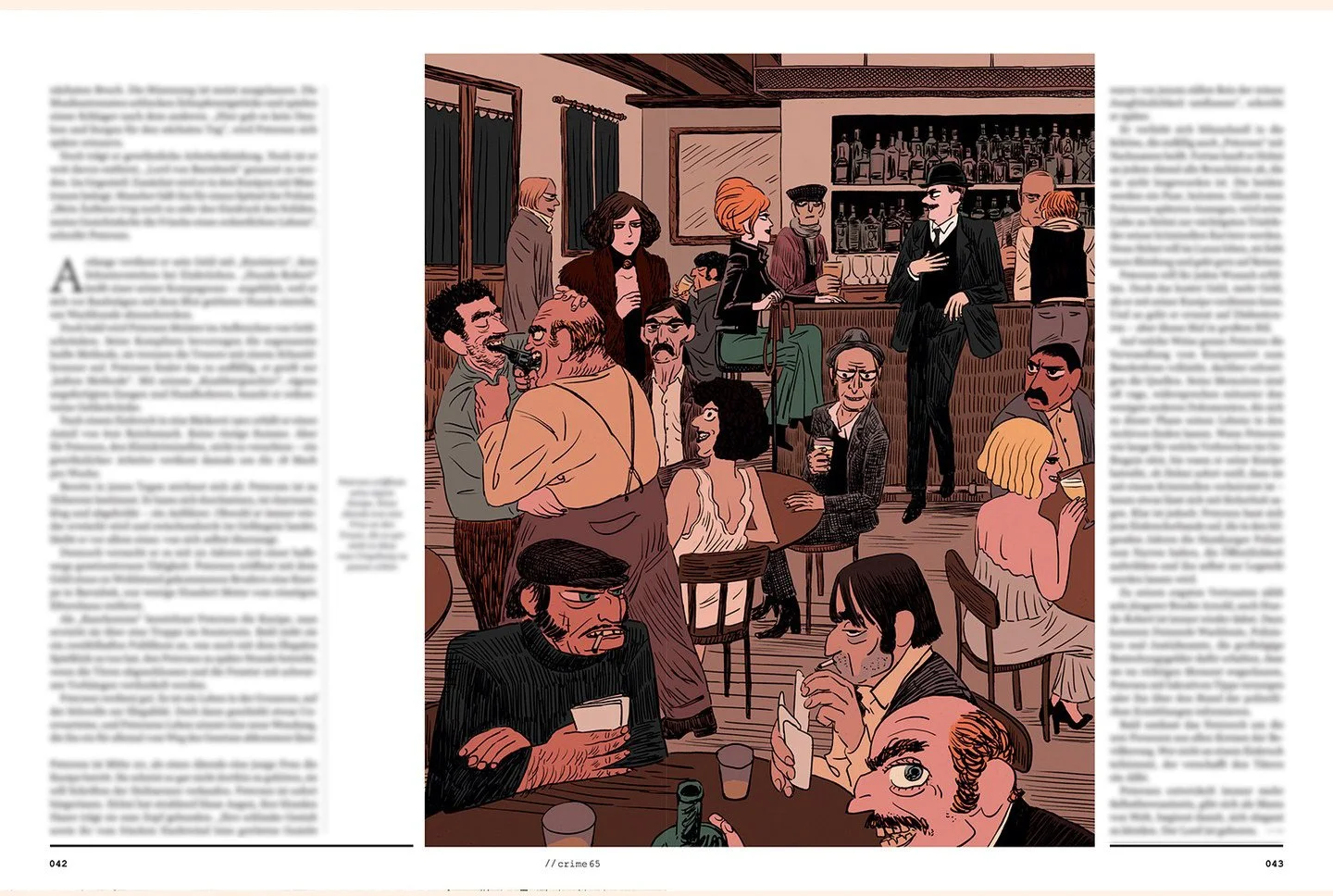
While history remembers Petersen for his cleverness, Javi looks at the "Lord" through a more skeptical, modern lens. In the illustrations—ranging from a chaotic heist to intimate scenes with the Lord’s many lovers—Petersen is always the best-dressed man in the room.
Javi captures the fundamental irony of the Lord’s career:
"Thinking about going to robberies dressed so elegantly, it doesn't seem like a very good strategy to me to draw attention to yourself in that way. He must not have been as intelligent as they say."
This is the central hook of the series. Javi isn't just drawing a cool guy in a suit; he’s drawing a man whose ego was his greatest tactical error. By using a clean, precise style, Javi highlights the absurdity of a criminal who refuses to blend in. The Lord of Barmbeck didn't want to be invisible; he wanted to be seen.
The Civilized Outlaw: Bonnie and Clyde vs. The Lord
When we think of "outlaw folk heroes," our minds often go straight to Bonnie and Clyde. But while they share the same anti-establishment DNA, the Lord of Barmbeck operated in a different universe of crime.
Unlike the raw, dusty violence of the American duo, Petersen’s story is about Style as Strategy. Where Bonnie and Clyde were famous for shootouts and a trail of blood, the "Lord" prided himself on a code of non-violence. He was an urban aristocrat, a pub owner, and a socialite. Bonnie and Clyde were running for their lives; the Lord of Barmbeck was running for the applause.
Javi is a master of the Ligne Claire (clear line) style, but here he evolves it. He takes the clarity of Hergé (of Tintin fame) and marries it to the heavy shadows of film noir.
The Final Curtain
The tragedy of the Lord of Barmbeck is that the performance eventually had to end. After a lifetime of escapes, Petersen was finally caught and handed a long sentence. In 1933, the "Lord" took his own life in prison—a stark, lonely end for a man who spent his life in the spotlight.
Javi’s work for Stern serves as a poignant coda to that life. It reminds us that while the "Gentleman Thief" is a beautiful myth to draw, it’s a dangerous one to live. Through Javi’s eyes, we don't just see a criminal; we see the cost of a curated identity.
In the world of true crime, the most dangerous thing you can wear isn't a gun—it’s a spotlight.