Klaus Kremmerz: Illustrating the Art-World Novel —Six Books Selected by Fiona Duncan
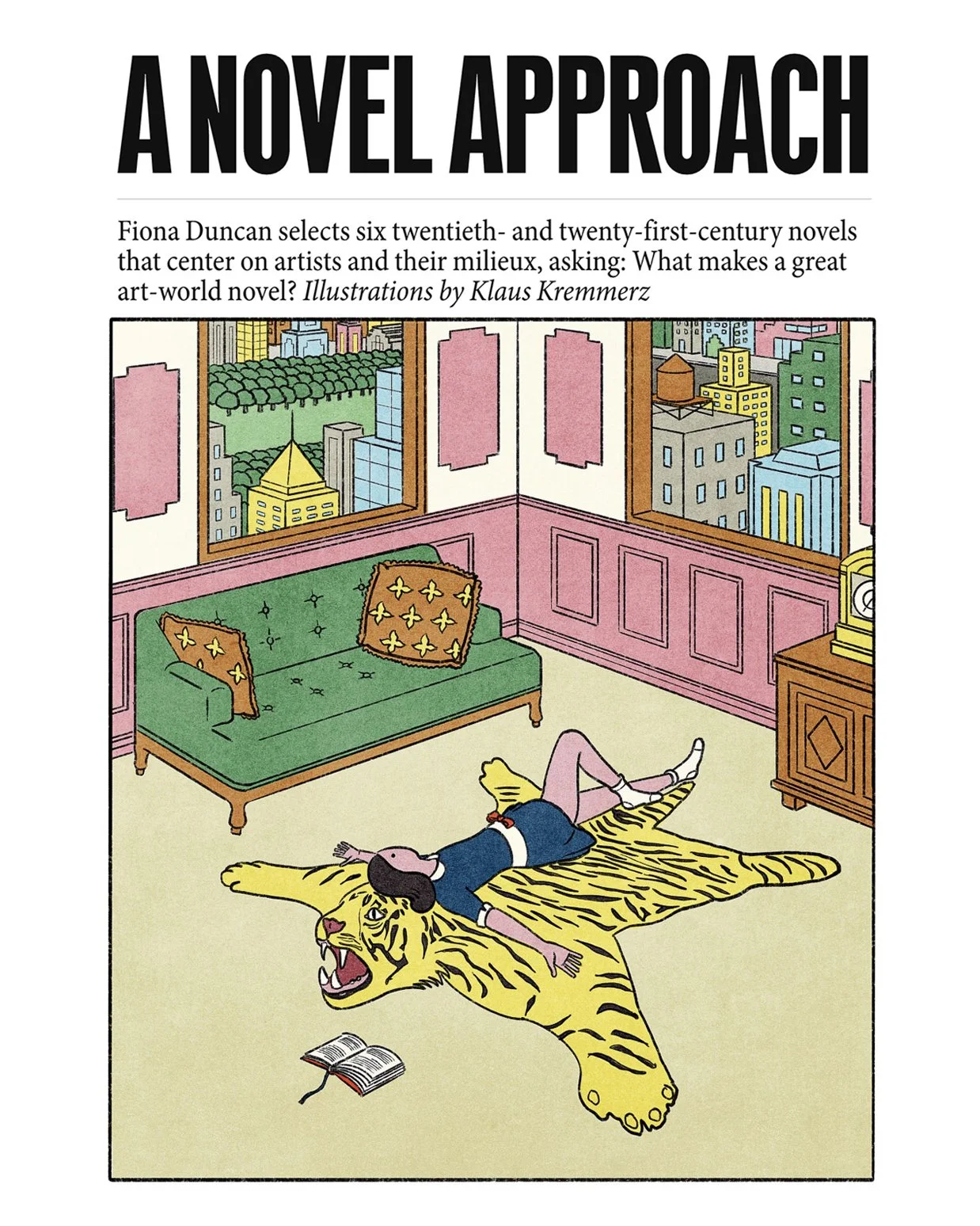
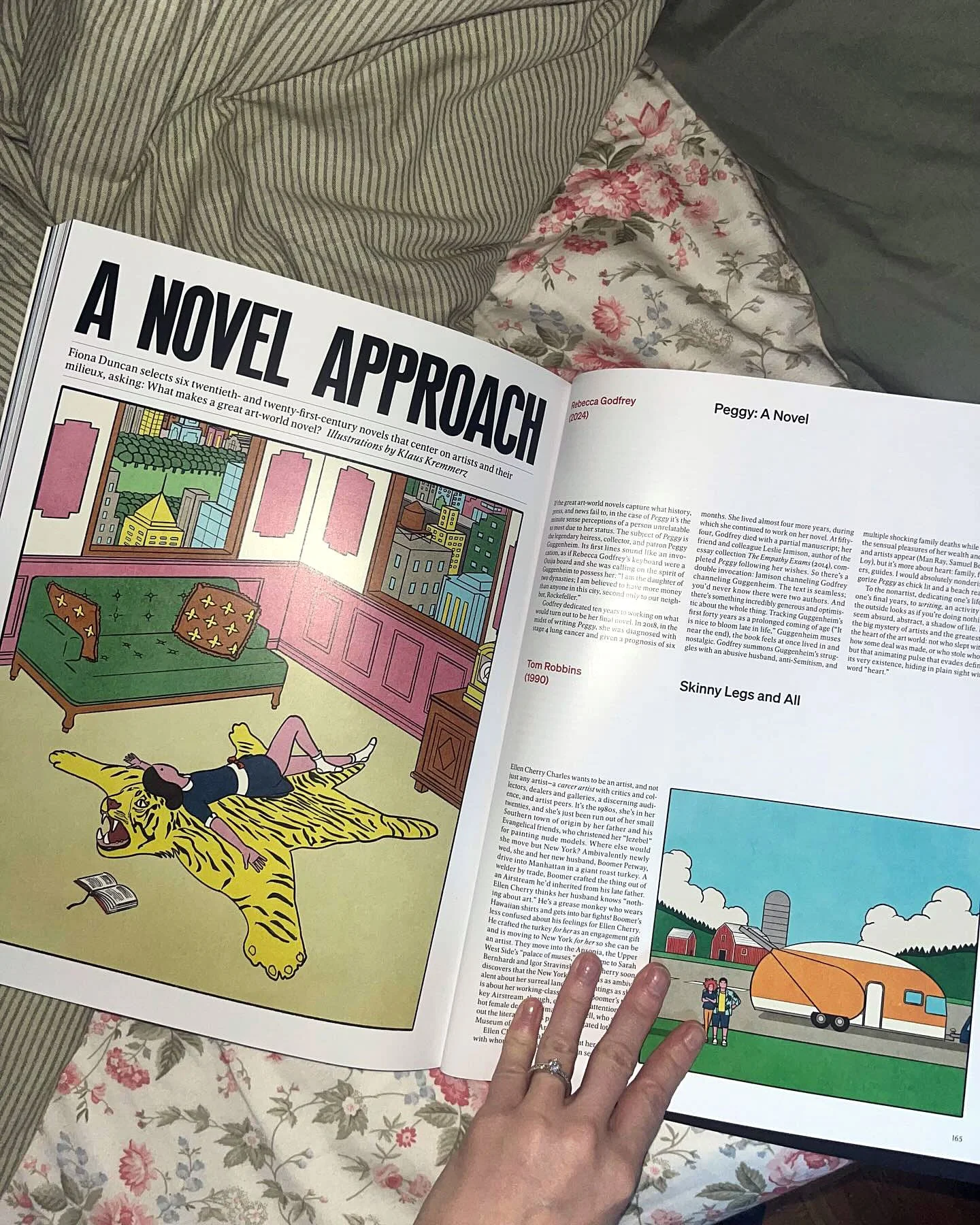
In the latest issue of Gagosian Quarterly, author Fiona Duncan curates A Novel Approach, a focused reading list of six novels that examine artists and the social, emotional, and institutional structures surrounding them.
The project pairs Duncan’s literary criticism with illustrations by Klaus Kremmerz, forming a collaboration that positions fiction as a serious tool for understanding how the art world operates from the inside.
The novels span seventy years and multiple tones.
Together, Fiona’s selection and Klaus’ visual contribution frame the art-world novel as a distinct literary category—one concerned less with spectacle than with perception, power, and the lived experience of making art.
Novels about the art world…
Peggy: A Novel (2024) by Rebecca Godfrey reconstructs the early life of Peggy Guggenheim through interior monologue and memory, prioritising emotional development over historical myth. The book treats collecting and patronage as deeply personal acts, shaped by family trauma, exile, and late self-realisation.
Skinny Legs and All (1990) by Tom Robbins approaches the New York art world through satire and surrealism, following an aspiring painter whose ambitions collide with class tension, religion, and political spectacle. The novel exaggerates art-world absurdities while remaining attentive to genuine creative longing.
In Cigarettes (1987), Harry Mathews charts intergenerational relationships shaped by art, money, and desire. Set between the 1930s and 1960s, the novel treats artworks as social currency, revealing how reputation and intimacy circulate alongside capital.
The Wicked Pavilion (1954) by Dawn Powell centres on a café frequented by artists, critics, and aspirants, exposing the fragile economies of attention and status that govern creative communities. Missed opportunities and social performance drive the narrative.
Siri Hustvedt’s The Blazing World (2014) stages an experiment in authorship as a woman artist exhibits work through male proxies, testing how gender bias shapes critical reception and institutional validation.
Finally, Lee and Elaine (2002) by Ann Rower blends biography and autofiction to examine how women artists are remembered, misread, and projected upon, using Lee Krasner and Elaine de Kooning as focal points.