Musée d’Orsay x Kiblind Atelier: Past Masters, Contemporary Illustration Voices
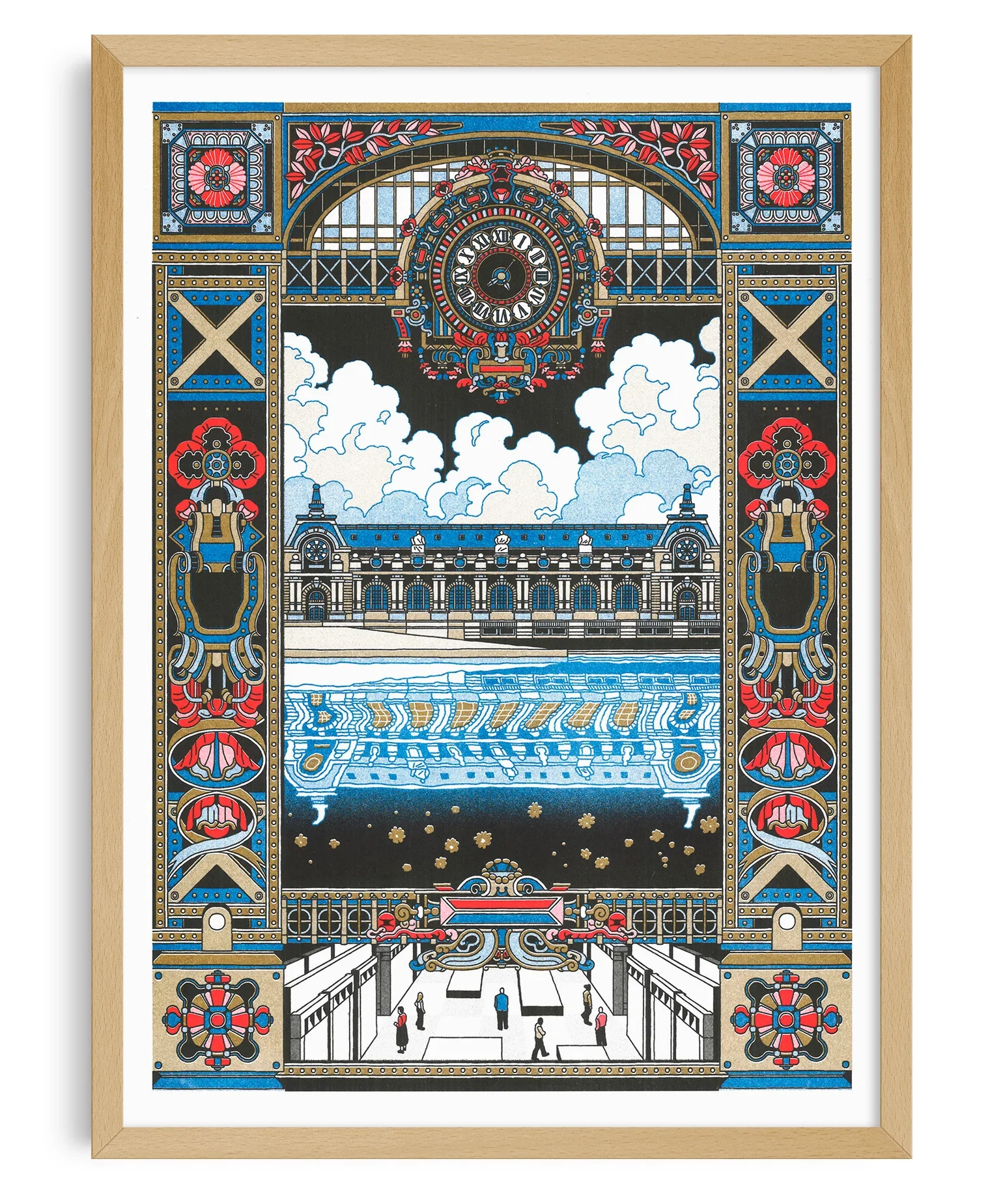
Jisu Choi - Musee D’Orsay
The Musée d’Orsay has partnered with Kiblind Atelier on a special poster collection that bridges the 19th and 21st centuries.
Produced for the exhibition L’art est dans la rue, the series asks six contemporary illustrators to revisit canonical works from the museum’s holdings, as well as the museum’s own architecture.
The results, printed in risography, highlight how visual languages evolve across time while keeping the central question of representation alive.
Each illustrator was paired with a single masterpiece:
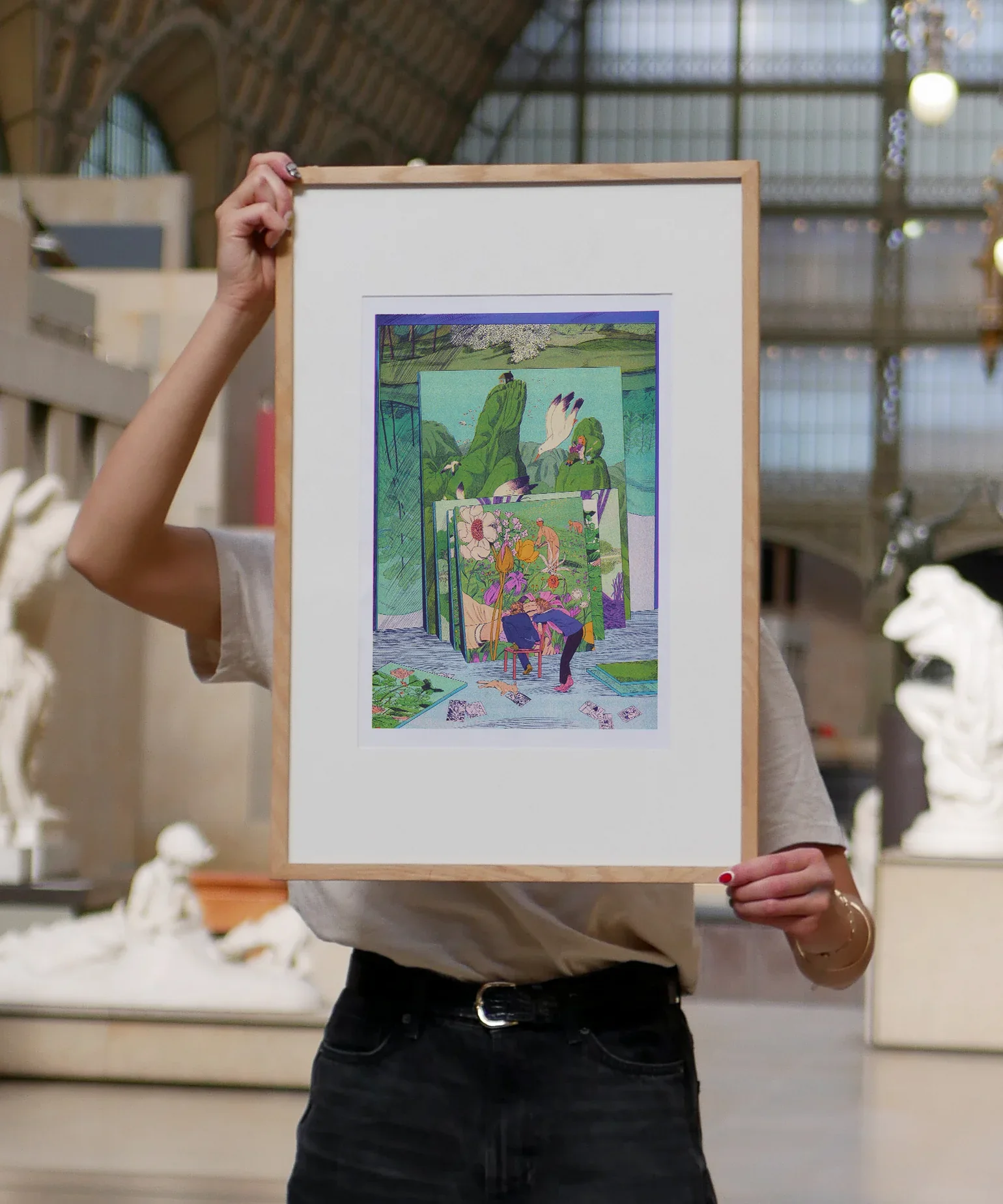
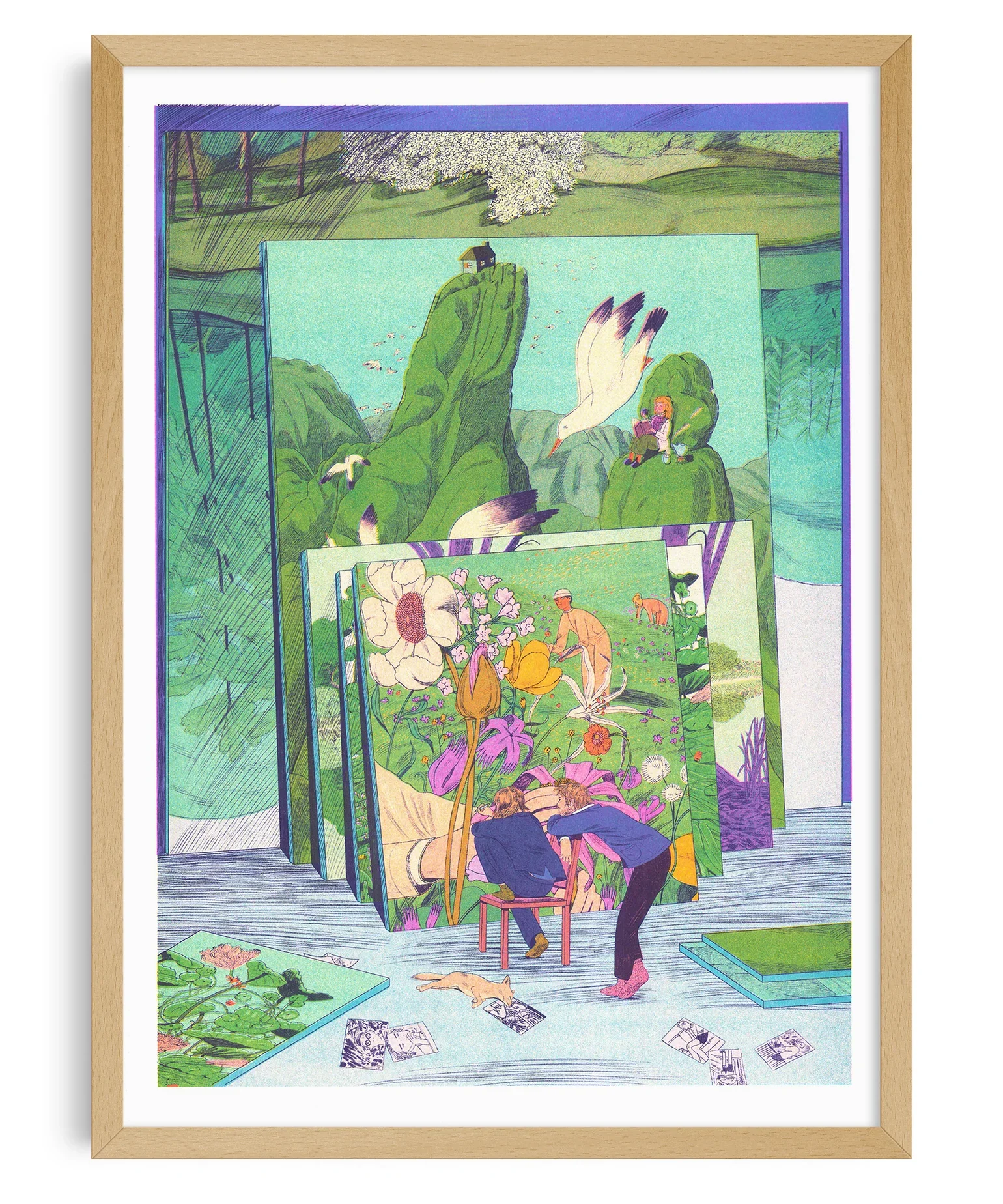
Karlotta Freier re-interpreted Gustave Courbet’s The Artist’s Studio (1854–55), a monumental tableau exploring the act of creation itself. Freier’s pared-down forms and direct linework capture both intimacy and scale.

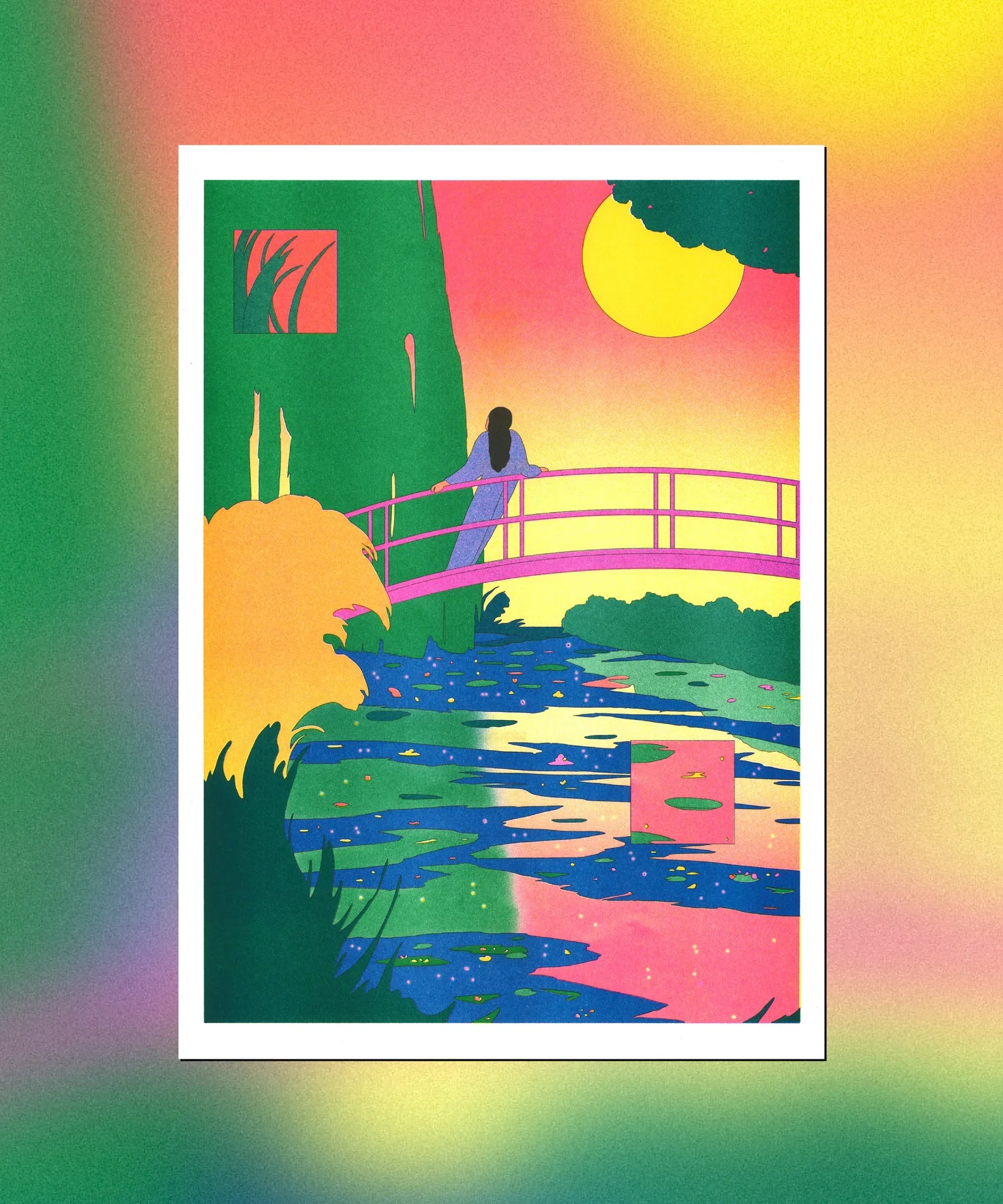
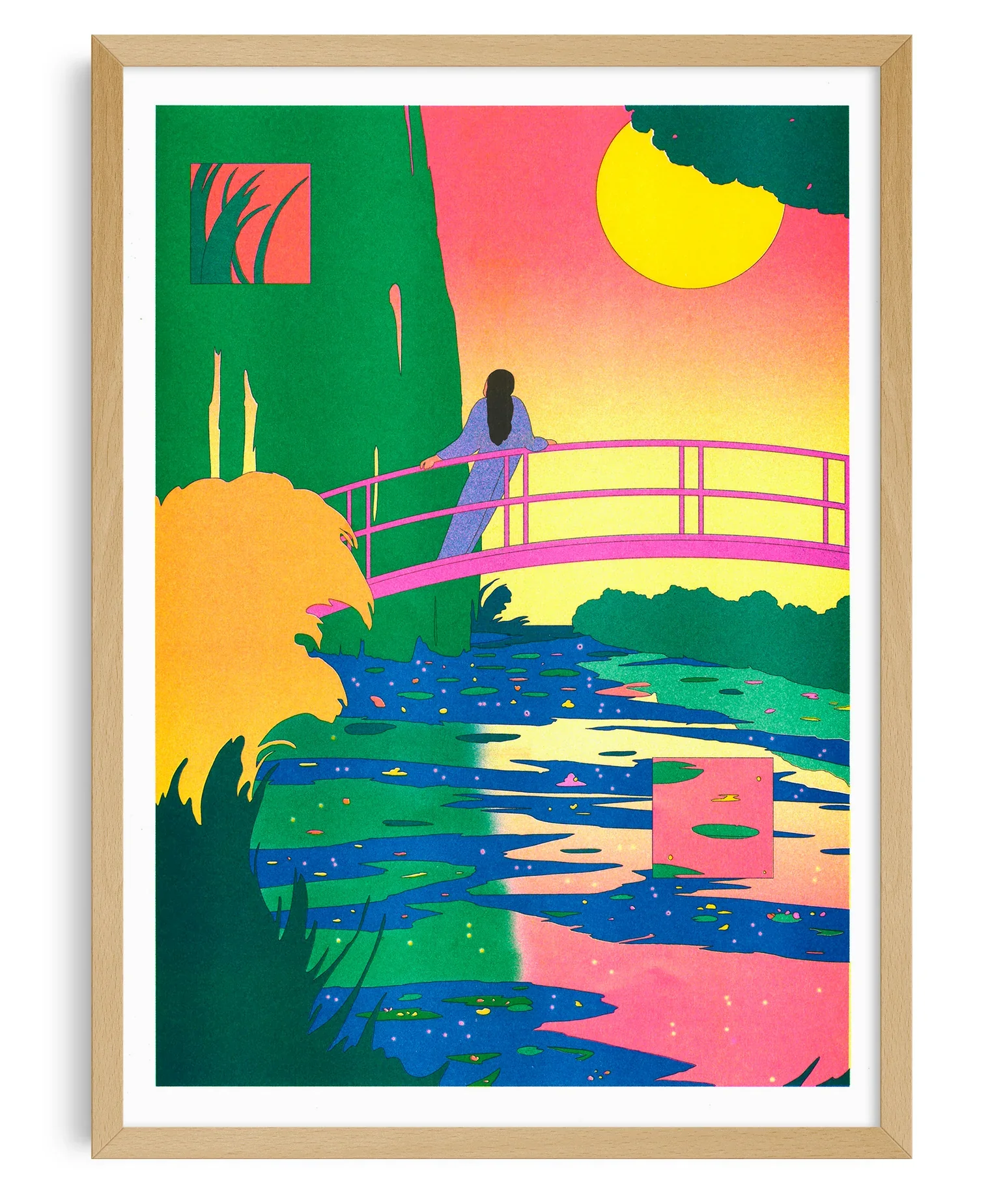
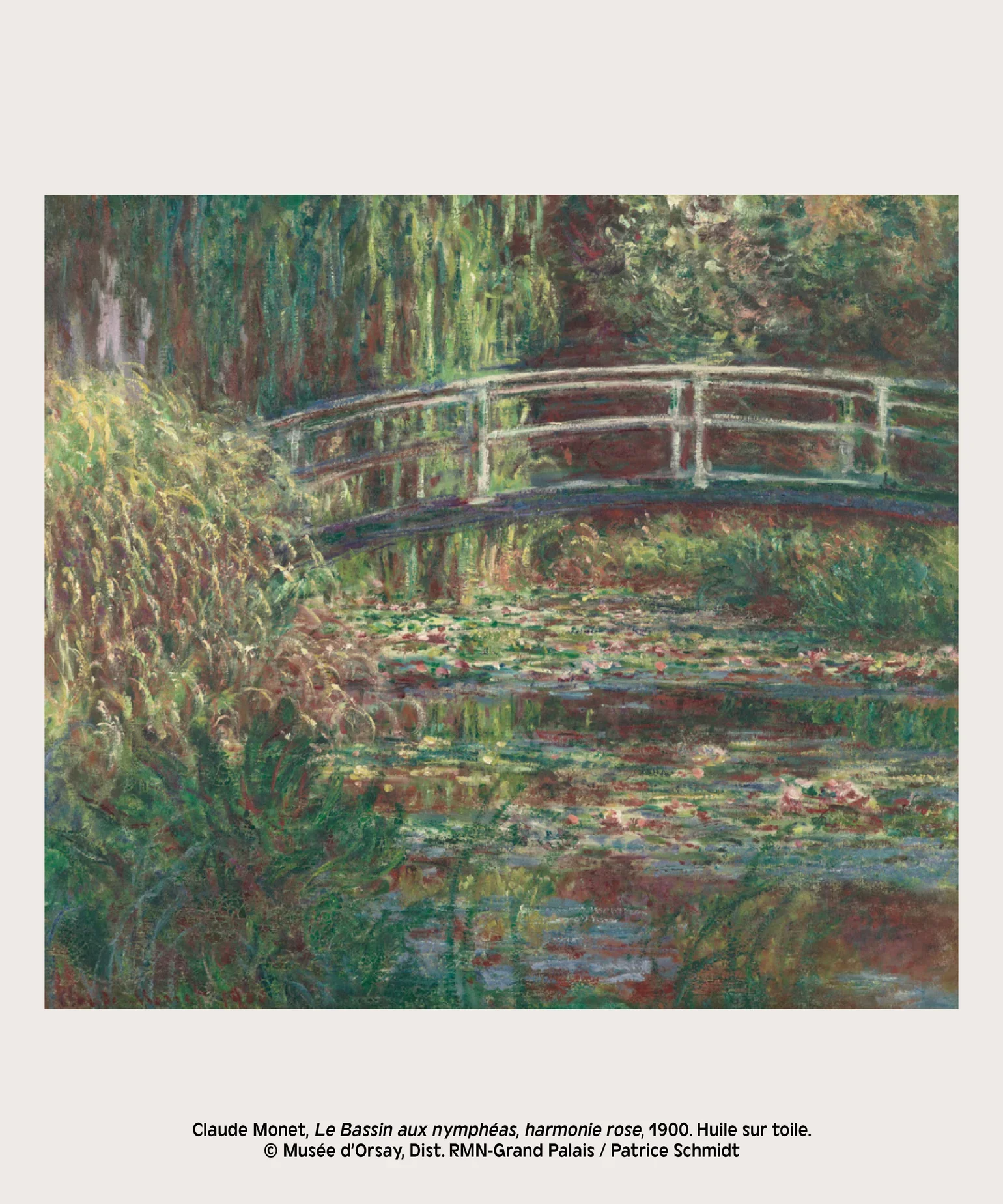
María Medem looked to Claude Monet’s Water Lily Pond, Symphony in Rose (1900). Her interpretation emphasizes rhythm and pattern, showing how repetition of forms can suggest the passage of light across water.
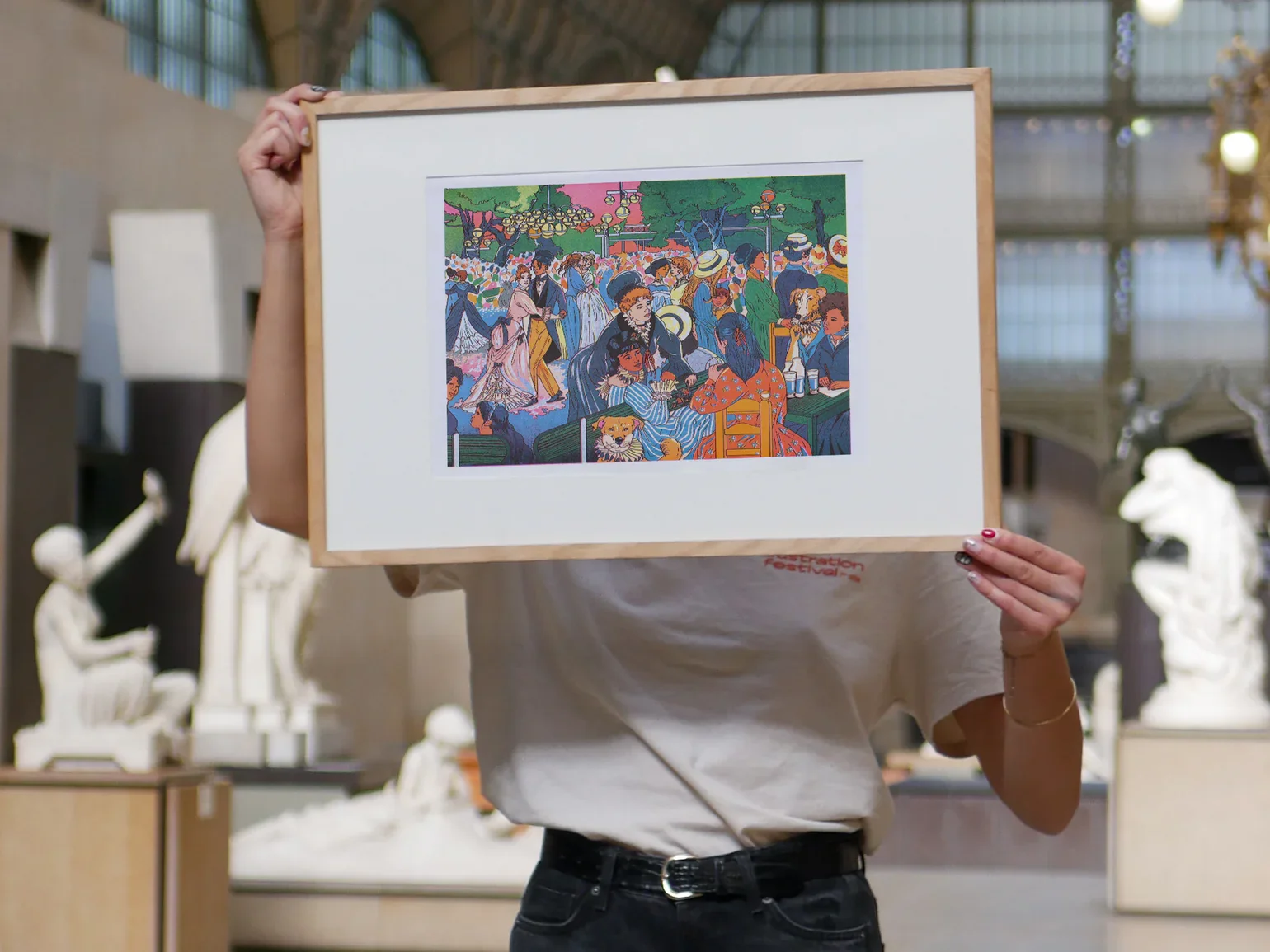
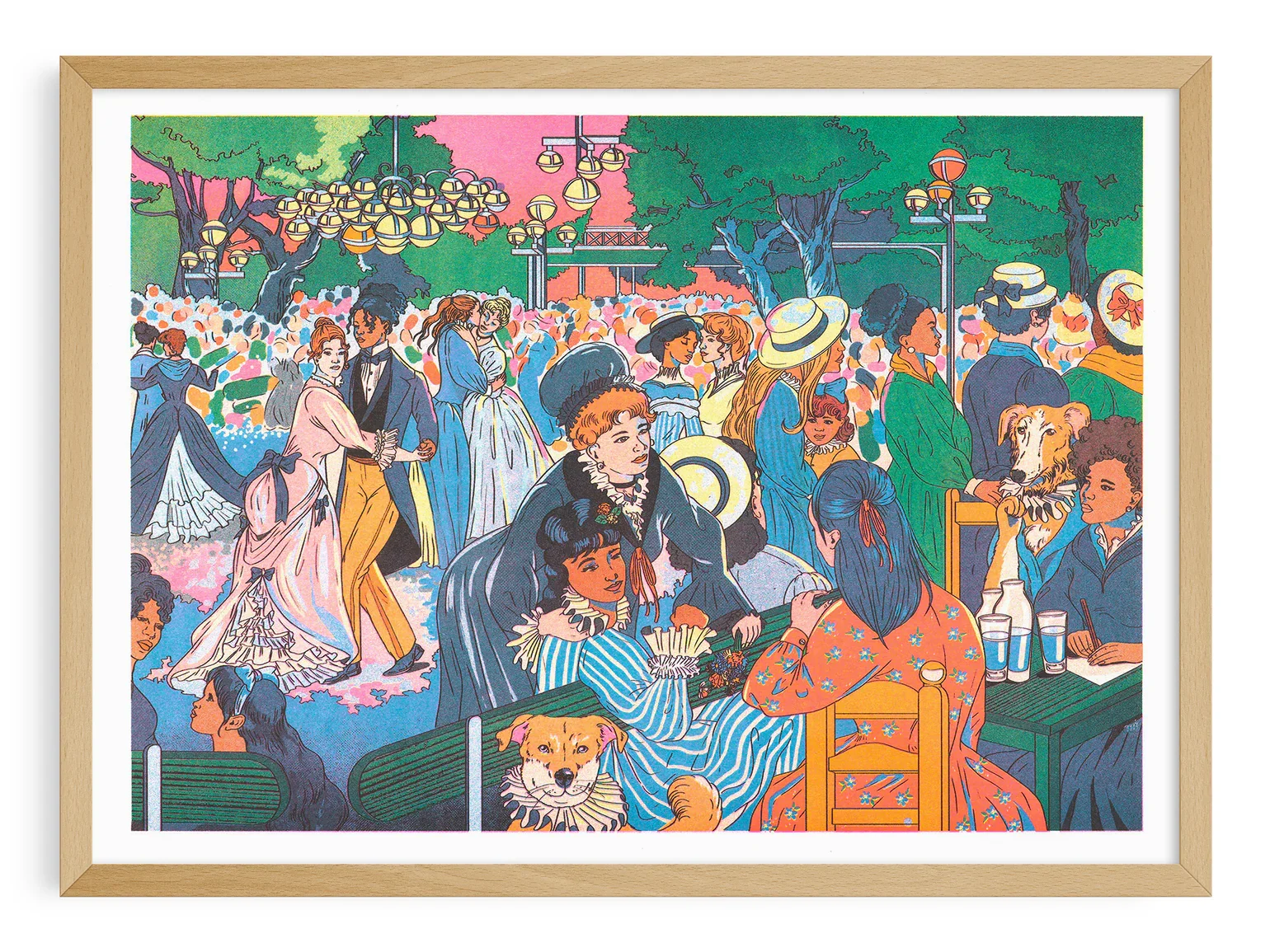
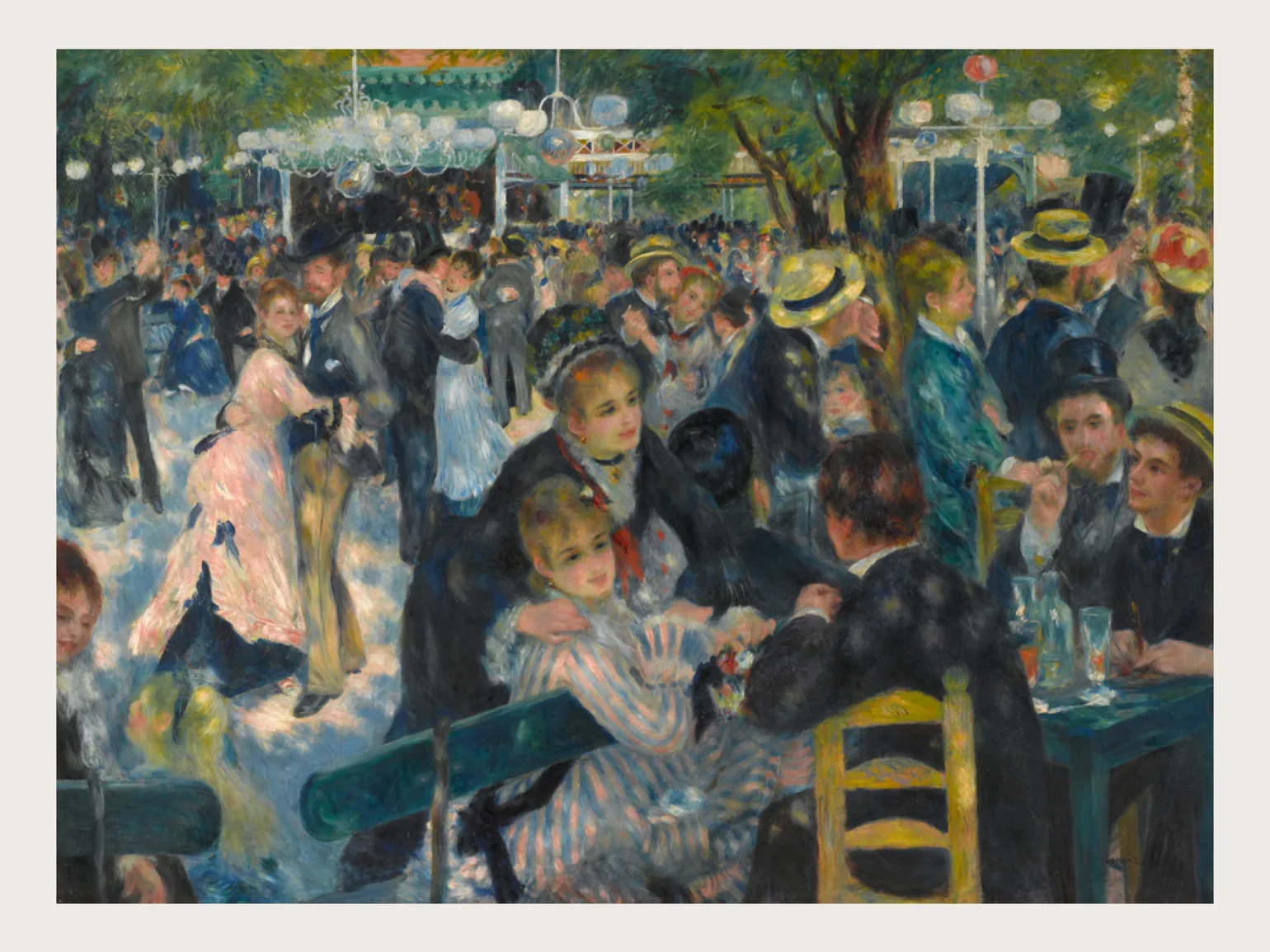
María Jesús Contreras took on Auguste Renoir’s Dance at Le Moulin de la Galette (1876). The composition is transformed into a chromatic field, where figures dissolve into atmosphere.
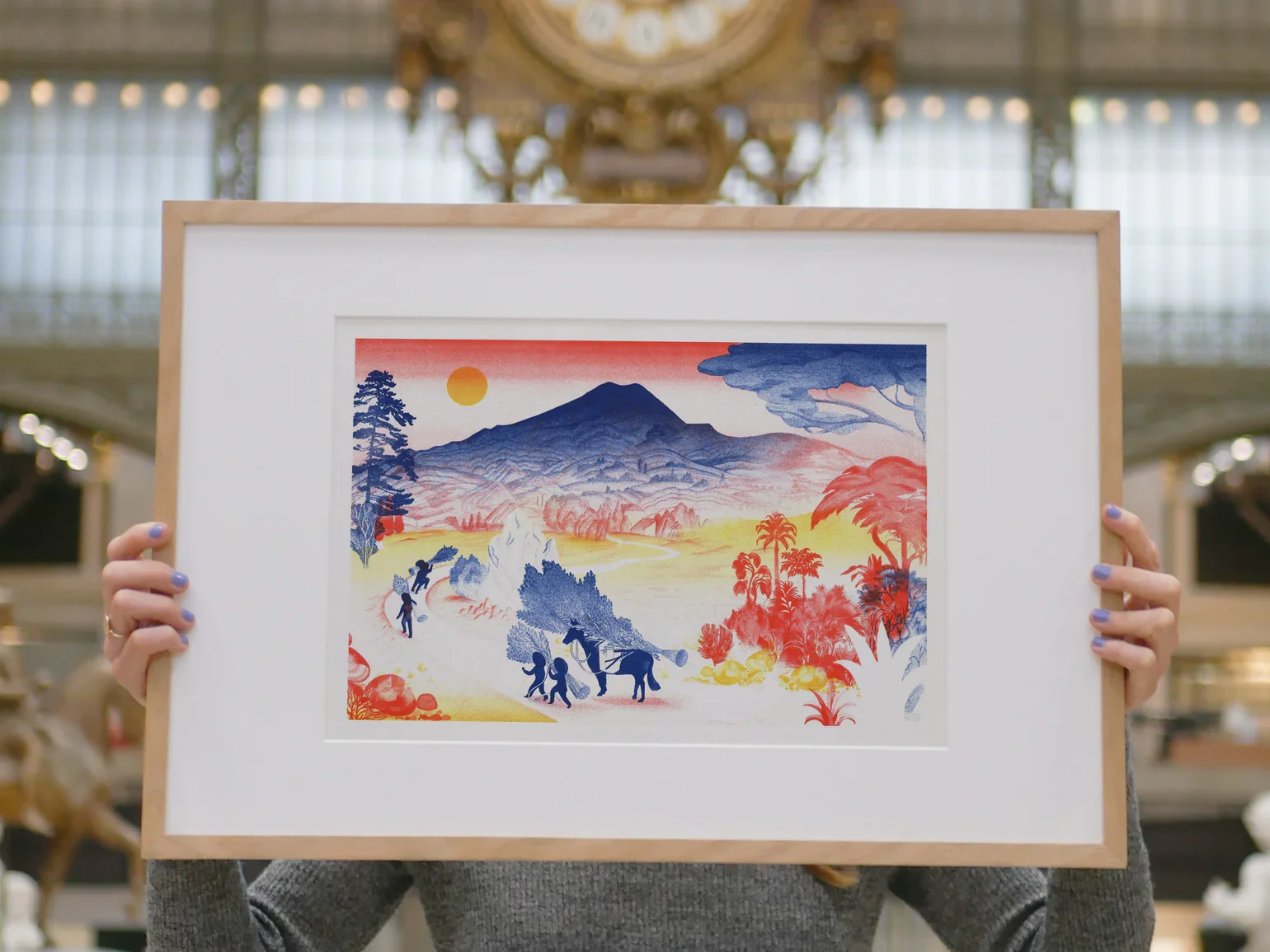
Mayumi Otero of Icinori reimagined Paul Cézanne’s Mount Sainte-Victoire (1890). Otero uses flat planes of color to emphasize the mountain’s structure, reflecting Cézanne’s role as a precursor to modern abstraction.


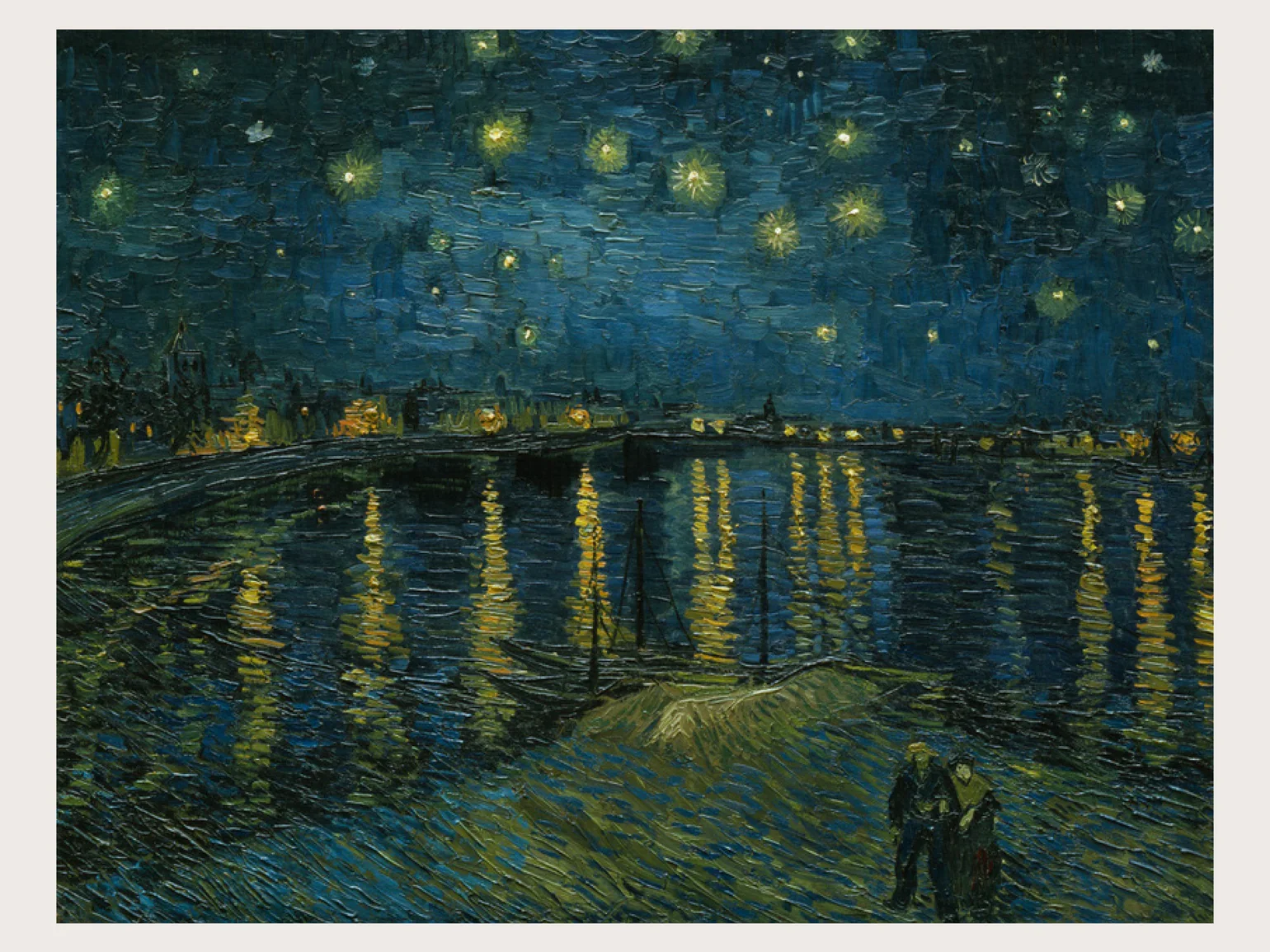
Manon Diemer responded to Vincent van Gogh’s Starry Night (1888). Her print amplifies the night sky into graphic shapes, reducing turbulence into bold marks.
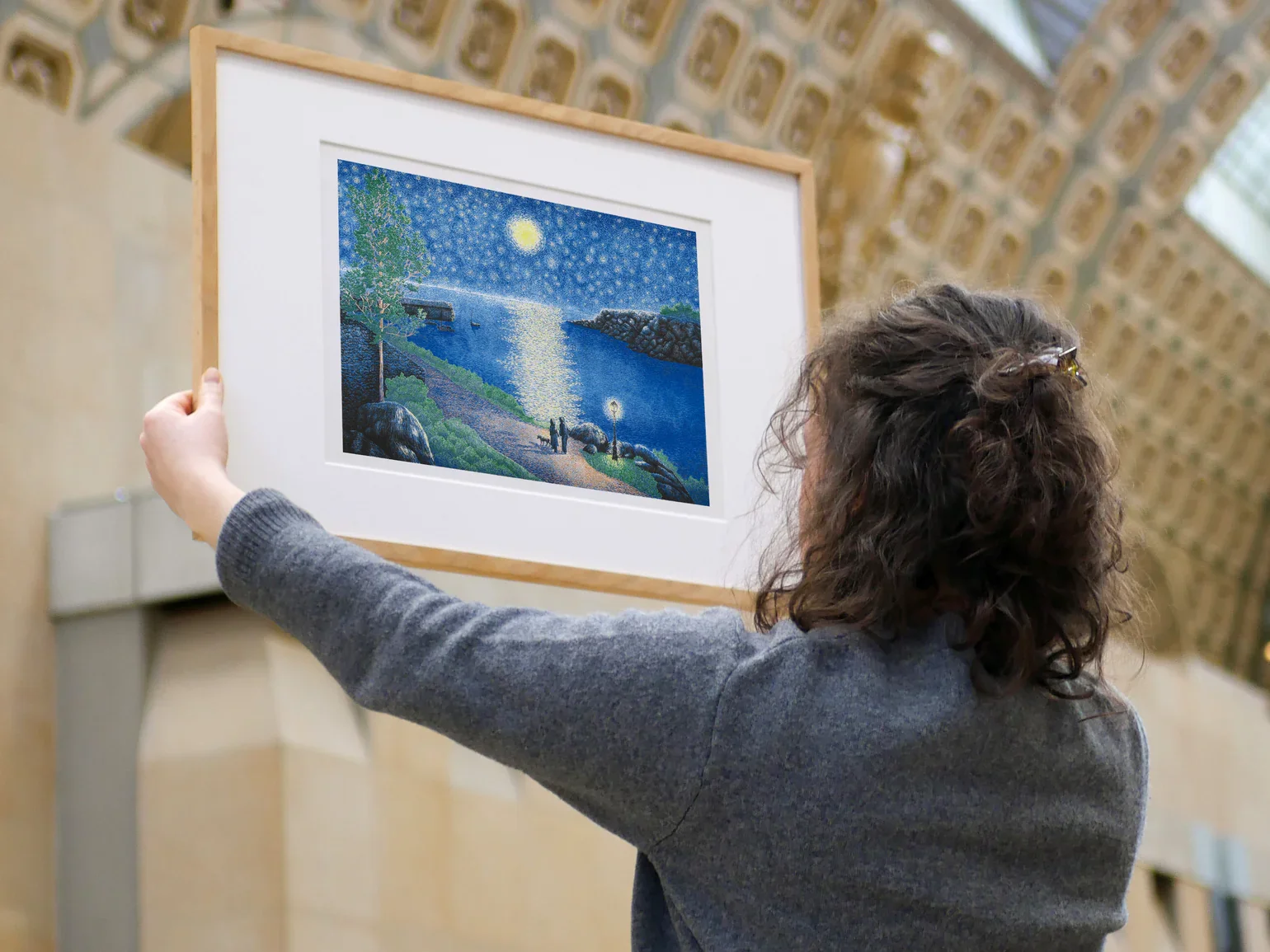
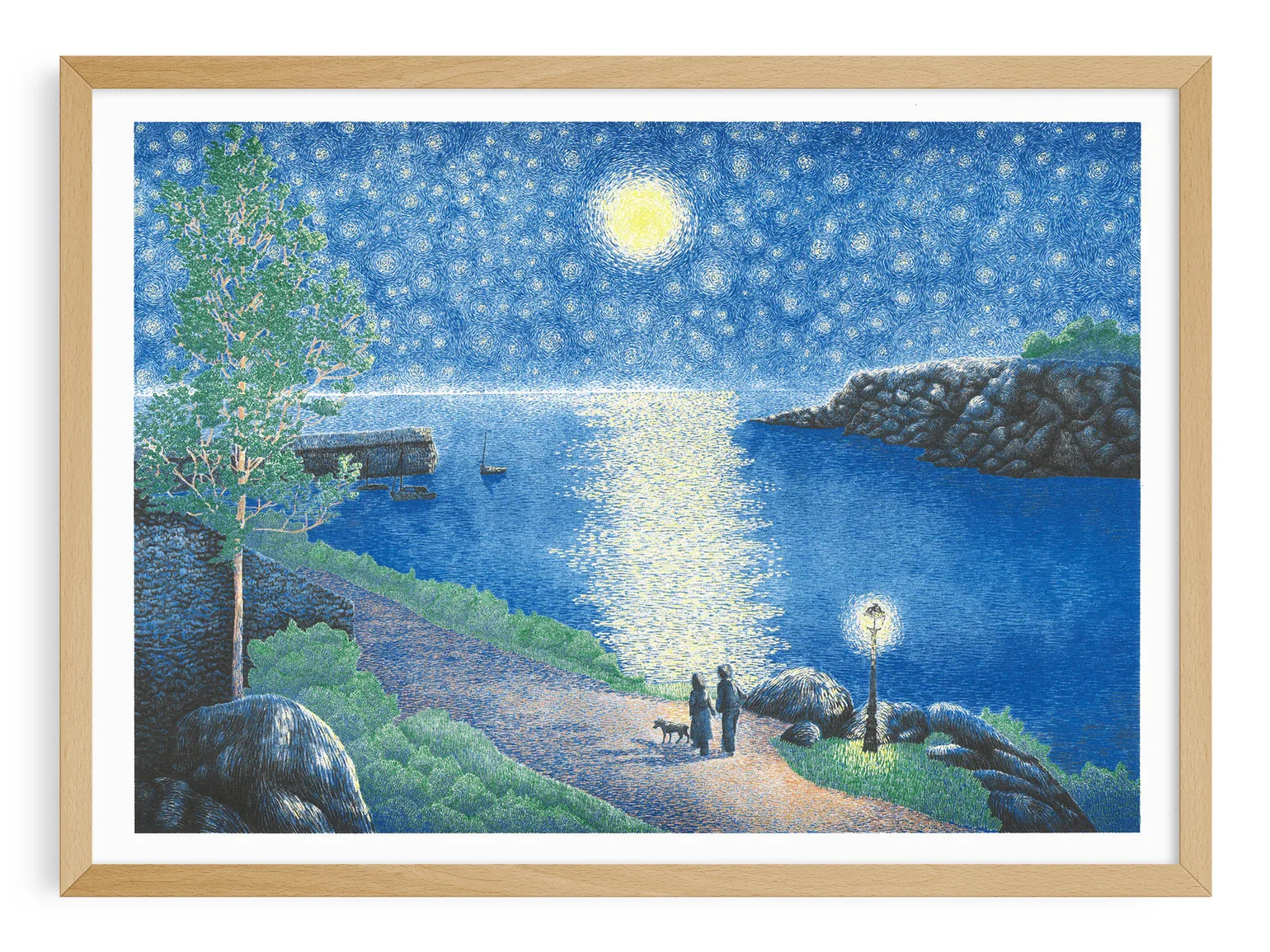
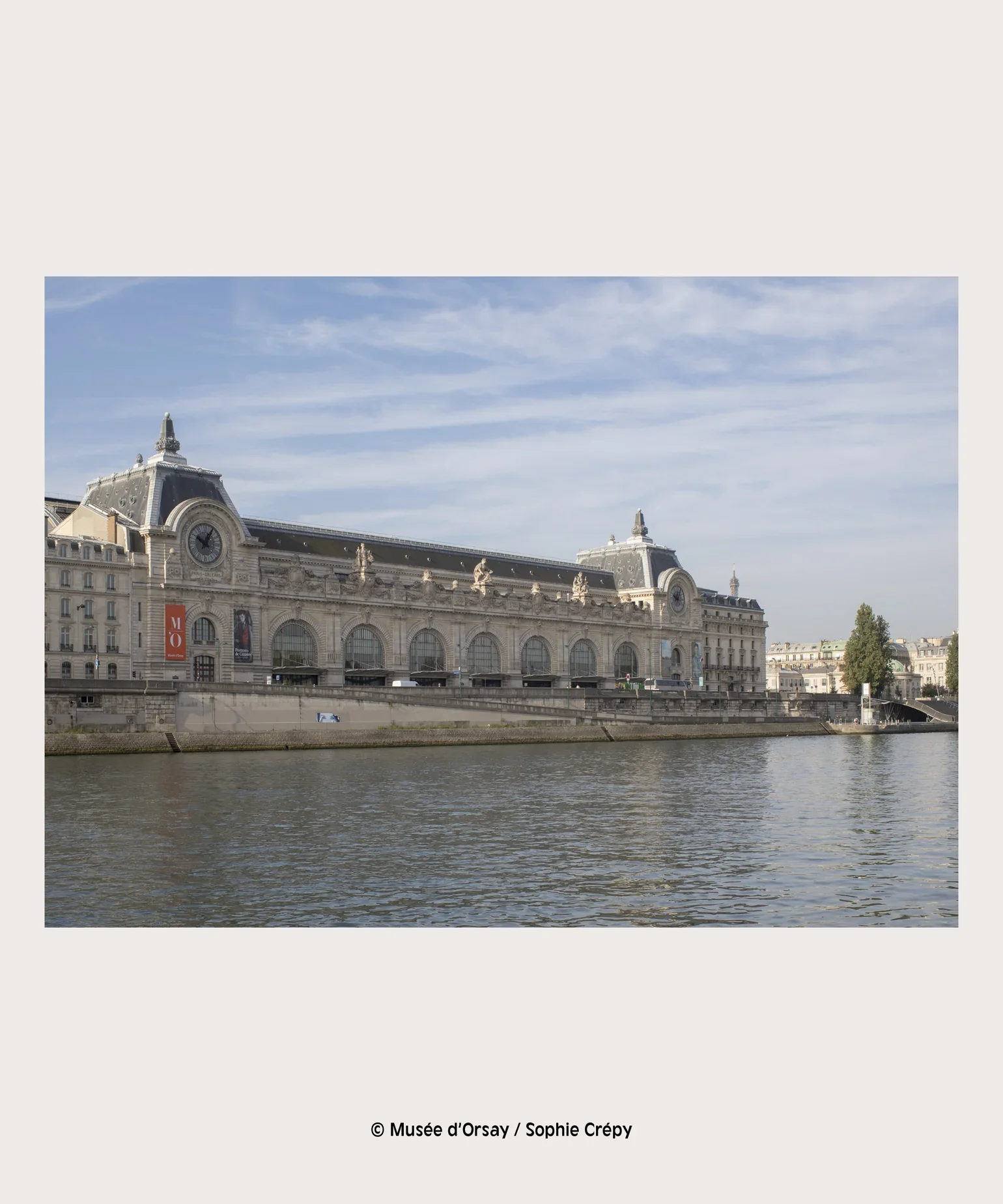
Jisu Choi created a vision of the Musée d’Orsay itself, glowing above the Seine. She captures the museum’s clock face and iron structure as both architecture and symbol.
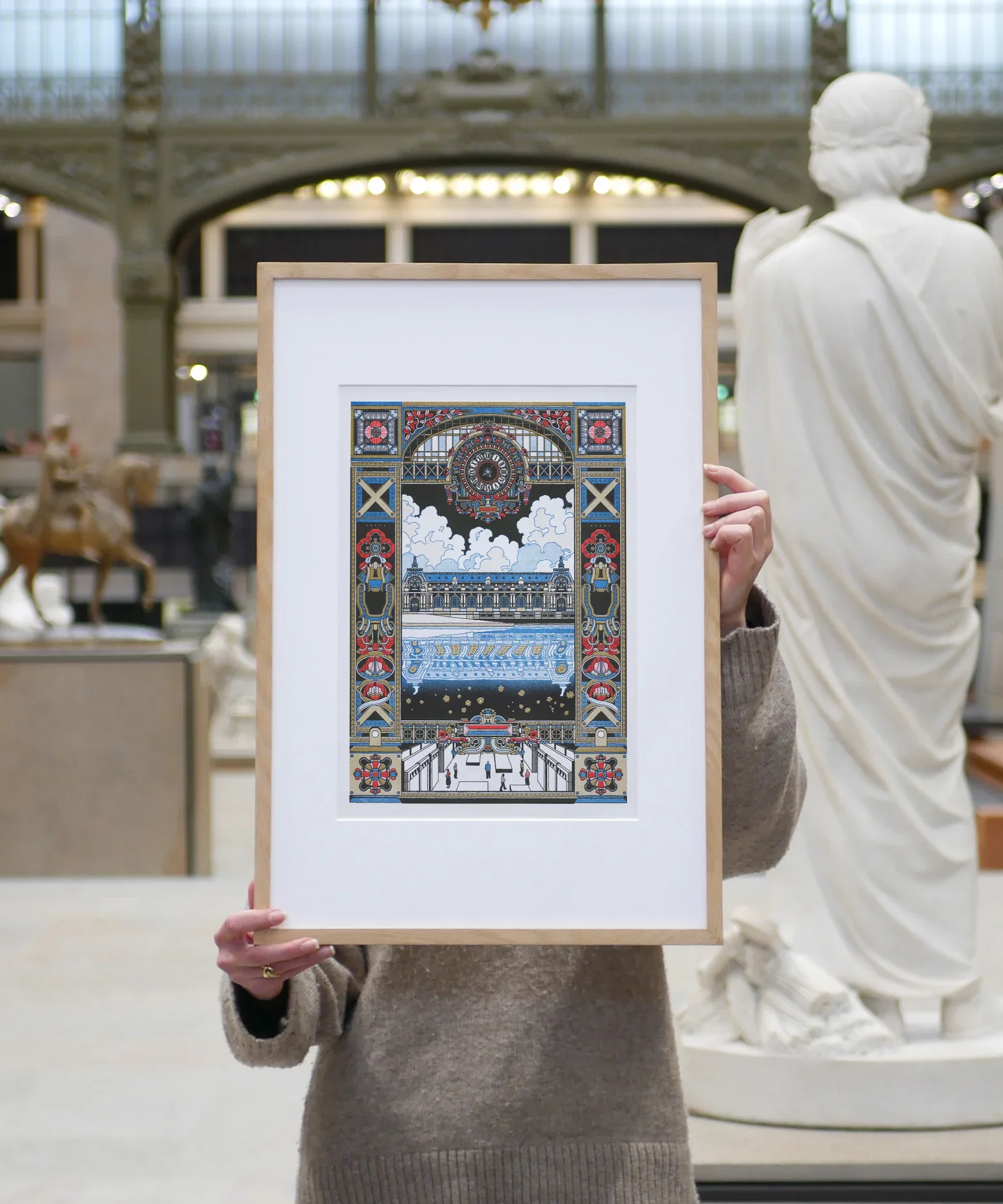

POSTERS (30euros) each
Available to purchase here:
https://kiblind-atelier.com/en/collections/musee-dorsay-1
Each poster is produced in an edition printed on Munken Print White 150g paper, a stock chosen for its smooth surface and ability to hold the layered inks of risography.
The format is A3 (29.7 × 42 cm), a size accessible for display while retaining detail. Risography, a stencil-based process developed in Japan in the 1980s, is known for its vivid color range and tactile finish. Unlike digital printing, riso creates slight shifts and overlays, echoing the material irregularities of lithography and screenprint.
By using risography, Kiblind Atelier emphasizes the handmade qualities of the posters. Each print in the series is unique in its small variations. The editions are not open-ended commercial reproductions but objects with their own presence, positioned between fine art and design.
A Dialogue Across Time
The project underlines how nineteenth-century painters once broke conventions in their own moment. Courbet challenged academic norms, Renoir depicted working-class leisure, Cézanne constructed the building blocks of modernism, and Van Gogh transformed subjective vision into swirling form. The illustrators in this collaboration echo that spirit of renewal. Their works are not replicas but responses, where illustration speaks back to painting.